Packaging knowledge

Packaging Blog

Explore packaging formats, equipment news and the links between food storage, barrier film and sealing.

Latest articles

21 / 21 articles

Packaging formats

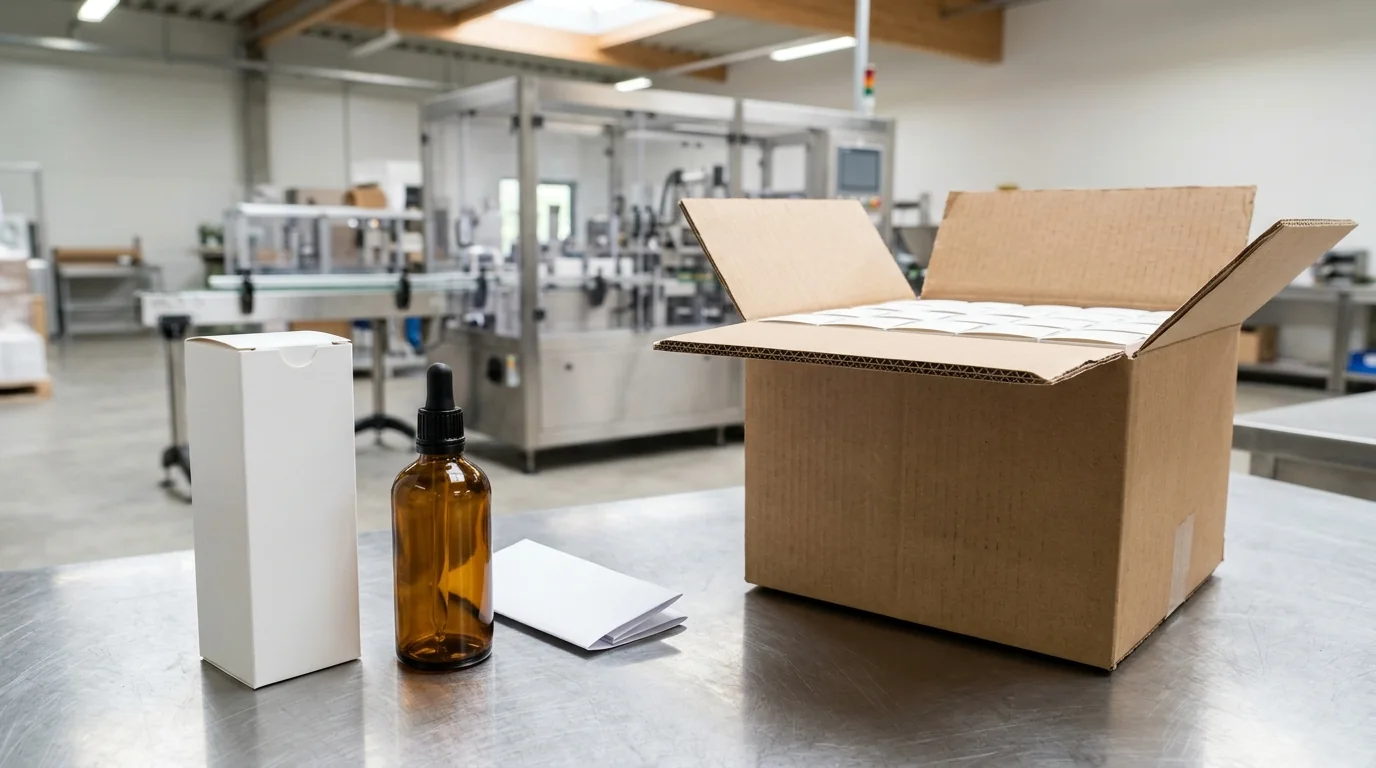
Types of Cartoning Machines: Carton vs Case, Horizontal vs Vertical

Carton vs case explained: compare folding cartoners against case packers, horizontal vs vertical loading, tuck vs hot-melt closures, and line sizing.

Examples of the carton vs case boundary on an automated line: a solid-paperboard folding retail carton with its primary bottle and leaflet on the left versus a fluted corrugated RSC shipping case holding grouped retail cartons on the right.

Read article
Packaging formats

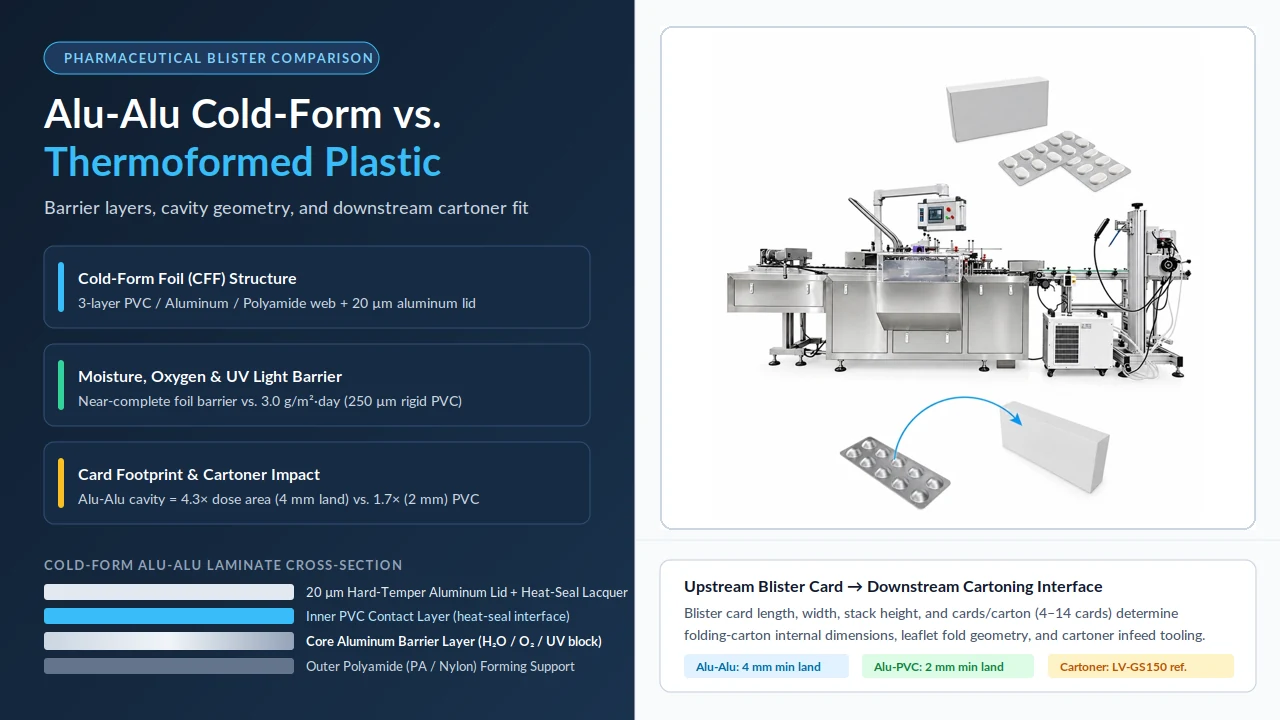
Alu Alu Blister Packaging: Cold-Form vs Plastic

Compare cold-form Alu-Alu blister packaging with thermoformed PVC, PVDC, PCTFE, and COC films across barrier layers, cavity size, and cartoner fit.

Examples of cold-form Alu-Alu and thermoformed PVC/Alu blister packaging architectures paired with a horizontal pharmaceutical blister cartoner.

Read article
Sealing and configuration

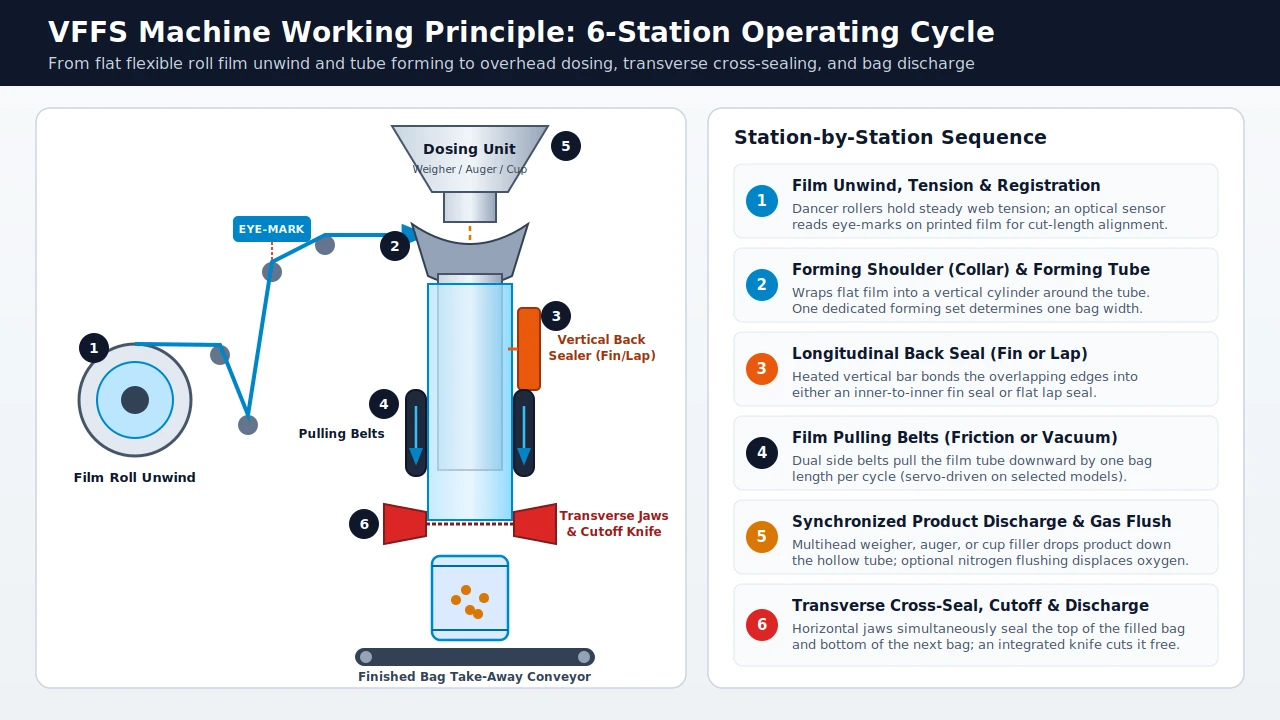
How a VFFS Machine Works: From Film Roll to Sealed Bag

Learn the VFFS machine working principle from film unwind, forming collar, and fin/lap back seals to dosing sync, ASTM checks, and cross-seal motion.

Six-station vertical form fill seal operating cycle from roll-film unwind and tube forming to synchronized overhead dosing, transverse cross-sealing, and finished bag discharge.

Read article
Sealing and configuration

Volumetric Filler: Types, Principle & Selection

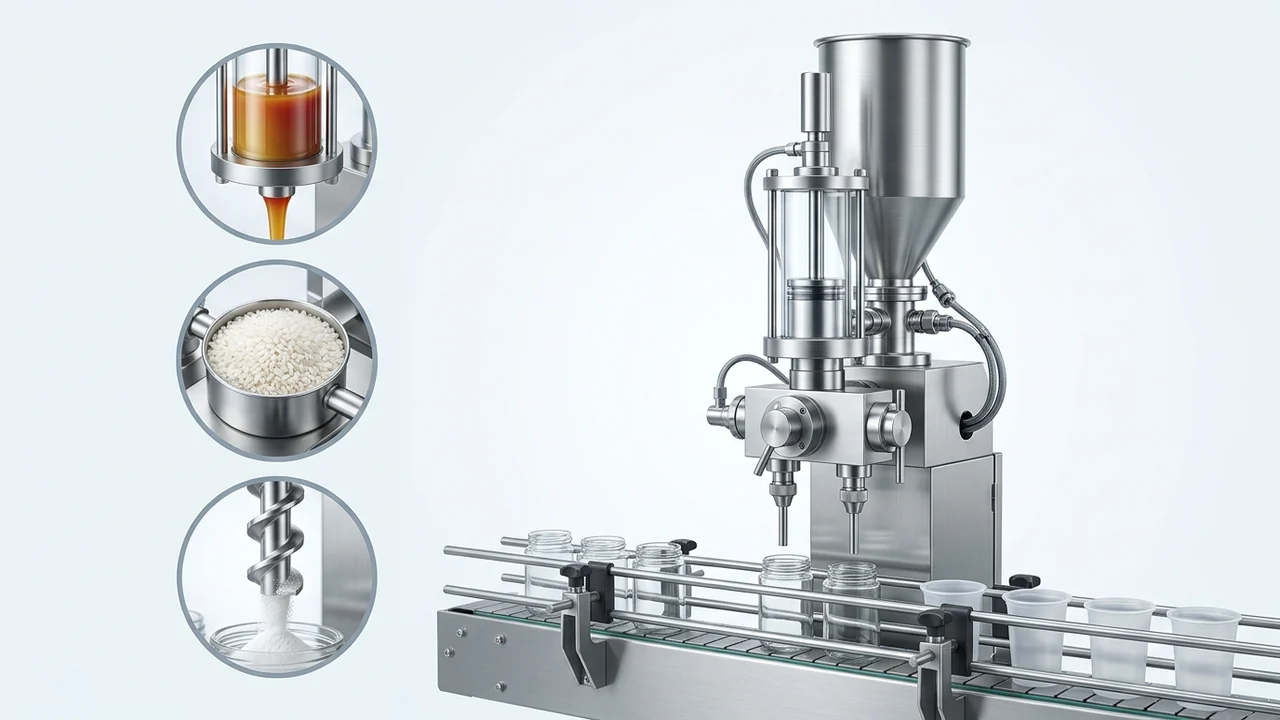
Compare volumetric piston, gravity, cup, and auger fillers against gravimetric weighing across viscosity, bulk density, accuracy, and RFQ checks.

Examples of volumetric filler architectures: a twin-nozzle stainless piston filling head paired with dosing insets for viscous sauces, free-flowing granules, and dry powders.

Read article
Packaging formats

Auto Bottom Carton: Crash-Lock vs Tuck-End Fit

Pre-glued auto bottom cartons lock into a load-bearing floor without tape for heavier jars, whereas single-ply tuck-end and hot-melt blanks run on automatic cartoners.

Pre-glued auto-bottom crash-lock base and single-ply tuck-end closure examples ahead of an automatic cartoner blank magazine.

Read article
Packaging formats

What Is a Sachet?

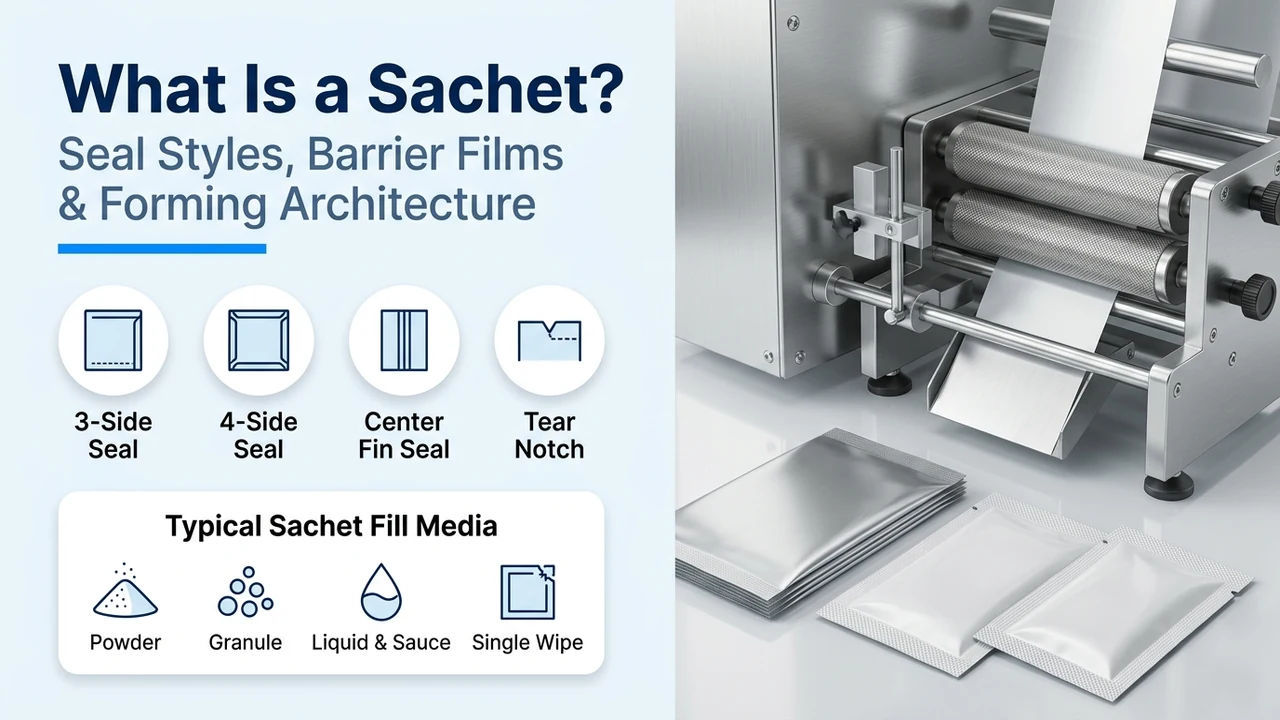
Single-portion sachets seal dry powders, free-flowing granules, sauces, and lotions in flat three-side or four-side roll-film packages.

Flat roll-film sachet seal styles, corner tear notches, and multi-lane side- and cross-sealing hardware for powder, granule, sauce, and lotion portions.

Read article
Sealing and configuration

Can Seaming: Double-Seam Stages & Defect Checks

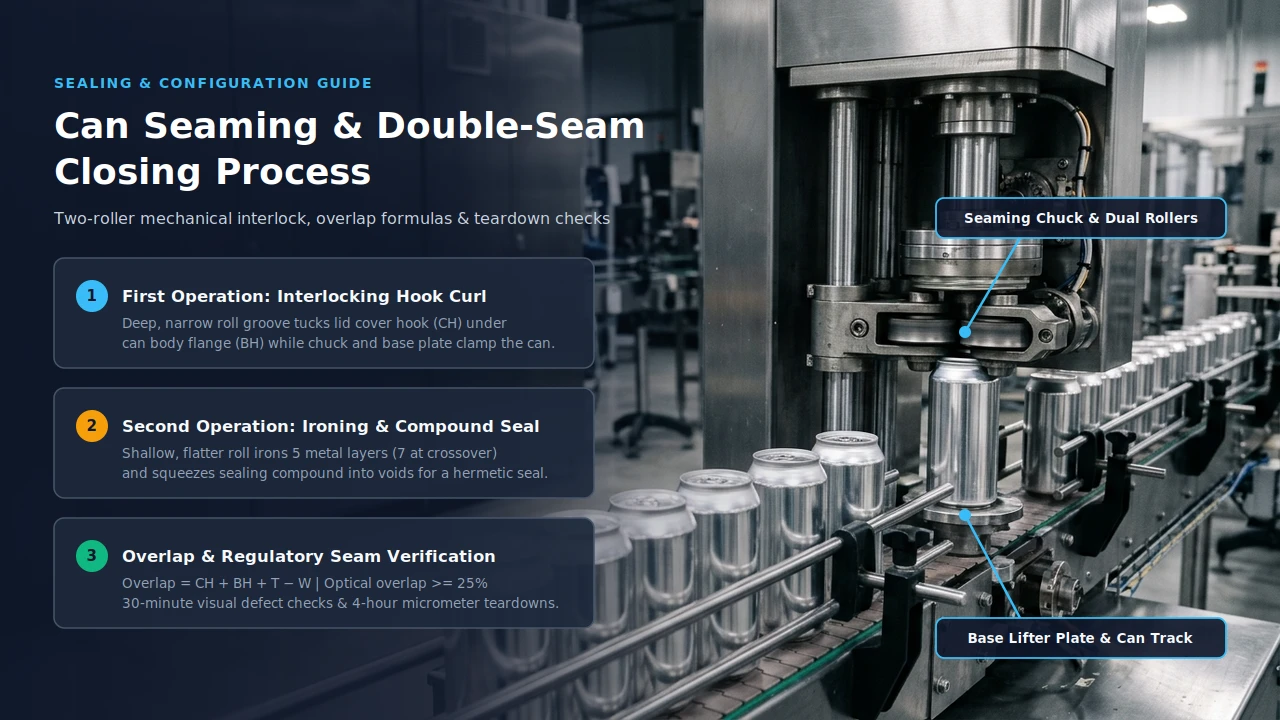
Can seaming closes filled cans in two roller steps, interlocking the lid curl and body flange before compressing the compound into a hermetic double seam.

Examples of first-operation hook curling and second-operation seam ironing on a rotary can seaming head.

Read article
Packaging formats

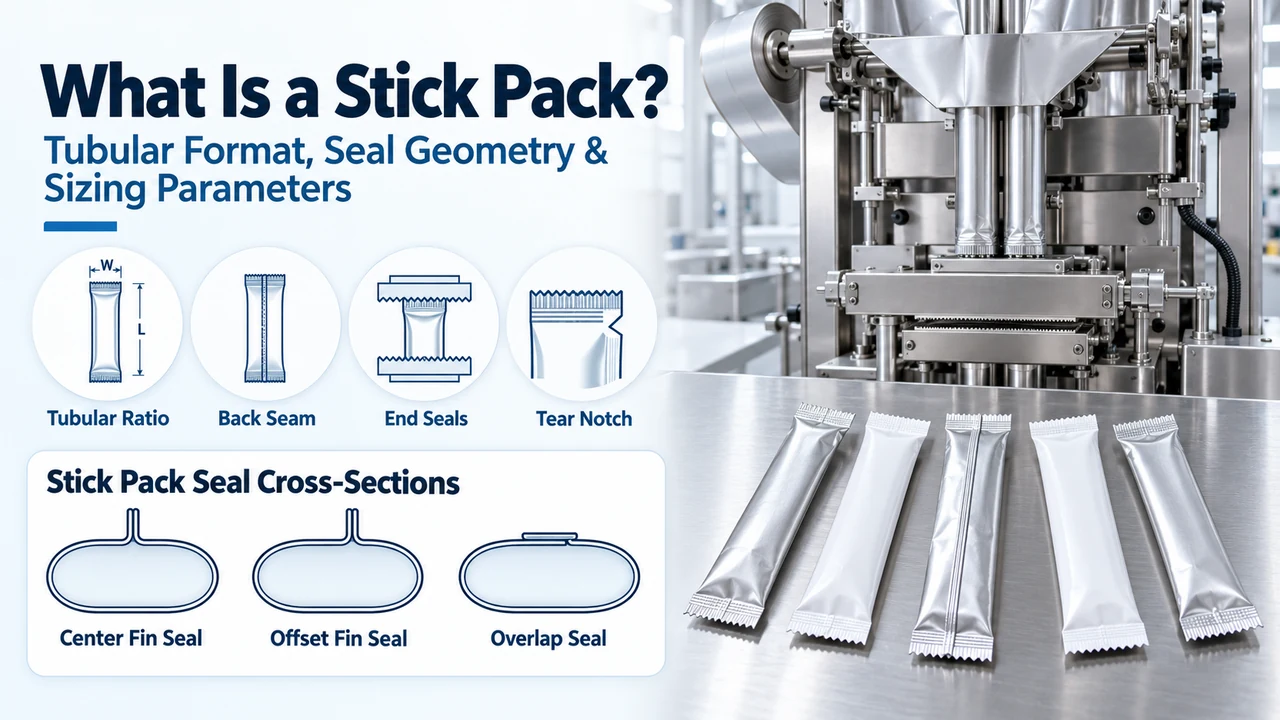
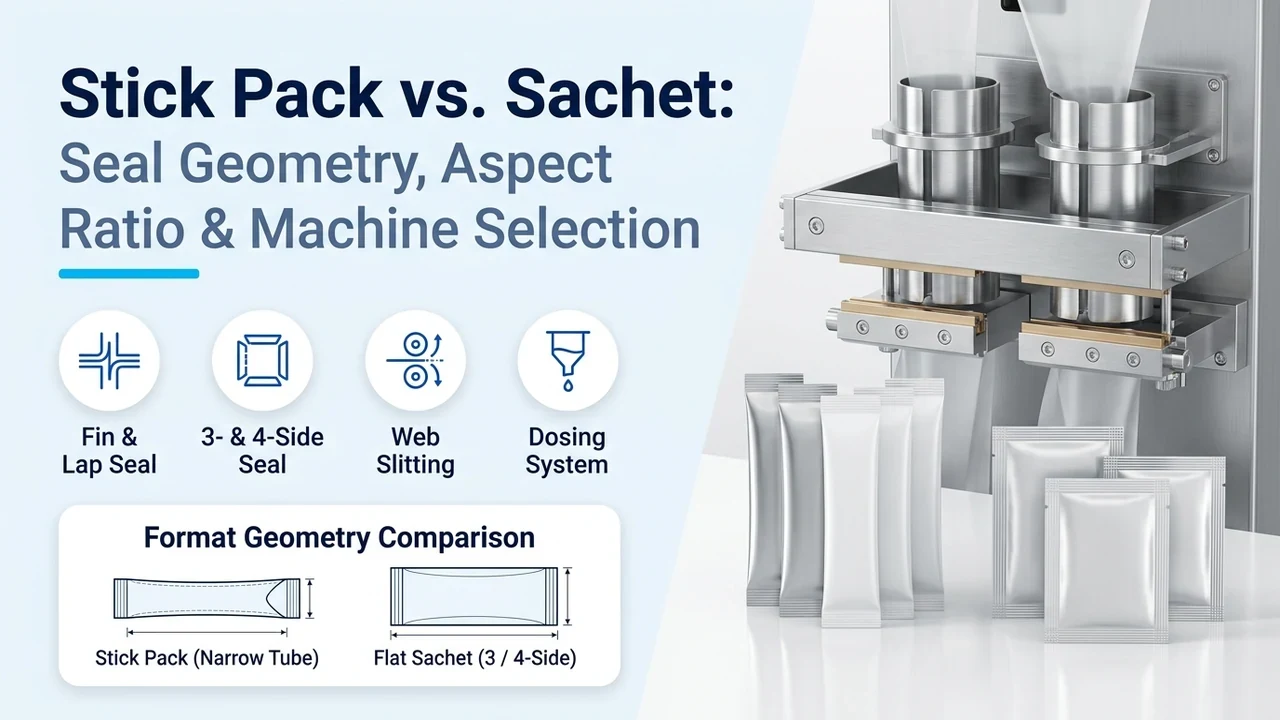
What Is a Stick Pack? Tubular Format, Fin vs. Lap Seals, Dimensions & Film Savings

Learn what a stick pack is, how fin-seal and lap-seal tubular geometry works, and how to calculate unfolded strip width W_strip and film savings vs. sachets.

Examples of the tubular stick-pack format: narrow high-aspect-ratio body, longitudinal back seam (center fin, offset fin, or flat overlap lap seal), serrated transverse end seals, and easy-open tear notch formed on vertical collar tubes.

Read article
Sealing and configuration

Box Motion vs Rotary End Seal

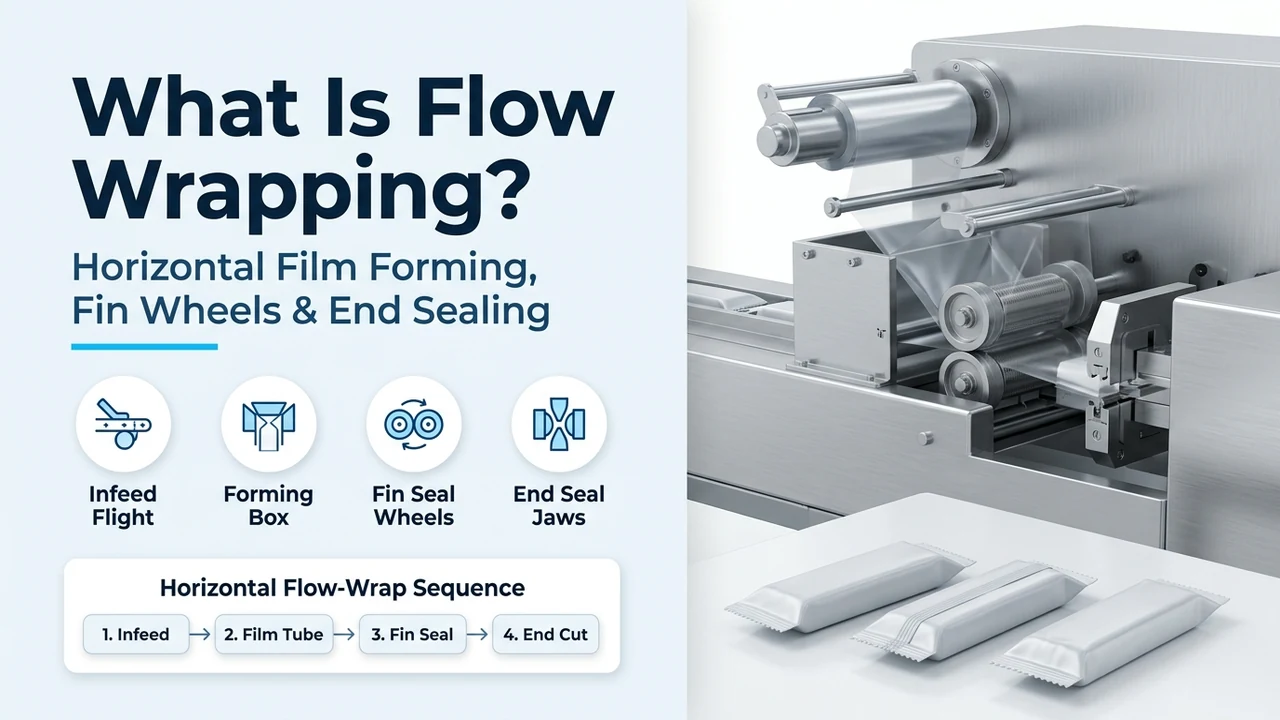
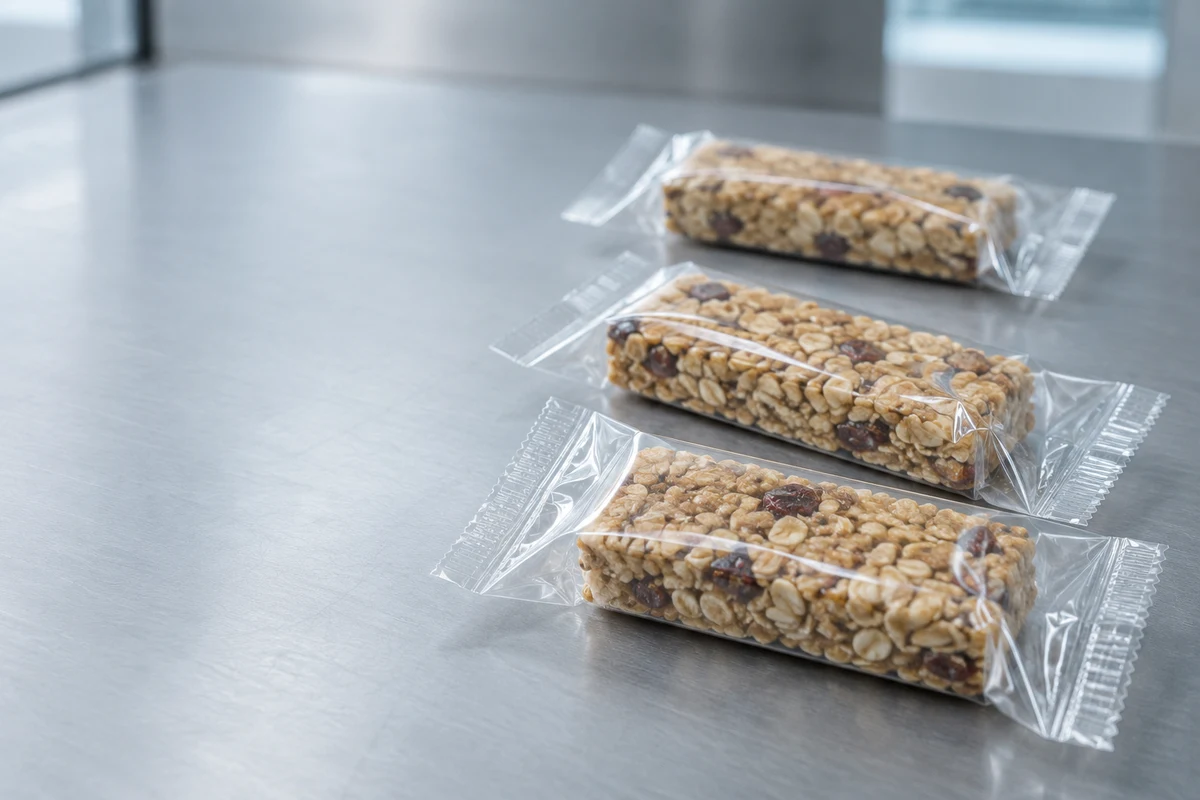
Compare end-jaw motion, sealing contact and the product and film evidence needed to review a flow-wrapper proposal.

Illustrated pillow-pack examples showing transverse end seals.

Read article
Packaging formats

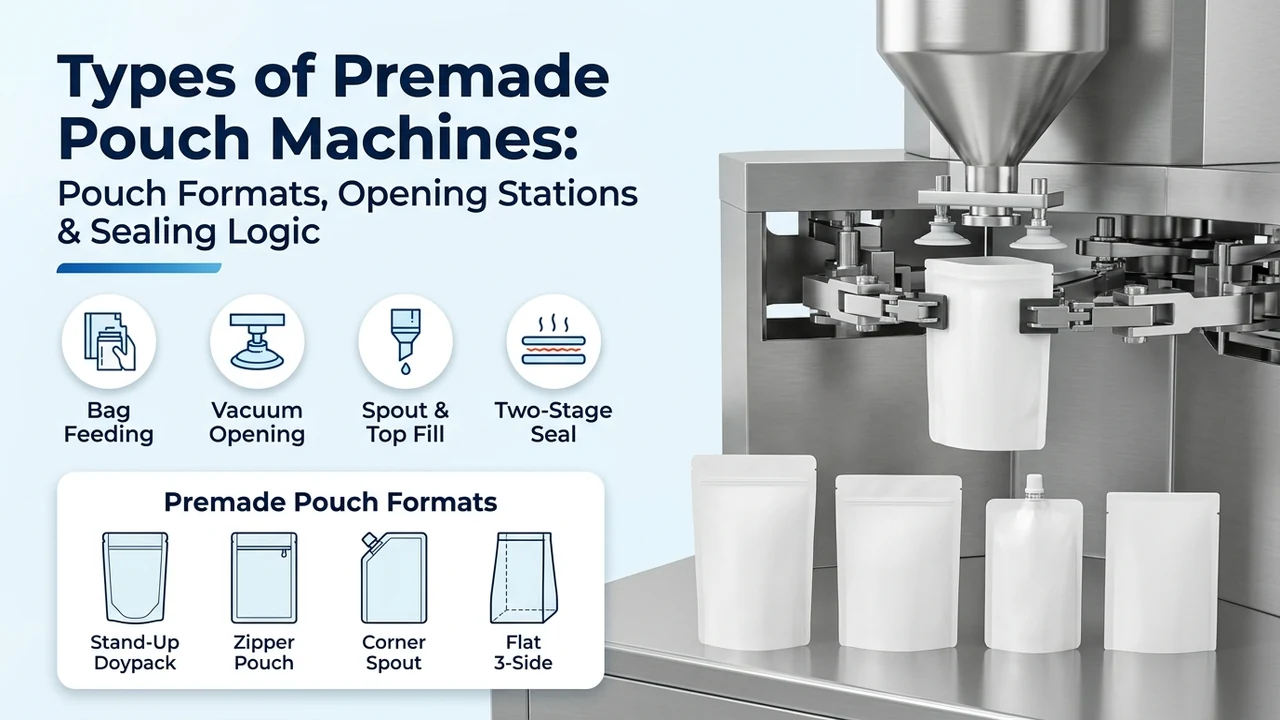
Types of Premade Pouch Machines: Matching Stand-Up, Zipper, Gusset & Spout Pouches to Station Hardware

Compare rotary pick-fill-seal, duplex, inline and through-spout premade pouch machines across stand-up doypack, zipper, gusset and spout pouch formats.

Examples of premade pouch formats and station mechanics: stand-up doypack, press-to-close zipper pouch, corner-spout pouch and flat 3-side-seal pouch matched to rotary gripper, vacuum opening and two-stage sealing hardware.

Read article
Pack protection and storage

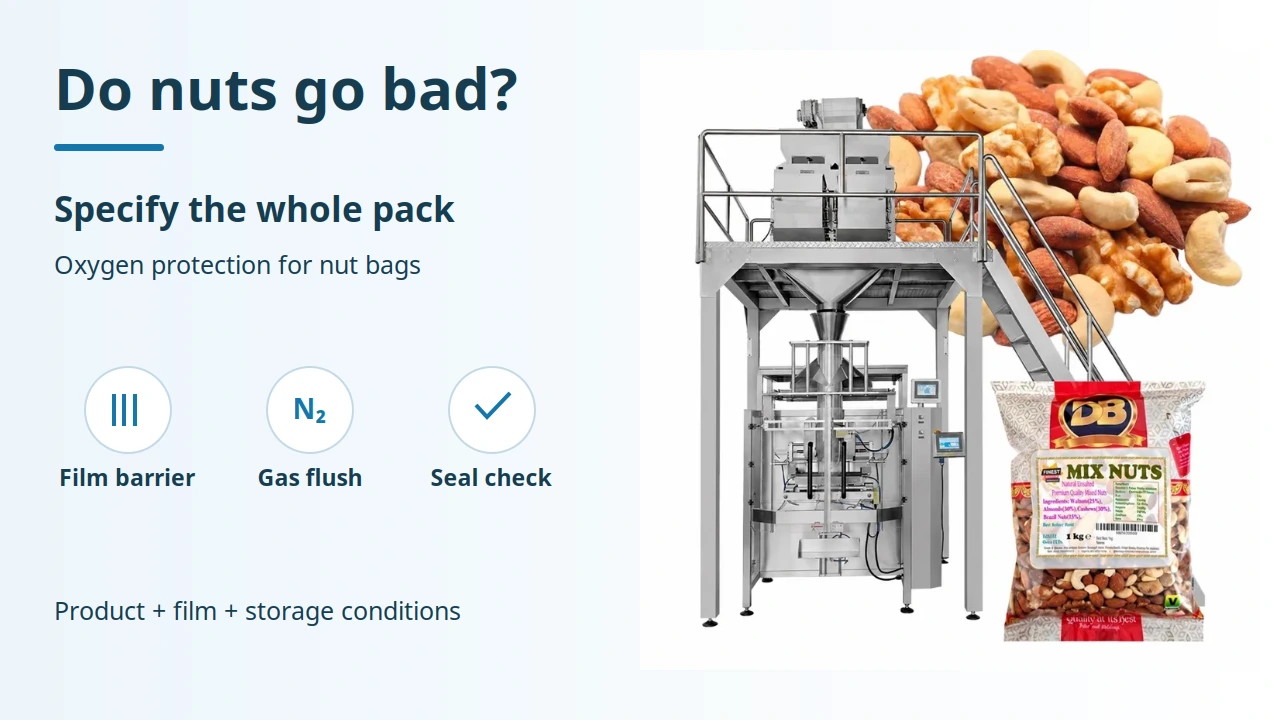
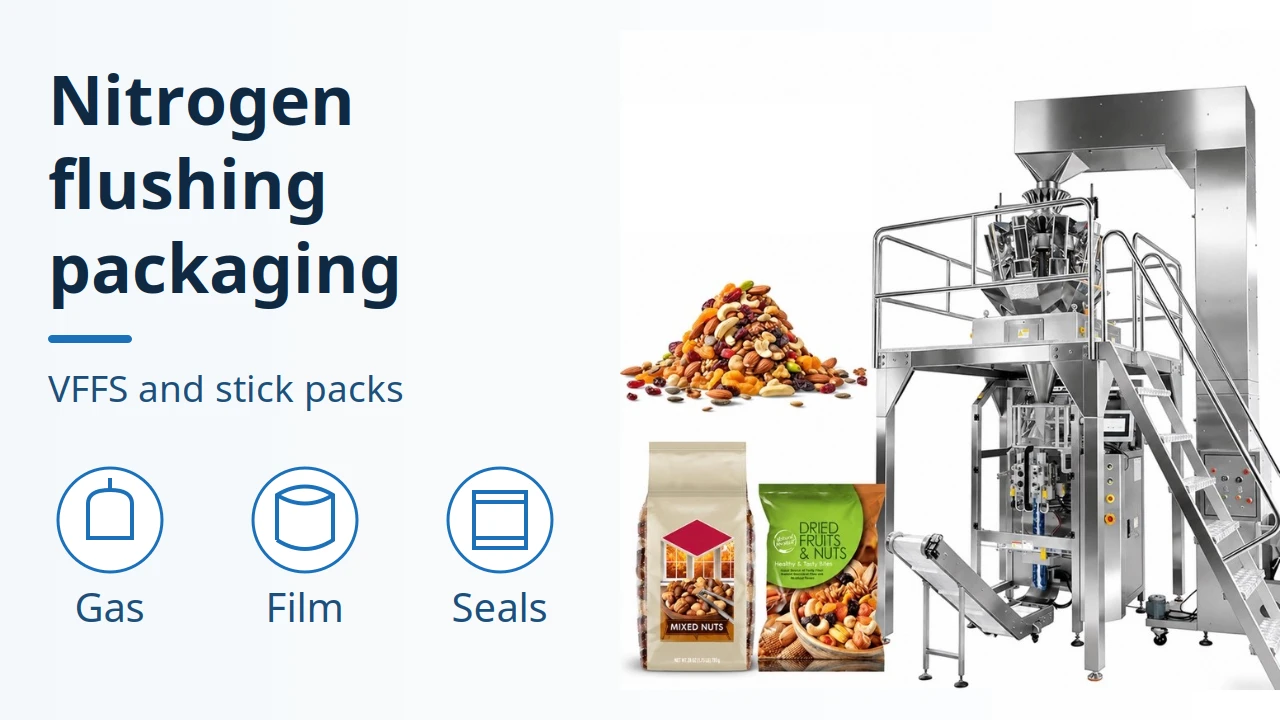
Do Nuts Go Bad? How Nitrogen Bags Protect Them

Understand nut storage, compare film and seal failure paths, and prepare a configuration brief for nitrogen-flushed nut bags.

Nut packaging equipment from our Foshan factory catalog with example pouches and illustrations of film-barrier, gas-flush and seal checks.

Read article
Equipment news

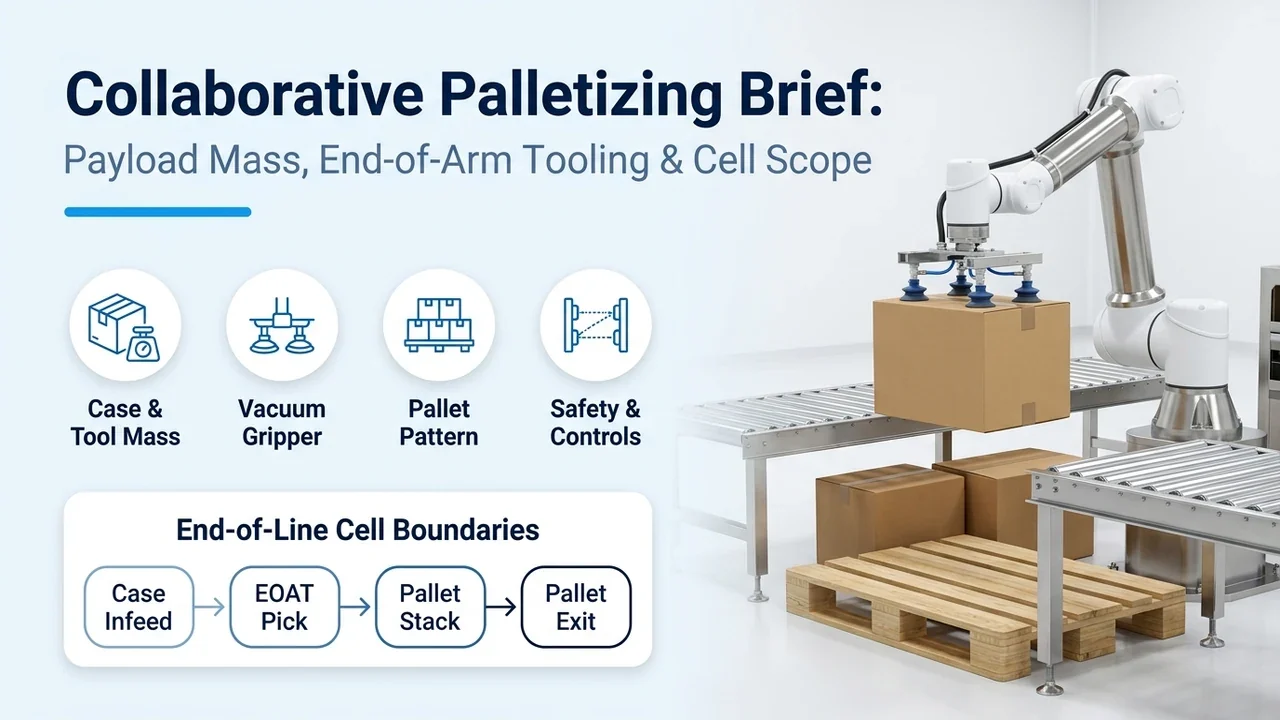
FANUC CRX-30iA Palletizer: Cobot Payload, Reach & End-of-Line Engineering Brief

Audit FANUC CRX-30iA palletizers (30 kg / 1,756 mm vs. 25 kg / 1,889 mm modes, AMT Maverick, M-410iC) across EoAT mass, ISO/TS 15066 and 5-year TCO.

Examples of collaborative palletizing cell engineering checkpoints: net payload after End-of-Arm Tooling (EoAT) deduction, foam-lip vacuum gripping, column/interlock pallet patterns, and ISO/TS 15066 safety zone controls.

Read article
Pack protection and storage

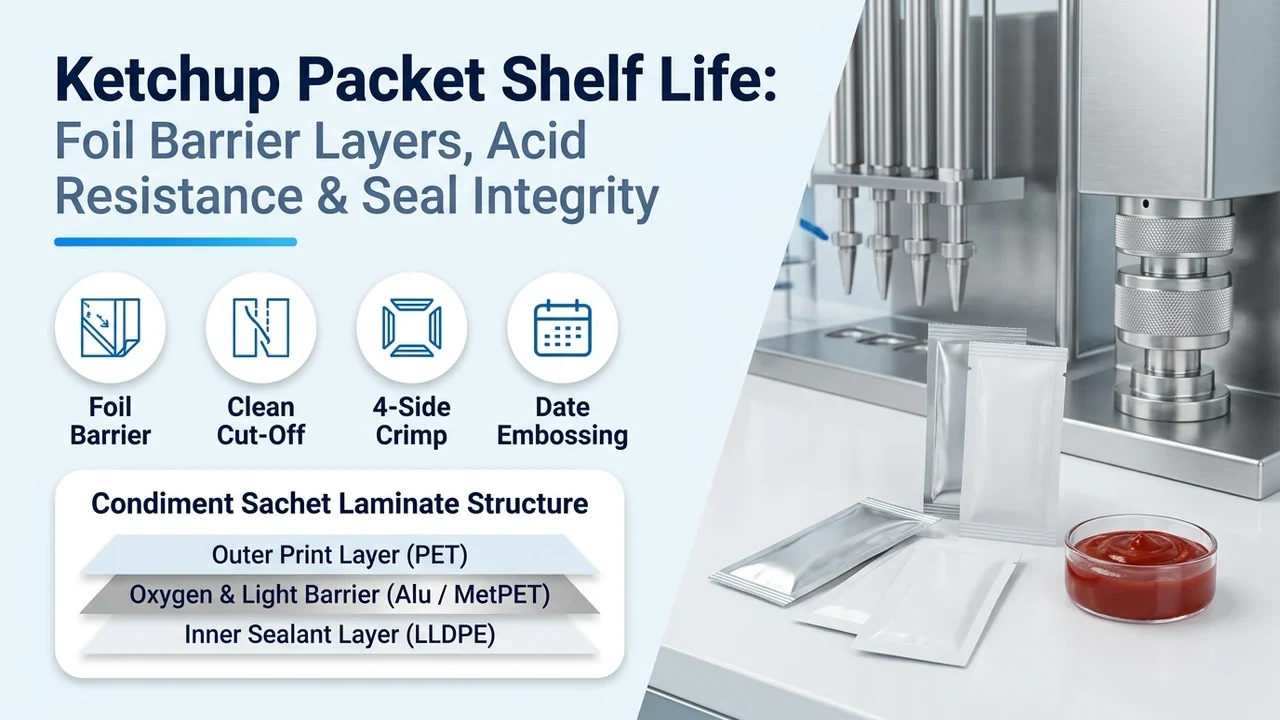
Do Ketchup and Condiment Packets Go Bad? Shelf Life, Barrier Film and Seals

Check ketchup and mayo packet shelf life (9–12 mo on foil vs. 4–6 mo on VMPET), ASTM D3985/F88 barrier and seal rules, and multi-lane sachet machines.

Examples of condiment sachet shelf-life and packaging checkpoints: PET/Alu/LLDPE foil barrier laminate structure, anti-drip filling cut-off, 4-side perimeter crimp, and batch date embossing.

Read article

Preparing a purchase?

Use the buyer resources for procurement guides, configuration checks and project preparation.

Buyer Resources