
On this page
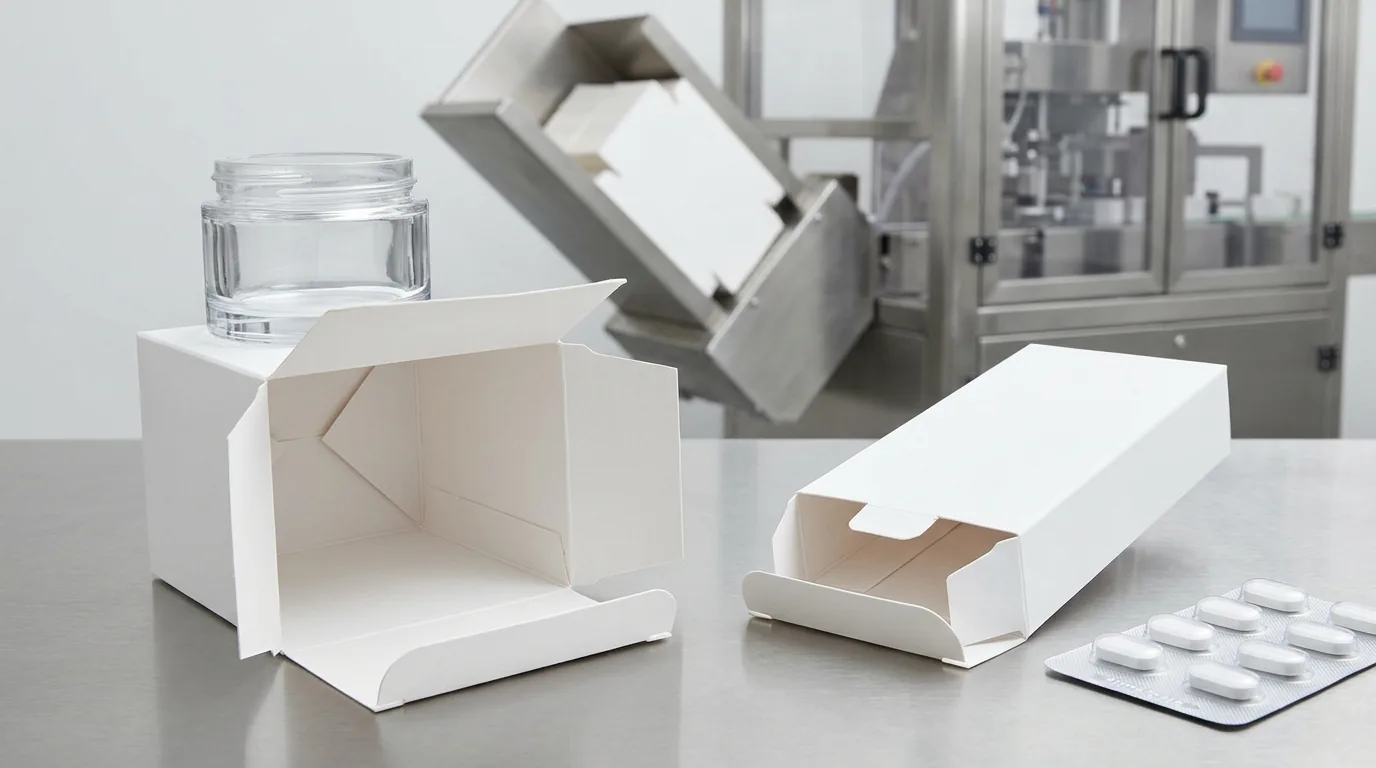
An auto bottom carton, also called a crash-lock or auto lock bottom box, ships as a flat folding blank with factory pre-glued bottom flaps that automatically lock into a load-bearing floor when unfolded, whereas a tuck-end carton closes with an unglued hinged tuck flap and friction locking tongue.
An auto bottom carton suits heavier bottles, cosmetic jars, and multi-packs assembled by hand or loaded vertically from above without packing-line tape, whereas single-ply tuck-end folding cartons fit lighter unit loads and inline hot-melt glue flaps seal higher-output runs measured in good cartons/min on automatic cartoning machines.
| Input | Typical value or condition | Why it matters |
|---|---|---|
| Bottom closure mechanism | Factory pre-glued auto lock flaps vs unglued hinged tuck tongue or inline hot-melt adhesive. | Sets manual setup speed, bottom load strength, and whether an adhesive station is needed on the cartoner. |
| Cartonboard thickness limit | Up to 0.81 mm (0.032 in) on standard cutting machinery; E-flute or F-flute microflute for heavier loads. | Standard single-ply folding cartons hold only a few pounds or kilograms before stepping up to microflute board. |
| Board caliper and stiffness | Points (0.001 in; 0.024 in equals 24 points) and grammage in g/m²; stiffness scales with the 1.6 power of caliper. | Paperboard stiffness governs how smoothly flat blanks erect, fill, and close inside automatic machinery. |
| Qualification sample set | Carton drawing PDF in mm, supplier flat blanks and closed carton, plus primary product dimensions in mm. | Confirms loading clearance, blank opening, and closing stations before comparing machine rates. |
How Does a Pre-Glued Auto Lock Bottom Carton Pop Into Place?
A pre-glued auto lock bottom carton pops into place because the carton converter bonds interlocking bottom flaps while folding the blank flat, so squeezing the side walls open pulls those factory-glued panels into a locked floor with no packing-line tape or glue required during setup.
As documented in converter specifications from Kelly Box & Packaging, pre-glued auto bottom cartons are shipped and stored as flat blanks to minimize warehouse storage space while giving operators the fastest manual setup with no tape. Compared with manually bottom-sealing a standard box, an auto lock bottom reduces tape consumption, lowers packing labor hours, and forms an interlocking bottom closure that adds structural stability and bottom load strength for heavier items during storage and transit.
Alternative unglued and shipping closures trade manual speed for simpler blank converting. A 1-2-3 snap-lock bottom uses interlocking bottom flaps folded sequentially by hand without factory pre-gluing, making setup slower and less consistent than an auto lock bottom, while regular slotted cartons use center-meeting flaps that require tape or a case erector on automated bulk shipping lines.
When Do You Pair an Auto Bottom Carton With a Tuck Top?
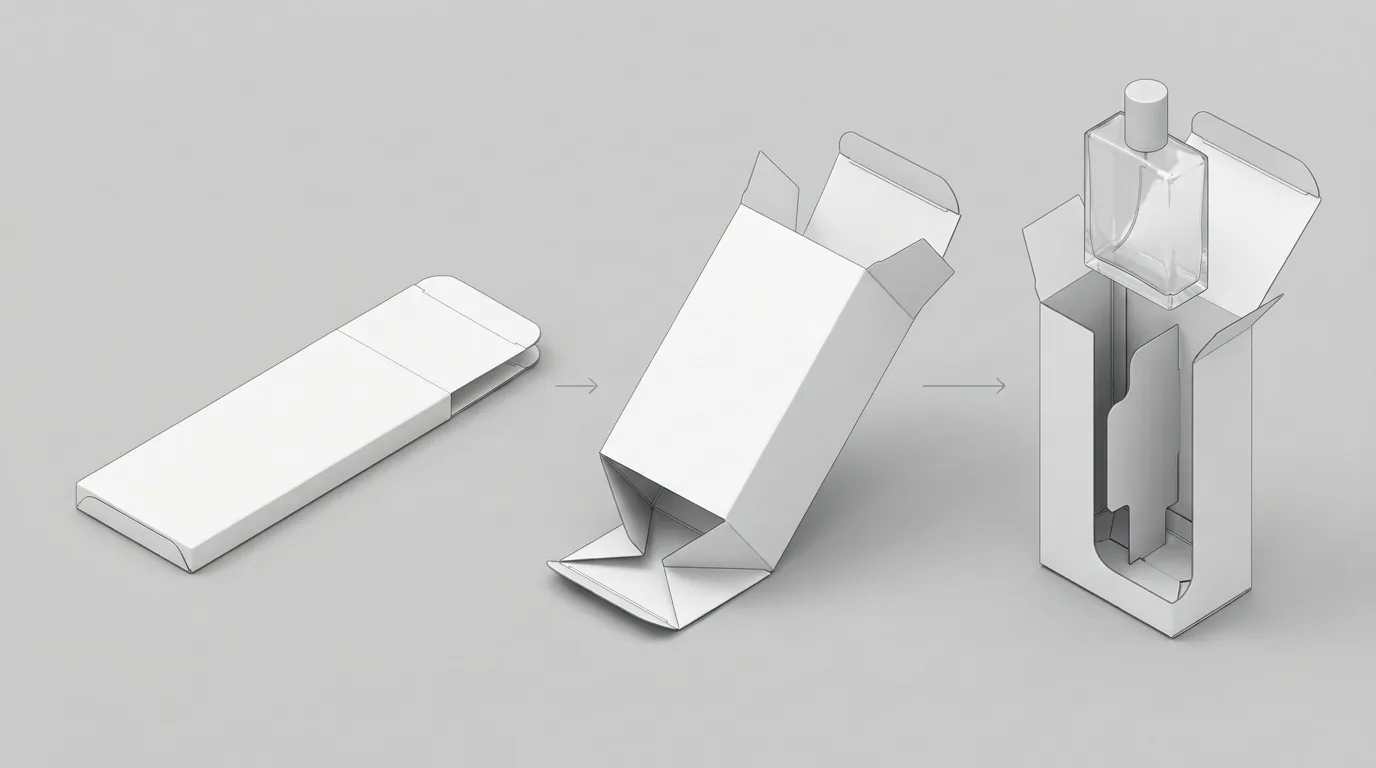
You pair an auto bottom carton with a tuck top when heavier primary containers such as glass perfume bottles, cosmetic jars, or food jars need a secure load-bearing floor below while keeping a hinged top tuck flap and locking tongue for clean retail reclosing above.
On manual packing benches and vertical top-load stations, products load downward from the top onto the locked crash-lock floor without bottom tape, and only the upper hinged tuck flap and locking tab insert into the carton body. When fragile bottles or jars require internal separation, auto lock bottom cartons can incorporate die-cut partitions or foam inserts sized around the primary product so the pack ships without excess internal void space.
Across our 48 configurations in the automatic cartoning machines family (T09)—including vertical perfume and cosmetic cartoning, LV-180 tea bag cartoning, and counted coffee pod cartoning—automatic cartoners handle tea bags, coffee pods, wrapped bars, cosmetics, and blister packs by erecting folding cartons from flat blanks, loading products, and closing the flaps.
How Does an Auto Bottom Carton Erector Handle Flat Blanks?
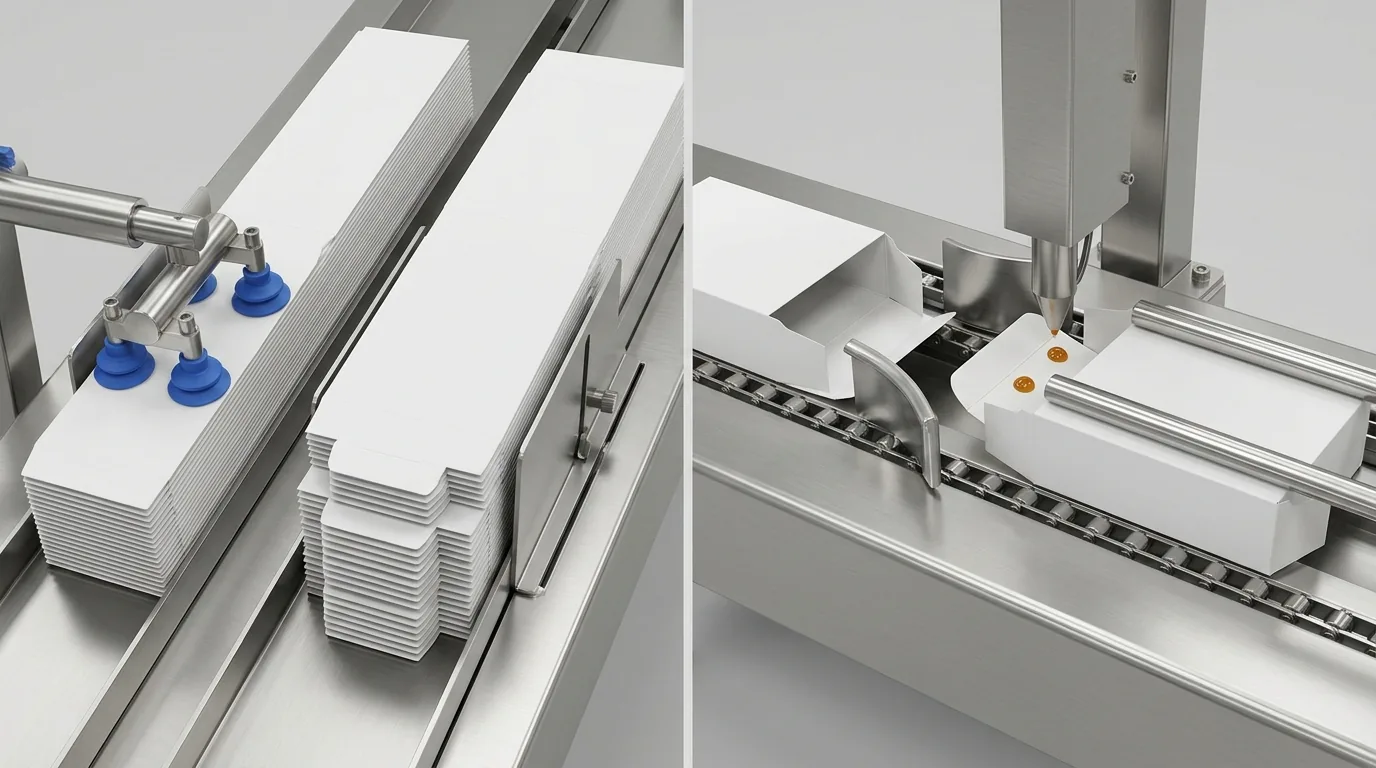
An automatic cartoning machine picks a single flat blank from a magazine stack, erects the folding carton upright or horizontally, loads the product, and closes the ends, so multi-layer pre-glued bottom flaps require matched magazine guides and controlled paperboard stiffness compared with flat tuck blanks.
Why does paperboard stiffness govern blank magazine feeding?
Paperboard stiffness is one of the primary material properties affecting how smoothly flat blanks run through the machine that erects, fills, and closes them, while also reducing carton bulge under settling flowable contents. Unlike tensile properties that rise with sheet density, a standard engineering rule of thumb holds that paperboard bending stiffness is proportional to the 1.6 power of sheet caliper. Multi-ply paperboard also delivers higher creasing and folding performance than single-ply board by layering distinct, individually treated pulp plies, and validating carton compatibility with the cartoner and conveyors can require finite element analysis or an experimental process capability study.
When should an automated line switch to tuck or hot-melt glue closing?
Cartoning machines divide into horizontal cartoners that push products in from the side through an open end and vertical cartoners that load products downward from the top; compare both product-entry layouts in our types of cartoning machines guide. When required good output in good cartons/min and operating hours/day per format justifies full automatic cartoning, feeding flat unglued blanks and sealing end panels on the machine—either by inserting tuck flaps or by applying adhesive such as hot-melt glue—avoids pre-glued bottom stack build-up in the magazine while securing the closure.
What Should an Auto Bottom Carton Dieline Specify Before Tooling?
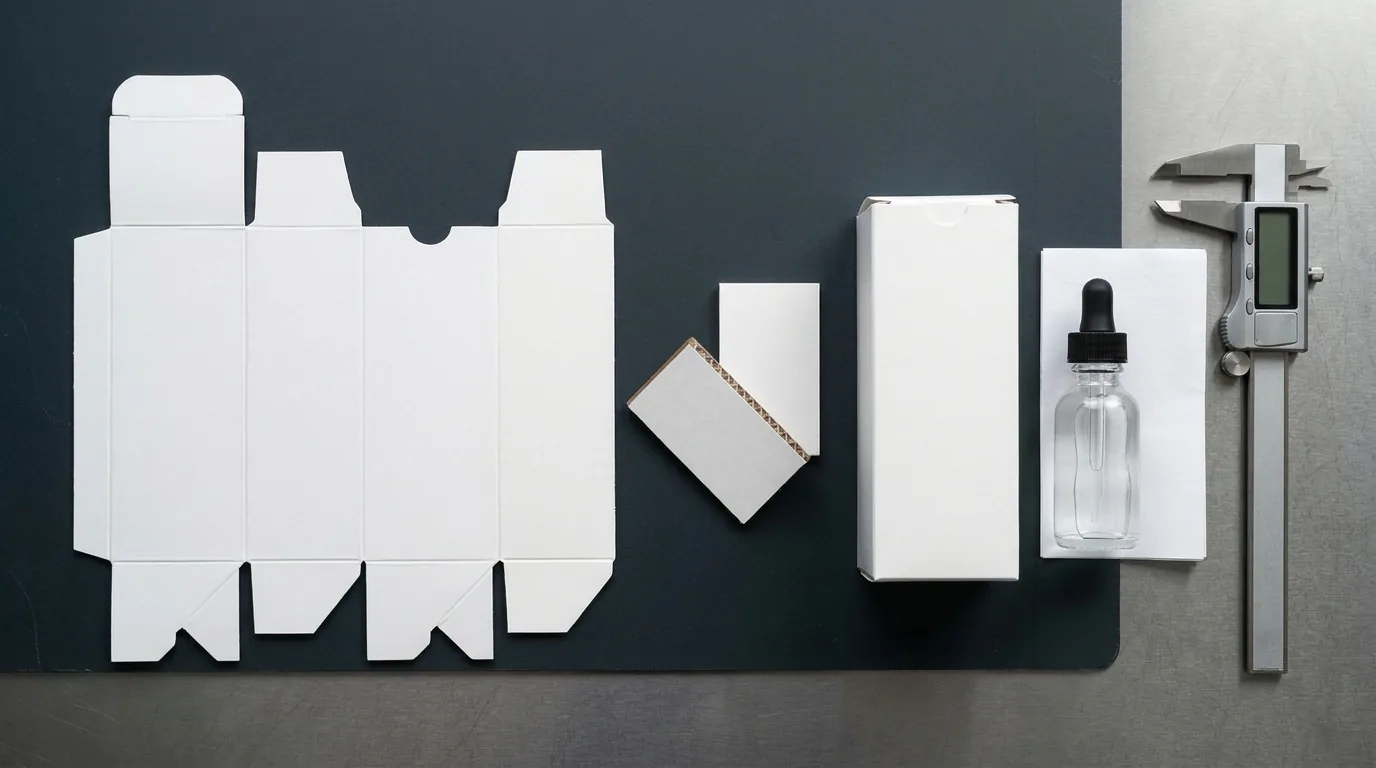
Before ordering die-cutting or cartoner tooling, an auto bottom carton dieline PDF in mm needs to specify tight product-fit internal dimensions without excess void space, board grade for weight and stacking, sheet caliper in mm or points alongside grammage in g/m², multi-ply crease positions, and any internal partition slots.
Because cutting machinery typically limits standard folding cartonboard thickness to 0.81 mm (0.032 in), conventional folding cartons generally hold only a few pounds or kilograms of material. In North American carton specifications, paperboard caliper is usually expressed in thousandths of an inch (0.001 in) or points, where a 0.024 in sheet equals 24 points, alongside metric grammage measured in grams per square meter (g/m²). Clean white virgin solid bleached sulphate (SBS) paperboard is used for food and cosmetic cartons, whereas heavier payloads exceeding single-ply board limits increasingly adopt E-flute and F-flute microflute boards.
| Dieline parameter | Specification unit or threshold | Machine & structural engineering impact |
|---|---|---|
| Internal carton & insert dimensions | Millimeters (mm) on supplier PDF drawing | Sizes the carton around the primary product without excess void space and reserves clearance for die-cut partitions or folded leaflets. |
| Folding cartonboard thickness ceiling | 0.81 mm (0.032 in) cutting-machinery limit | Limits standard single-ply folding cartons to a few pounds or kilograms; heavier payloads step up to E-flute or F-flute microflute. |
| Sheet caliper & metric grammage | Points (0.001 in; 0.024 in = 24 points) and grammage in g/m² | Bending stiffness scales with the 1.6 power of sheet caliper, governing smooth erecting, filling, and flap closing. |
| Paperboard ply & grade construction | Multi-ply virgin SBS or corrugated E/F microflute | Multi-ply pulp layers raise creasing and folding performance across pre-glued crash-lock hinges and tuck flaps. |
How Does an Auto Bottom Folding Carton Compare With Tuck Cartons?
Pre-glued auto bottom cartons deliver the fastest tape-free hand setup and secure bottom load strength for heavier containers, standard tuck-end cartons feed cleanly as single-layer blanks for lighter products, 1-2-3 snap-lock bottoms avoid factory gluing at slower manual speed, and inline hot-melt glue flaps seal automated cartoner runs.
| Carton bottom style | Blank & closure geometry | Payload & line fit | Primary failure risk & prevention |
|---|---|---|---|
| Pre-glued auto bottom (crash-lock) | Shipped flat with factory pre-glued interlocking bottom flaps and an upper tuck or glue closure. | Heavier bottles, cosmetic jars, and multi-packs on manual benches or vertical top-load stations with no bottom tape. | Folded multi-layer base hangs up in an unverified erector magazine: qualify supplier blanks in an experimental process capability study. |
| Tuck-end folding carton | Single-layer flat blank closed via a hinged tuck flap and locking tab (tongue) inserted into the carton body. | Lighter unit loads within the 0.81 mm (0.032 in) board limit on horizontal or vertical automatic cartoners. | Heavy container pushes an unglued bottom tongue open during transfer: switch to a pre-glued auto bottom or hot-melt glue sealing. |
| 1-2-3 snap-lock bottom | Interlocking bottom flaps folded sequentially by hand without factory pre-gluing. | Manual packing runs seeking interlocking bottom support without converter pre-gluing. | Hand setup is slower and less consistent than an auto lock bottom, raising packing labor hours as shift demand rises. |
| Inline adhesive / hot-melt glue carton | Flat unglued blank picked from a magazine stack, erected, filled, and sealed with hot-melt glue on the cartoner. | Automated lines sized around required good cartons/min and operating hours/day. | Stiffness mismatch causes erecting or closing jams: specify caliper in points and g/m² and verify on supplier blanks. |
What Samples Should Buyers Prepare Before Cartoner Qualification?
Before comparing cartoning machine speeds, prepare finished primary packages with photos and dimensions in mm, a carton dieline PDF in mm alongside physical flat blanks and closed cartons from your supplier, folded leaflet samples in mm, and target output in good cartons/min for sample testing.
On our cartoning projects, engineers match the primary product and carton blank before comparing machine rates because a model name alone does not confirm loading direction or included stations. Defining closing style (such as tuck-in flaps or adhesive sealing), side batch coding, and missing-product sensors upfront separates required stations from optional equipment, while upstream wrapper integration requires wrapper make and model, incoming packs/min, product spacing in mm, layout drawings, and signal interface details.
| Qualification item | Measured data or sample to supply | Station & closure decision confirmed |
|---|---|---|
| Primary package & internal support | Wrapped units, bottles, or blister packs with photos, dimensions in mm, and any die-cut partition or insert | Confirms horizontal side-entry vs vertical top-load orientation and internal void clearance. |
| Carton dieline PDF & supplier blanks | Carton drawing PDF in mm, board grade (SBS or E/F microflute), caliper in points and g/m², plus flat and closed samples | Verifies magazine pick geometry, 1.6-power caliper stiffness, and crash-lock vs tuck or hot-melt closing. |
| Leaflets, coding & sensor stations | Folded and unfolded leaflet size in mm with PDF and sample, side batch code location, and missing-product check | Separates required leaflet insertion, coding, and inspection stations from optional equipment. |
| Output demand & upstream wrapper link | Good cartons/min and hours/day per format, plus wrapper make/model, packs/min, spacing in mm, and interface list | Matches semi-automatic loading vs full automatic cartoning and synchronizes upstream infeed pitch. |
Frequently Asked Questions
Buyers comparing pre-glued crash-lock, unglued snap-lock, single-ply tuck-end, and inline hot-melt glue cartons review manual setup speed, standard 0.81 mm board thickness limits, 1.6-power paperboard bending stiffness, and physical supplier blank qualification before ordering carton tooling or configuring an automatic cartoning machine.
How does an auto lock bottom differ from a 1-2-3 snap-lock bottom?
An auto lock bottom ships flat with factory pre-glued flaps that lock automatically into place as the box opens for fast, tape-free hand setup, whereas a 1-2-3 snap-lock bottom uses unglued interlocking flaps folded by hand, making setup slower and less consistent than an auto lock bottom.
What is the board thickness limit for standard folding cartons?
Standard folding carton cutting machinery typically limits paperboard thickness to 0.81 mm (0.032 in), holding a few pounds or kilograms of product; heavier payloads move to E-flute or F-flute microflute boards and can add internal die-cut partitions for bottle protection.
Why does paperboard caliper control how blanks run in a cartoner?
Paperboard stiffness governs how smoothly flat blanks run through an automatic machine that erects, fills, and closes them, and bending stiffness scales with the 1.6 power of sheet caliper—specified in points (0.001 in, where 0.024 in equals 24 points) alongside grammage in g/m².
When should a line choose inline hot-melt glue over pre-glued auto bottoms?
Manual benches and lower-rate vertical top-load stations use pre-glued auto bottoms to eliminate bottom tape and lower packing labor hours, whereas automated lines sized in good cartons/min and hours/day feed flat unglued blanks and apply hot-melt adhesive on the cartoner.
What carton and product details are needed to review a LINEVO cartoner?
Prepare primary package photos and dimensions in mm, a carton drawing PDF in mm with physical flat blanks and closed cartons from your supplier, folded and unfolded leaflet sizes in mm, closing and batch-coding checks, required good cartons/min, and upstream wrapper spacing in mm.
Sources
- Wikipedia — Folding carton
- Wikipedia — Paperboard
- Wikipedia — Cartoning machine
- Kelly Box & Packaging — Pre-Glued Auto Lock & Crash Lock Bottom Boxes (pre-glued auto lock bottom mechanism, flat blank storage, and comparison against 1-2-3 snap-lock and center-meeting slotted boxes)
Discuss your application with LINEVO.
Send your carton dieline & product specs