
On this page
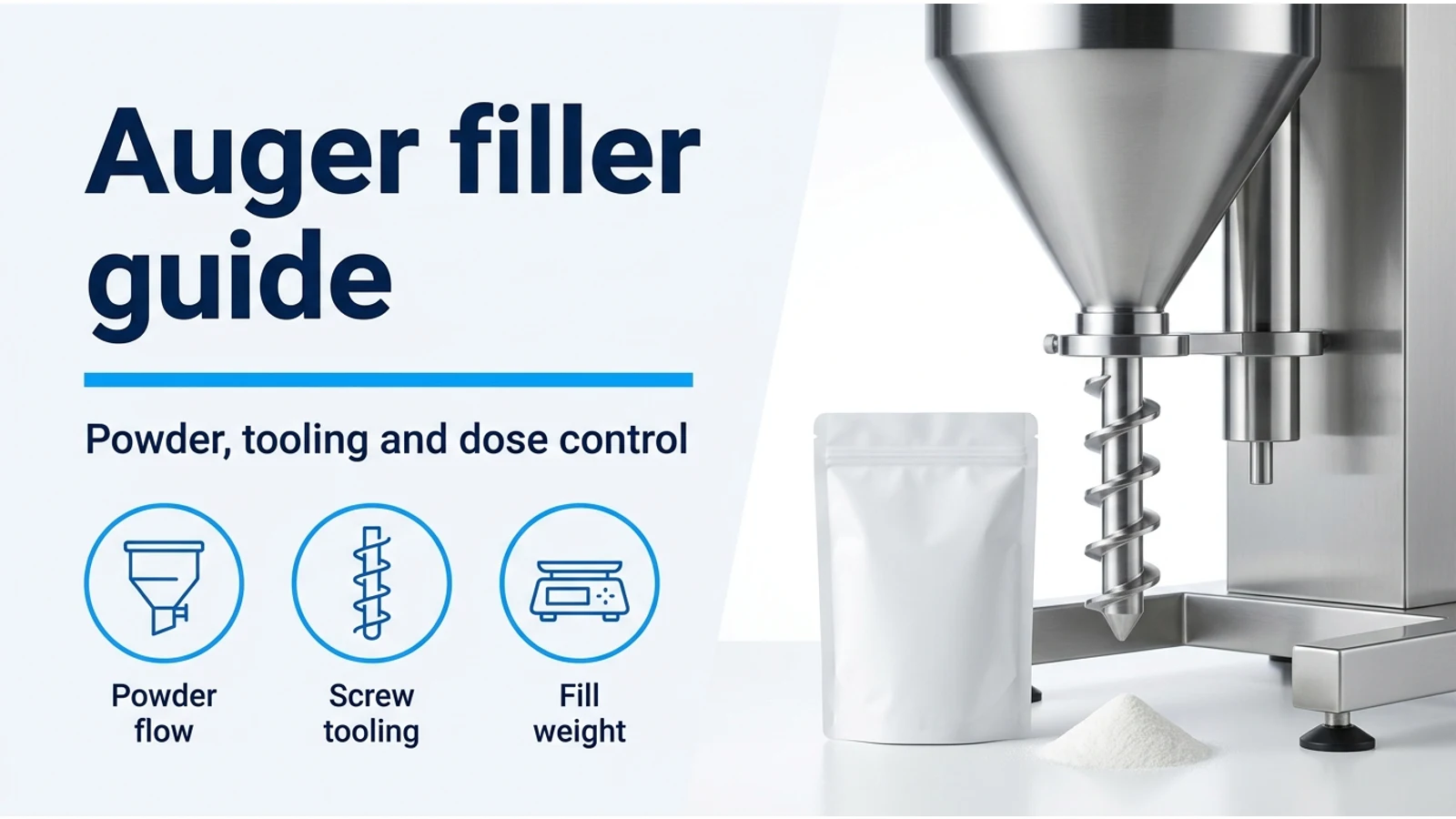
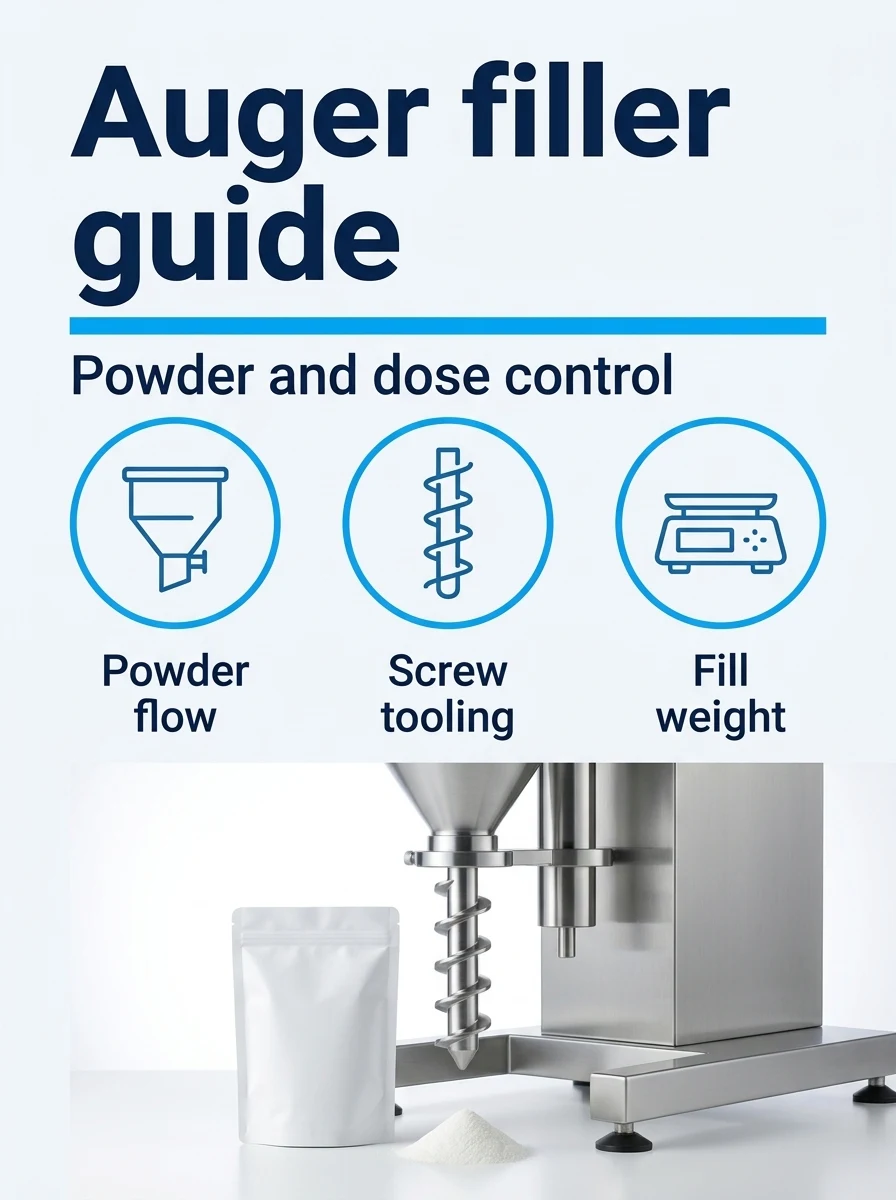
Powder dribble and drifting fill weights waste product and contaminate seals. An auger filler meters powder with a rotating screw; its tooling must match powder flow, while its control method must account for bulk-density changes.
An auger filling machine moves powder from a hopper through a funnel using controlled screw rotation. For a powder that feeds consistently, a calibrated number of revolutions can deliver a repeatable volume. Cohesive powders need help reaching the screw flights; free-flowing powders need an outlet arrangement that stops uncontrolled discharge. Choose the tooling from the actual powder, dose and pack opening, then choose volumetric or weight-based control from the required tolerance and density stability. The dosing head can feed a bagger, stick-pack machine or container line.
| Input | Typical value or condition | Why it matters |
|---|---|---|
| Powder behavior | Representative batches: flow, moisture, particle mix and aeration. | Determines feeding, agitation and cut-off tooling. |
| Bulk density | Measured g/mL, with the handling and measurement method recorded. | Converts dose mass to volume; density changes alter volumetric fill weight. |
| Dose and tolerance | Minimum, normal and maximum g/pack; agreed acceptable deviation. | Sets the tooling range and the need for weighing. |
| Pack and output | Opening dimensions, bag style and required good packs per minute. | Constrains funnel size, filling time and downstream handling. |
How does an auger filler work?
The screw carries powder through its flights and out of the funnel. The hopper holds the supply; an agitator helps feed powder into the screw; the drive controls the screw movement. Agitation and auger rotation perform different jobs, so changing one setting cannot correct every feeding problem.
In volumetric operation, the controller stops after the selected screw movement. That movement defines a displaced volume. The resulting mass also depends on how completely the flights fill and the powder's bulk density. A servo drive controls rotation; a weighing arrangement is needed to measure mass.
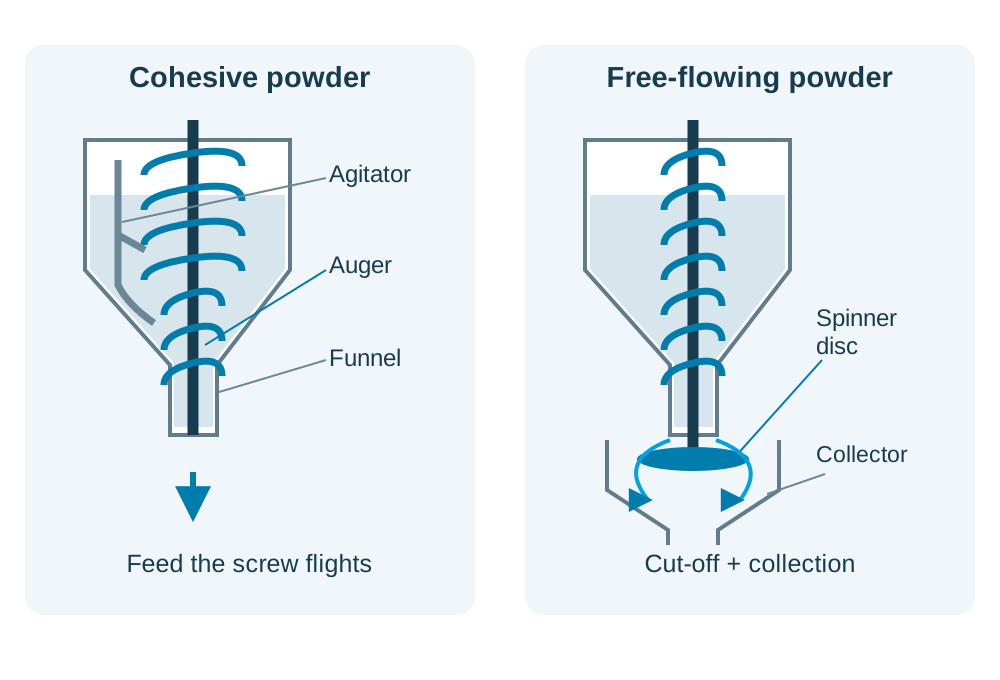
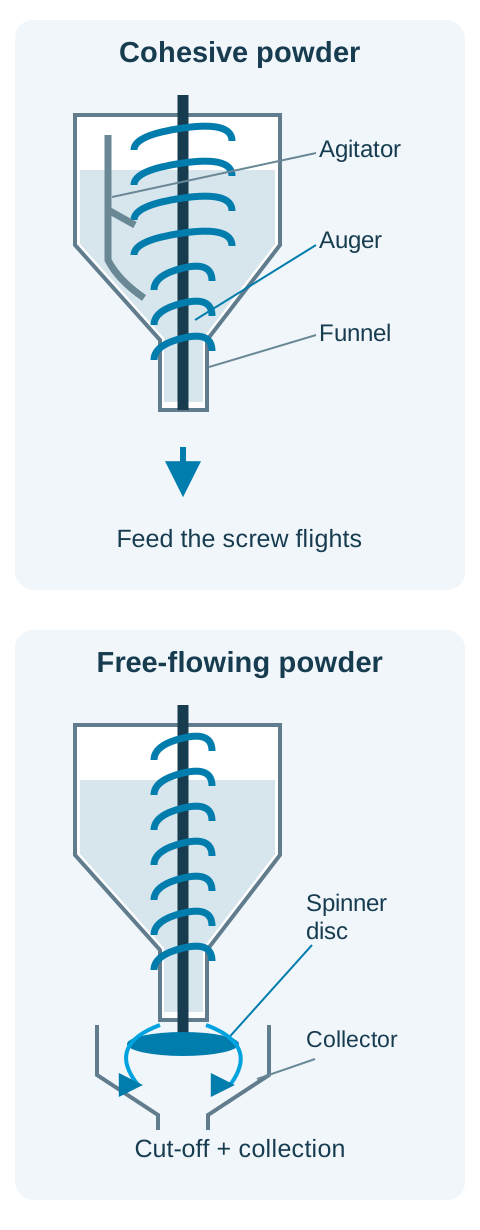
- Agitation helps fill the screw flights.
- The funnel guides the dose to the pack opening.
- A spinner disc retains free-flowing product at rest; a collector redirects the discharge.
Which powder needs which auger tooling?
Choose tooling by observed flow behavior rather than the ingredient name alone. Particle size, moisture and handling can make two batches of the same product feed differently. Check powder as it reaches the hopper, including immediately after replenishment.
| Powder behavior | Tooling to evaluate | Dominant failure mode & prevention |
|---|---|---|
| Non-free-flowing or cohesive | Self-feeding screw geometry and agitation that reaches the funnel throat. | Bridging or an empty channel above the screw starves the flights. Review agitation, replenishment and actual sample flow; excessive agitation can compact powder. |
| Semi-free-flowing | Parallel screw flights; evaluate a drip washer, outlet lip or grid if material dribbles. | Residual discharge after the screw stops changes dose and soils the pack. Check cut-off on the actual powder; compressive tooling can damage delicate granules. |
| Free-flowing granular powder | Straight auger, matched spinner disc and collection funnel, or another validated cut-off arrangement. | Gravity flow continues through an unrestrained outlet. Match the disc, funnel gap and collector to flow and opening; stopping rotation alone may leave product running. |
Fine dust and aeration are additional characteristics, not separate flow classes. Review dust collection at the filling point and keep the seal area clear. Confirm feeding and settling with the intended transfer method rather than testing only powder scooped from a quiet container.
How do you size an auger filler?
Size the screw and funnel around dose volume, pack opening and available filling time. A larger screw moves more powder per revolution, but may give coarse adjustment at a small dose. A smaller screw can improve adjustment resolution while taking longer to deliver a large dose. A wide dose range may require more than one tooling set.
Convert dose weight to an effective volume
Dose mass (g) ≈ bulk density (g/mL) × effective volume per revolution (mL/rev) × revolutions. Effective volume per revolution is established with the powder and tooling; screw diameter or theoretical pitch volume alone does not account for incomplete flight filling.
At 0.50 g/mL, 5 mL/rev and 10 revolutions the dose is 25 g. If bulk density falls to 0.45 g/mL with the same volume and revolutions, the dose drops to 22.5 g, a 10% shortfall. Actual volume per revolution is measured with your powder during sample dosing.
Check the opening and cycle budget
Provide the usable pack opening, including the space taken by pouch grippers or a forming tube. The funnel must deliver the dose into that opening without obstructing presentation. Confirm its discharge position and the time needed for the powder to settle clear of the closing area.
Available cycle time (s/pack) = 60 ÷ required packs/min. A single sequential head at 40 packs/min has 1.5 s for filling, settling and handling. If those steps take longer, the line needs parallel or overlapping stations with a timing review; increasing screw speed alone may increase dust or disturb flight filling.
How is auger fill accuracy controlled?
Control starts with consistent powder supply and tooling, then adds the weighing method needed for the target tolerance. Record individual fill weights through hopper replenishment and batch changes, because an average weight can hide both underfills and overfills.
| Control approach | What it controls or measures | Dominant failure mode & prevention |
|---|---|---|
| Volumetric screw control | Repeats calibrated screw movement; finished samples are weighed separately. | Density or flight-fill changes alter mass. Stabilize hopper feeding and verify weights at agreed points. |
| Volumetric fill with weight feedback | Uses downstream weight data to adjust subsequent doses and correct trends. | A correction affects later packs. Confirm inspection coverage, reject handling, tare treatment and feedback response. |
| Gravimetric auger filling | A load cell or balance measures mass during filling; bulk and fine-fill stages may be used. | Powder already falling after cut-off adds mass; scale settling takes time. Verify cut-off compensation and final net weight at the required rate. |
OIML R 61-1:2017, section 2, covers automatic gravimetric filling instruments that produce predetermined individual fill masses by automatic weighing. A revolution-controlled head without automatic weighing falls outside that description. Use the distinction to specify what the proposed weighing system does; the standard's scope does not establish approval of a particular machine.
Where does the auger head fit in a packaging line?
The dosing principle can stay the same while the pack-making machinery changes. For roll-film bags, start with vertical form fill seal machines. For portioned powders, compare powder stick-pack and sachet configurations. Product-specific routes are compared for ground and instant coffee and for pharmaceutical powder sticks and sachets. For jars or other containers, use the filling-machine overview to discuss container presentation and closing.
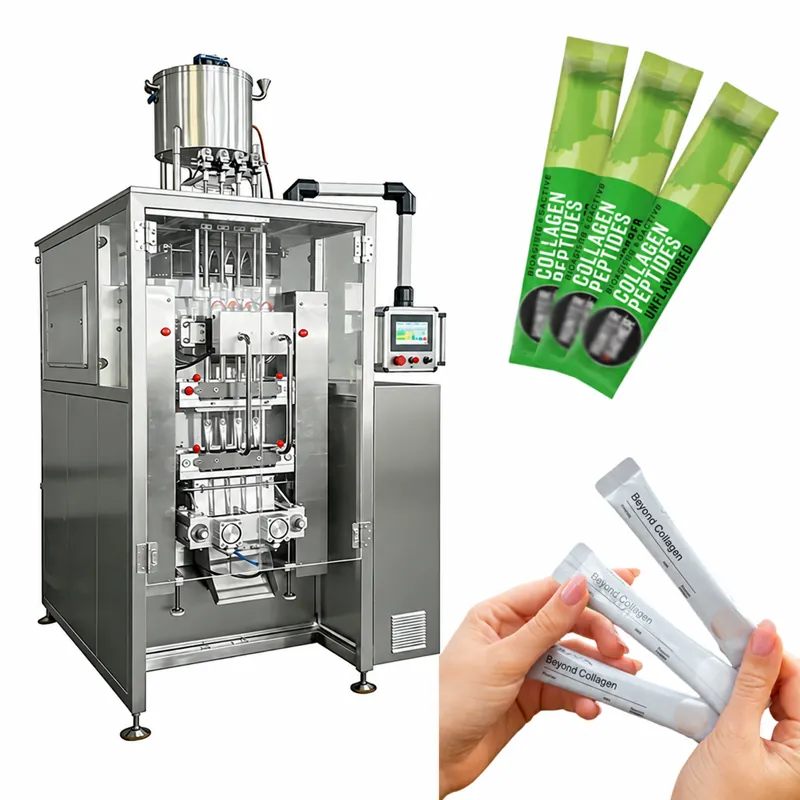
Synchronize dose release with the bagger's filling window. Powder must leave the sealing area before closure; the line also needs a plan for incomplete doses, stops and rejected packs. For multi-lane equipment, compare weights by lane rather than pooling the results. If sticks are then boxed, include the counting and transfer interface in the cartoning-machine discussion.
LINEVO builds auger-dosed powder configurations. The screw set, cut-off, dust control, weighing arrangement and output are specified in the quotation for each project. Use the sample-testing preparation guide to agree which uncertainties the trial should resolve.
What losses belong in the cost comparison?
Compare product giveaway, rejected packs and changeover time over the same production period. A purchase price comparison leaves these costs hidden. Keep rejected-pack material separate from excess product in accepted packs so the same loss is not counted twice.
| Loss item | Formula | What to record |
|---|---|---|
| Giveaway in accepted packs | Accepted packs × mean excess g/pack ÷ 1,000 = kg. | Mean overfill by lane and shift from check-weigher data. |
| Rejected pack materials | Attempted packs − accepted packs = rejected packs. | Rejects by cause (light, heavy, seal contamination, start-up); record product recovery separately. |
| Changeover time | Number of changes × recorded minutes/change = minutes. | Measured minutes per change, including cleaning and rechecking the first acceptable dose. |
For a same-period cost ledger, multiply giveaway by your product cost/kg, discarded packs by material cost/pack, and changeover hours by the applicable labor or constrained-line cost. Add energy and maintenance over that same period. Count downtime as lost output only if production cannot be recovered elsewhere; avoid charging both the same lost output and its full contribution twice. Ask whether dedicated tooling reduces your actual cleaning or adjustment time, and include its storage and replacement requirements.
Powder sample testing checklist
Prepare the powder, target dose and pack together so a trial can establish both metering and clean filling. Copy the checklist below into your project brief, marking unknown fields for measurement. Agree sample quantity and shipping instructions before sending material.
| Record | What to include | What it establishes |
|---|---|---|
| Representative powder | Product, batch, particle mix, flow behavior and any handling restrictions. | The material used to evaluate feeding and cut-off. |
| Bulk density | g/mL, measurement method, loose or settled condition and change after transfer. | Dose volume and potential mass drift. |
| Moisture and storage | Moisture result with method, storage conditions and expected batch variation. | Whether caking or changed flow needs evaluation. |
| Target fill | Minimum, normal and maximum g/pack; tolerance and tare method. | Tooling range and final net-weight acceptance. |
| Bag or container | Bag style, opening dimensions and film or container samples. | Funnel fit, filling position and closing-area cleanliness. |
| Trial acceptance record | Good packs/min, lane-by-lane weights where relevant, replenishment events, rejects and changeovers. | Whether the proposed arrangement meets the agreed conditions. |
Discuss your powder filling requirements with the powder details, dose range, bag or container and required good output. Our engineering team can review the proposed configuration and agree whether a sample test is needed. The quotation preparation page covers the wider project brief.
Sources
Auger operation and powder-specific tooling are described from OEM technical documentation and our own powder configurations and sample tests. The screw, powder, package and weighing arrangement are validated together in the sample trial before acceptance limits are agreed.
Standards reference: OIML R 61-1:2017, Automatic gravimetric filling instruments, section 2. Its scope concerns automatic weighing, rather than volumetric screw movement alone. Powder behavior and project requirements determine which checks belong in the agreed trial.
Discuss your application with LINEVO.
Discuss your powder filling requirements