
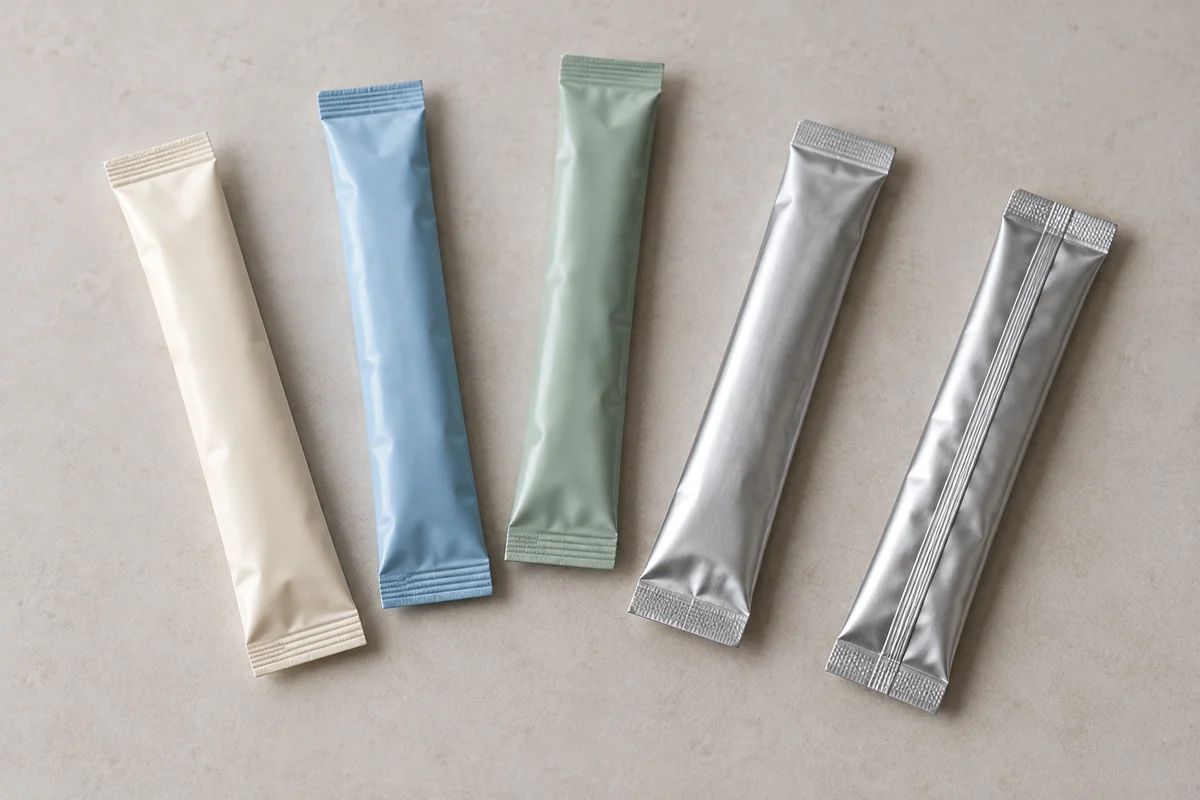
Five narrow flexible stick packs in muted colors and silver, including a silver pack with its back seam visible.
A stick pack is a narrow, tube-like single-serve package used for products such as coffee powder, drink mixes, sugar, sauces and gels. Its conventional structure joins the film along the back and seals it across both ends. Finished size depends on the portion, product behavior, seal layout and film, so a pack drawing is more useful than a general size label. This guide explains how to recognize the format and record the details needed for a packaging discussion.
- Shape: a long, narrow flexible pack containing a single portion.
- Seals: a longitudinal back seam and transverse seals at both short ends.
- Dimensions: flat width and overall cut length, with the seal regions identified.
- Product fit: powders, granules, liquids and gels, subject to formulation and packaging review.
On this page
What makes a pack a stick pack?
A stick pack has a long, narrow body made from flexible film. The sealed package holds a portion that the user opens for pouring, mixing or squeezing. The name describes the package format; it does not specify a fill weight, film structure or particular machine configuration.
A coffee portion and a gel portion may both use a stick-shaped package, although their materials, dispensing behavior and filling requirements differ. Begin with a sample or sketch of the finished pack. The stick pack machine family is the next step when that format is already defined.
Where are the seals on a stick pack?
On a conventional stick pack, the back seam runs along the long axis, while end seals close the two short ends. The front can look smooth because the long seam sits on the opposite face. Turn a sample over before describing its seal layout or approving artwork around the seam.
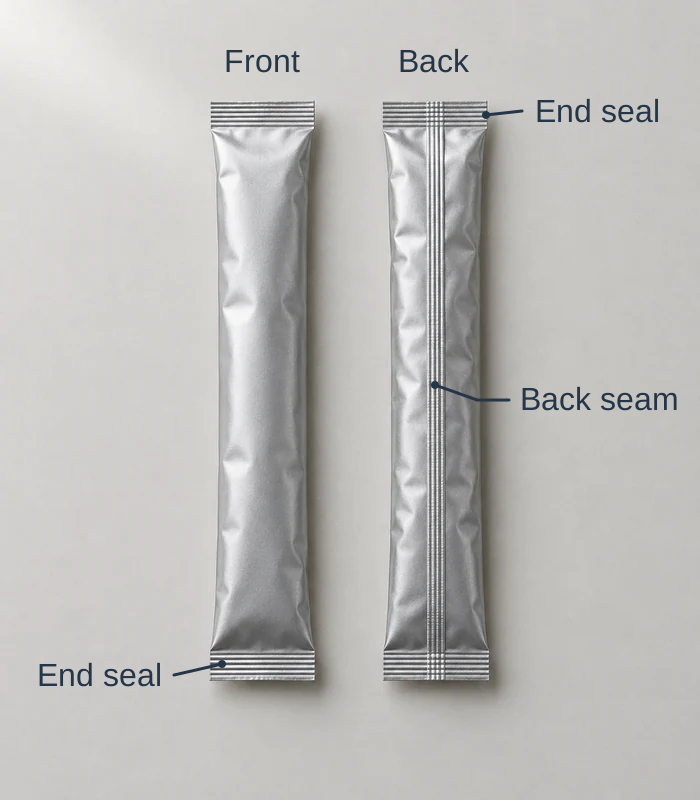
Front and back views of silver stick packs with labels pointing to the end seals and the back seam.
| Part | Where it sits | What to record |
|---|---|---|
| Back seam | Along the length on the back | Seam type and position on the drawing |
| End seals | Across the top and bottom short ends | Seal regions and their relationship to the product area |
| Product area | Inside the body between the end seals | Space for the fill and its behavior during dispensing |
| Opening feature | At the designated opening end | The cut pattern and any tear notch |
A lap seam joins overlapping film faces and lies relatively flat. A fin seam joins the inside faces of the film edges, leaving a projecting fin. Both describe the longitudinal joint. Neither term, by itself, establishes the seal strength or suitability of the film for a particular product.
Small flat packets can have a different arrangement of seals. The sachet definition and seal layouts explain those neighboring formats without changing the dimensions you need to record for a stick. To compare a stick with three-side and four-side sachets, read stick pack vs sachet.
What determines stick pack dimensions?
Stick dimensions follow the required portion, the space it occupies and the seal and opening layout. Record flat width and overall cut length on the finished-pack drawing. Overall length includes the end seals; it is longer than the region available for the product. A dose weight alone does not define these dimensions.
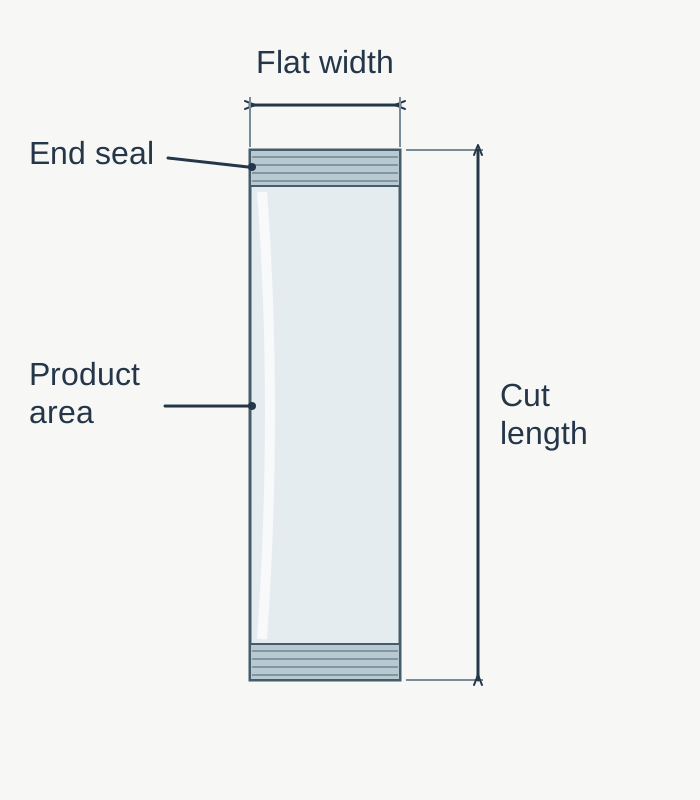
Stick pack schematic marking flat width, overall cut length, end seals and the product area between the seals.
| Input | How to record it | Why it changes the pack |
|---|---|---|
| Flat width | Outside edge to outside edge on the laid-flat pack, in mm | Defines the finished width being discussed |
| Overall cut length | Top cut edge to bottom cut edge, in mm | Includes both end-seal regions as well as the body |
| End-seal regions | Show each seal region on the drawing | Separates sealed film from the product chamber |
| Fill per pack | Target mass in g or volume in ml, with product identity | Connects the intended portion to the available space |
| Opening | Mark the opening end and any notch | Sets the dispensing feature that must fit beside the seals |
| Film | Attach the film structure and sealing-layer information | Provides material information for seal and format review |
The same mass of two powders can occupy different volumes. A liquid or gel has its own density and dispensing behavior. Keep the product description beside the target dose rather than treating grams, milliliters and pack dimensions as interchangeable. The powder packaging input checklist covers the product information needed when a powder portion must fit a proposed stick.
Which stick pack features can vary?
Stick packs can vary in the back seam, cut pattern, opening feature and body shape. These are separate choices. A zigzag cut describes the cut edge; a tear notch identifies a starting point for opening. Write the required feature on the drawing so a picture does not become an ambiguous tooling request.
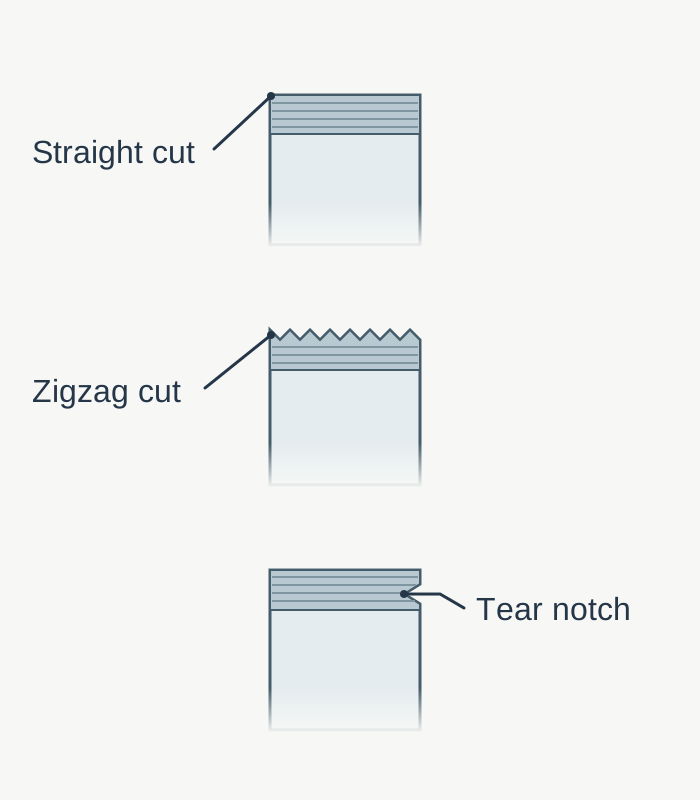
Enlarged stick pack end details showing a straight cut, zigzag cut and a side tear notch in the seal region.
| Feature | What the description means | What to specify |
|---|---|---|
| Fin or lap seam | How the long film edges join | Required seam type and its position |
| Straight, zigzag or rounded cut | The shape of the cut edge | Which ends carry the pattern |
| Tear notch | A small cut intended to help start opening | Location on the pack drawing |
| Shaped body or dispensing end | A pack outline that differs from a plain narrow stick | A sample or outline drawing and the intended dispensing action |
Public equipment catalogs show these features as format options. That does not mean every machine can make every option. A shaped or easy-open pack needs its tooling and film confirmed for the project. For a liquid or gel, the liquid and sauce packaging requirements help connect the opening to the material being dispensed.
Which products suit stick packaging?
Stick packaging has applications for powders, granules, liquids and gels. The useful first distinction is how the product fills the narrow body and how the user empties it. Product category starts the discussion; flow, particle size, viscosity, the required portion and film information decide what needs closer review.
| Product group | Examples in the published catalog scope | What to check |
|---|---|---|
| Powders | Instant coffee, drink mixes, protein or supplement powders | How the powder flows, its dose and whether dust reaches the seal area |
| Granules | Sugar, salt and drink granules | Particle size, flow and whether the intended opening allows dispensing |
| Liquids | Liquid portions and sauces | Viscosity, density and behavior at the intended filling conditions |
| Gels and pastes | Energy gels, wasabi, mustard and lotion | How the portion fills and leaves the narrow pack |
If a powder needs more explanation than its name provides, use the powder stick pack and sachet application page to record the relevant behavior. For a flowing liquid, thick sauce or gel, the liquid and sauce application page lists the material details that help separate possible packaging routes.
The intended use matters too: a powder might be poured into a drink, while a gel might be squeezed directly from the pack. Show the intended opening and describe that action in the brief. This keeps a familiar-looking pack from hiding a dispensing requirement.
Send the product description, fill amount, pack sample or drawing, film information, opening requirement and target good output through WhatsApp. We review the details and whether a sample test is needed before settling a configuration. We reply within 24 hours.
What are the practical advantages of the format?
A stick pack puts a single portion in a narrow package that is easy to carry and open for its intended use. Its usefulness depends on the product and opening. Portion size, pouring or squeezing, and the amount of readable pack information matter more than a general claim that the format is better.
| Benefit | Why it may help | Condition to check |
|---|---|---|
| Single portion | The user takes one pack rather than measuring from a larger container | The fill amount matches the intended use |
| Portable format | The small narrow package is convenient to carry | The film and seals suit handling and the product |
| Pouring or squeezing | The narrow body can support controlled dispensing | The product passes through the chosen opening as intended |
The format alone does not establish a cost saving or a sustainability result. Film structure, pack geometry and production conditions would have to be compared on the same basis. Once the pack is defined, the stick pack machine selection guide explains how product, dose and finished geometry feed into equipment selection.
When does this description need further review?
The definition explains package geometry. It cannot establish shelf life, regulatory suitability, seal performance or compatibility with a particular recipe. Those decisions need product and film evidence. A narrow stick may also be the wrong starting point when the required opening, portion or other pack features call for a different format.
Bring the film specification and product information when discussing storage protection. A foil-like appearance does not establish the barrier performance of the laminate, and a sealed sample does not demonstrate shelf life. State the protection requirement rather than choosing a material from its appearance.
If a flat packet is the intended result, review the sachet packaging route. If the proposed stick needs product-specific checks, the sample-testing preparation page explains what to send and what to agree before a run.
Questions about stick pack terminology and preparation
Use these answers to clarify wording and measurements before handing over a brief. The same package name can appear in different spellings, and a size description can refer to different measurements. A front-and-back sample photo, a dimensioned drawing and a separate fill amount keep the request clear.
Is it written “stick pack” or “stickpack”?
Both spellings occur in packaging searches and descriptions. This guide uses “stick pack” as the noun and “stick packaging” for the format. The spelling does not identify a different seam, dose or pack shape; describe those features separately.
Is the width measured on the flat pack or the filled pack?
Record the width of the laid-flat pack and say that it is a flat-width measurement. A filled stick has thickness and can present a different visible profile. Put the measurement method on the drawing so both sides discuss the same dimension.
Can the same fill weight use different stick sizes?
Yes. Check the dimension inputs before reusing a pack size for another product.
Can stick packs contain liquids as well as powders?
Yes. Liquid, sauce and gel applications exist as well as powder and granule applications. A liquid request needs its behavior and intended opening described, including viscosity and filling conditions where known. A powder configuration is not automatically suitable for that request.
What is sachet packaging?
Sachet packaging uses small flexible packets for individual portions; the term covers several seal layouts. A conventional stick describes the long, narrow back-sealed format discussed here. The guide to sachet formats explains the neighboring terminology and seal arrangements.
What is a stick pack machine?
A stick pack machine forms, fills and seals the narrow package. The pack is the finished container; the machine is the equipment that makes it. The stick pack equipment overview covers the published product branches and configuration discussion.
Method and sources
This explanation combines public manufacturer descriptions of conventional stick-pack seams and format features with trade reporting of single-portion applications and LINEVO’s authorized product catalog. The size and product tables organize inputs for a packaging discussion. They do not present a universal dimensional range or results from a LINEVO trial.
The reviewed source set includes archived format and equipment descriptions and older trade reporting used for stable package concepts. Catalog options describe possibilities in their stated scope. Project-specific film, dose, geometry and dispensing behavior still need review together. Updated October 2026.
Prepare the pack details for your inquiry
Send the product description and target fill with the pack drawing or sample photos, film specification, opening requirement and required good output. The closing table shows how to record each item. If a choice is still open, say so. We can then review the packaging route and whether a sample test is needed.
The project brief checklist adds the site and line details needed when the discussion progresses to equipment. Start with the pack information you have; a finished drawing is not required to explain the intended portion and use.
Use WhatsApp to discuss the stick pack to send the product, fill, drawing or photos, film, opening and output requirement. We reply within 24 hours.
We reply within 24 hours.
Discuss your stick pack