
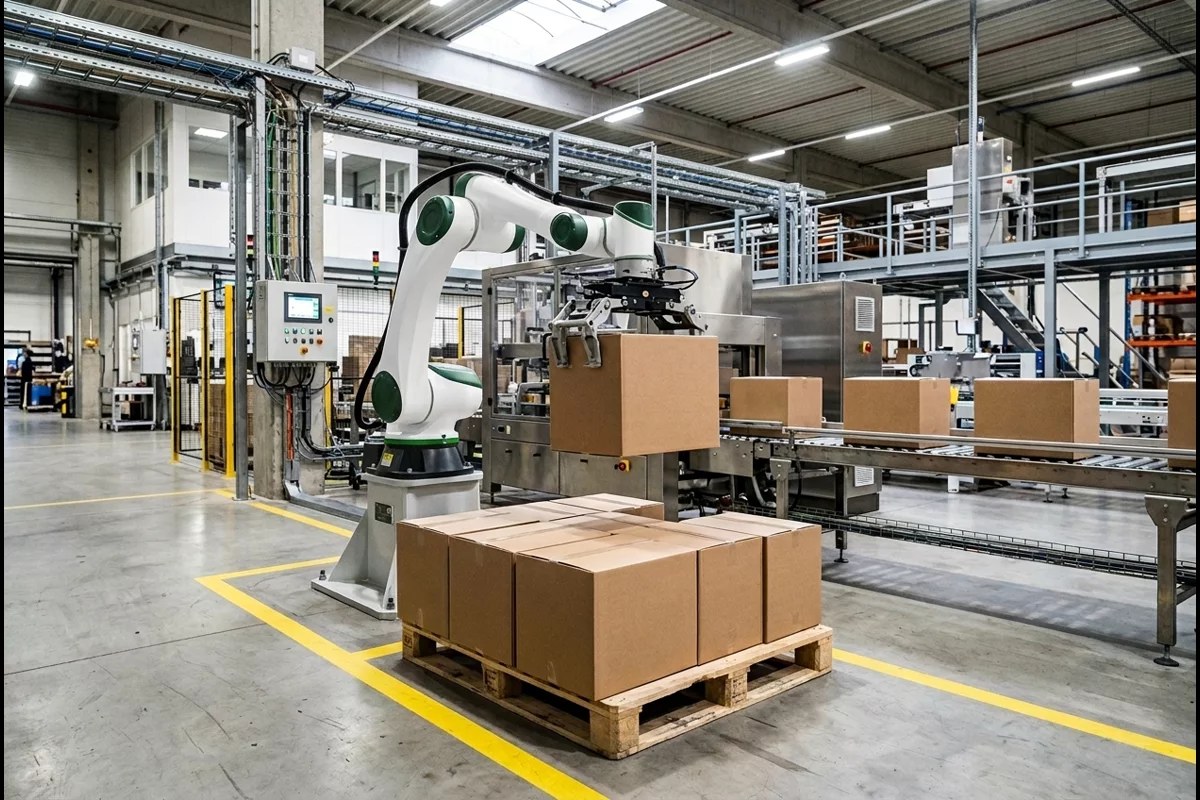
Illustration of a collaborative robot stacking corrugated cases onto a wooden pallet beside a case conveyor.
The AMT solution announced on September 25, 2026 uses a FANUC CRX-30iA collaborative robot for palletizing. A palletizing cell combines the robot with its handling tool, case arrival, pallet positions and controls. The robot is one component of that cell; its component rating does not describe the complete installed handling system.
- Distinguish the robot component from the complete palletizing cell.
- Record the handled load and the actual case presentation together.
- Resolve layout, recovery, controls and cost scope before acceptance.
On this page
What was announced, and what the cell includes
Packaging World published AMT’s supplier-submitted announcement on September 25, 2026. AMT describes a CRX-30iA-based palletizing solution with an interface for entering case dimensions and choosing patterns, and the ability to move between lines. Those are supplier statements about its system, not independent observations of your installation.
A cell is the operating arrangement around the robot: incoming cases, the handling tool, pallet positions, controls and the way completed pallets leave. Define those responsibilities using the packaging-line planning guide. A robot model reference can identify a component without describing the conveyor or pallet-handling work in the quotation.
- Cell boundary: case arrival; gripper and robot; pallet pattern; full-pallet removal; controls and site review.
Who needs a new end-of-line project record
AMT positions its announced solution for high-mix, low-volume work and tight production spaces. Those are supplier positioning statements. The situations below show which buyer records to review before judging whether the proposed cell fits; they do not establish output, space savings or payback.
| Project situation | What to review | Basis / evidence needed |
|---|---|---|
| Frequent case or pattern changes | Case dimensions and pallet-pattern change records | AMT describes high-mix work; obtain the actual SKU sequence and change procedure |
| Small production batches | Batch schedule, handling task and operating-cost assumptions | AMT describes low-volume work; compare a scoped proposal with buyer production records |
| Restricted installation space | Working envelope, pallet removal and access routes | AMT describes tight-space applications; obtain a cell layout and site review |
Operations supplies the production record, engineering reviews tooling and interfaces, and procurement collects the itemized offer. Bring those responsibilities together around the same proposed configuration.
Keep payload, case weight and reach distinct
The FANUC EU CRX-30iA technical table, reviewed October 8, 2026, lists 30 kg robot payload, 1,756 mm reach and IP67 protection. AMT’s supplier-submitted announcement, published September 25, 2026, uses 1,889 mm for reach. Keep the conflict visible and request the correct regional model revision and drawing before using either value as a confirmed cell-layout input.
| Record | Published component information / source | What the cell brief still needs |
|---|---|---|
| Robot payload | FANUC EU table, reviewed October 8, 2026: 30 kg | Case, gripper and attached-tool load approval |
| Robot reach | FANUC EU table, reviewed October 8, 2026: 1,756 mm; AMT announcement, September 25, 2026: 1,889 mm | Reconciled configuration and working-envelope drawing |
| Protection | FANUC EU body and wrist table, reviewed October 8, 2026: IP67 | Suitability of the whole installed configuration |
- Case mass + tooling and attachment mass = combined handled load to assess.
- Pair the load record with pallet pattern and height for supplier approval.
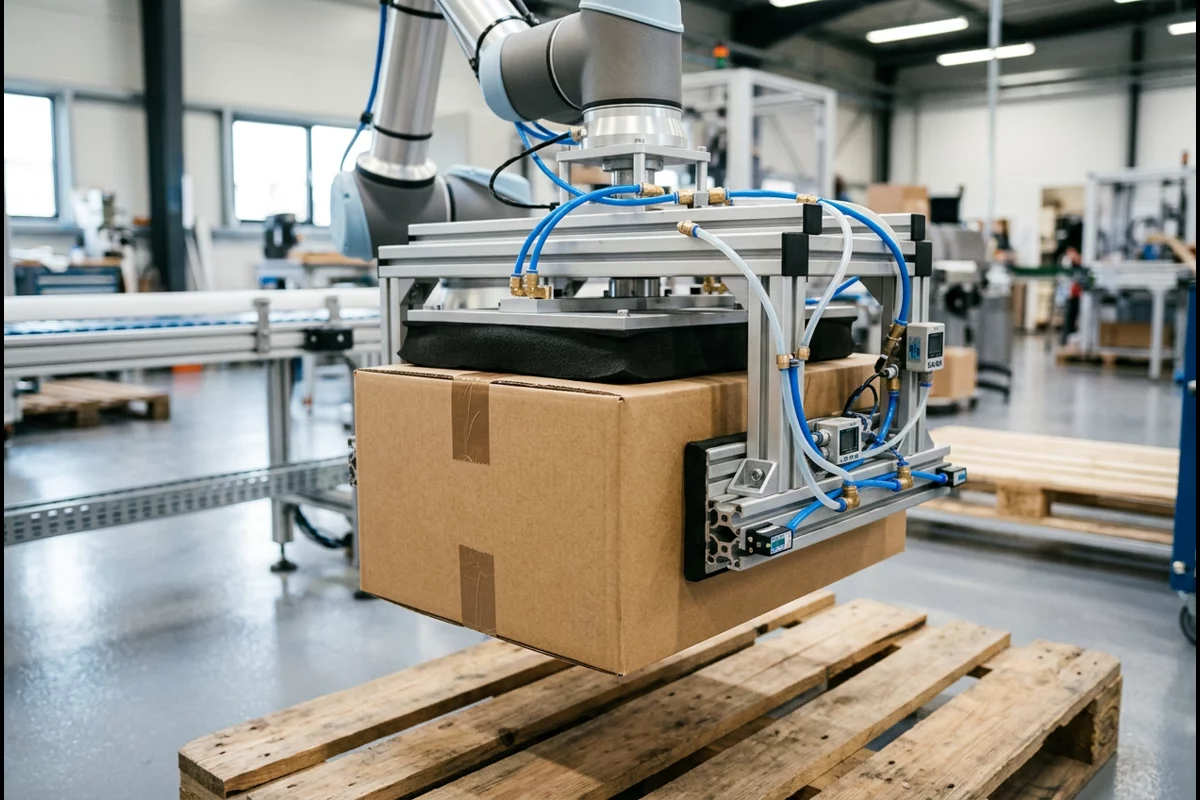
Illustration of a foam vacuum gripper holding a corrugated case above a pallet.
List the filled case mass, gripper mass and other attachments separately. Ask the integrator to assess the combined load with the required motion and tooling. Record pallet pattern and stack height on the same review sheet. The configuration terminology guide explains why a component value needs its scope and conditions wherever it is reused.
Prepare cases and pallet patterns as paired records
The brief should pair every case with its required pallet pattern. A dimensions-only list leaves the gripping surface, incoming orientation, stacking arrangement and completed-load requirement undecided. Assemble the actual filled-case information and proposed pallet drawing before discussing the operator interface or format changes.
| Buyer input | What it tells the integrator | Record to prepare |
|---|---|---|
| Filled case dimensions and mass | The load and shape to handle | Dimensioned drawing and measured production record |
| Case construction and gripping surface | The presentation the tool must accommodate | Case sample or photographs |
| Incoming orientation and arrival sequence | The pick-point conditions | Conveyor sketch and operating video |
| Pallet dimensions and pattern | The intended destinations for cases | Pattern drawing for each case |
| Stack height and load handoff | The completed-load boundary | Pallet record and removal sequence |
If the case contains folding cartons, keep the cartoning-machine scope separate from case packing and palletizing. The packaging applications directory helps identify the upstream primary pack. Neither reference establishes that a particular robot tool can grip the shipping case; that question belongs to the cell review.
Turn payback language into a documented budget
The announcement contains starting-price and short-payback claims without a project cost breakdown or operating assumptions. It does not establish your delivered cell price or savings. Ask for an itemized scope and build any investment comparison from your own production and staffing records, with the supplier’s assumptions stated separately.
- Budget record: included equipment; integration and site work; operating assumptions; documented savings; scenario comparison.
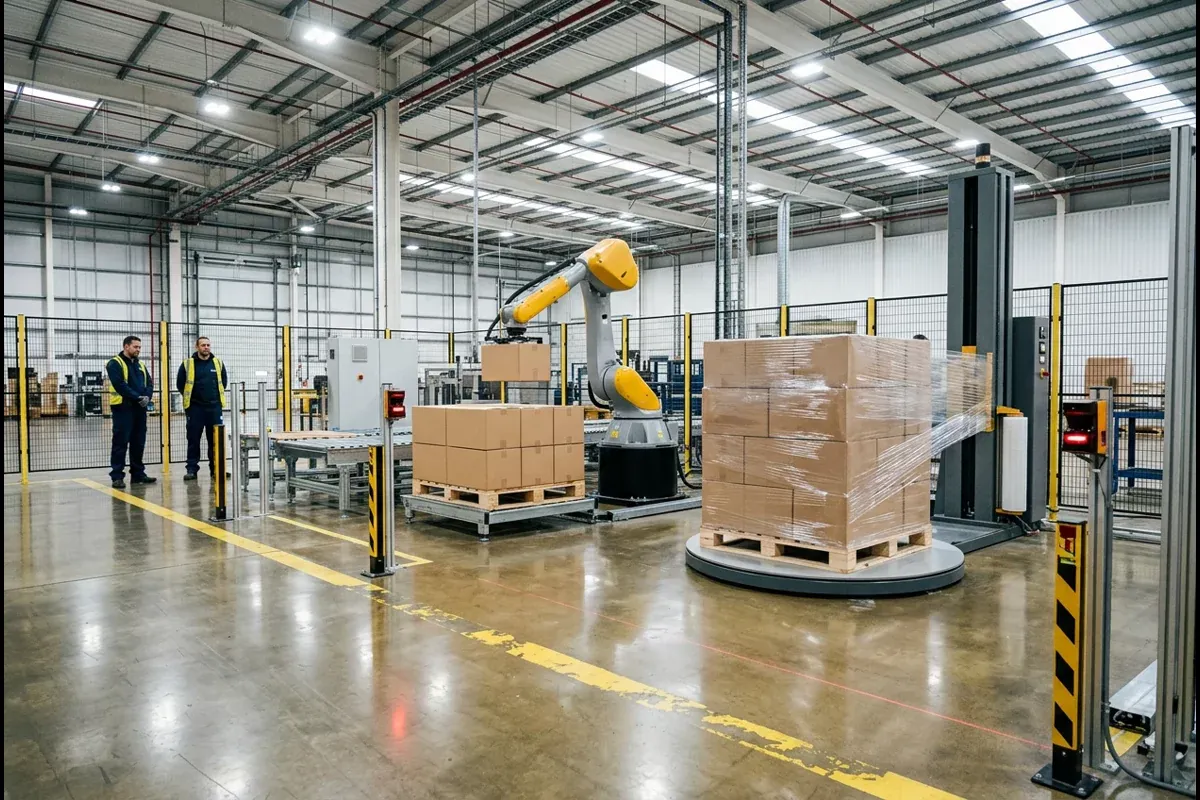
Illustration of a guarded palletizing area with a robot, a case conveyor and a turntable stretch wrapper.
| Budget question | Evidence to collect | How it affects the comparison |
|---|---|---|
| What equipment is included? | Supplier scope for tooling, conveyors, controls and pallets | Defines the boundary behind the offer |
| What site work remains? | Layout, installation and utility responsibilities | Separates supplied equipment from project work |
| What work would actually change? | Buyer staffing and task record | Identifies savings assumptions rather than promised savings |
| What operating rate is feasible? | Case-specific run and recovery record | Connects capacity to the actual task |
| What continuing costs apply? | Support, parts and operating responsibilities | Keeps the investment comparison on a consistent scope |
Use the project quotation checklist to keep equipment, formats, testing and support scope explicit for LINEVO’s separate proposal. The project services sequence explains when these responsibilities are settled. A supplier’s generic payback claim should remain outside the approved project budget until the buyer’s assumptions and cost boundary are documented.
Specify arrivals, recovery and acceptance
An acceptance brief should describe case arrival, picking, pallet placement, full-pallet removal and recovery after an interruption. Record which unit owns each signal and which party programs the connection. Request the integrator’s application risk assessment and proposed safeguarding arrangement as part of the same configuration review.
| Boundary to review | Input needed | Outcome to agree |
|---|---|---|
| Upstream case arrival | Orientation, flow and interruption record | Accepted pick presentation and controlled handoff |
| Pallet change and removal | Load pattern and site movement plan | Defined stop, resume and completed-load handoff |
| Format selection | Case and pallet-pattern schedule | Operator actions and validated settings |
| Controls and plant connection | Existing systems and required signals | Named interface scope and recovery logic |
| Operating and maintenance access | Layout and task description | Application review and agreed access arrangements |
| Acceptance run | Representative cases and proposed conditions | Good output, exceptions and observation record |
- Acceptance sequence: case and pallet records → layout and access → cycle and recovery → safety review → agreed acceptance record.
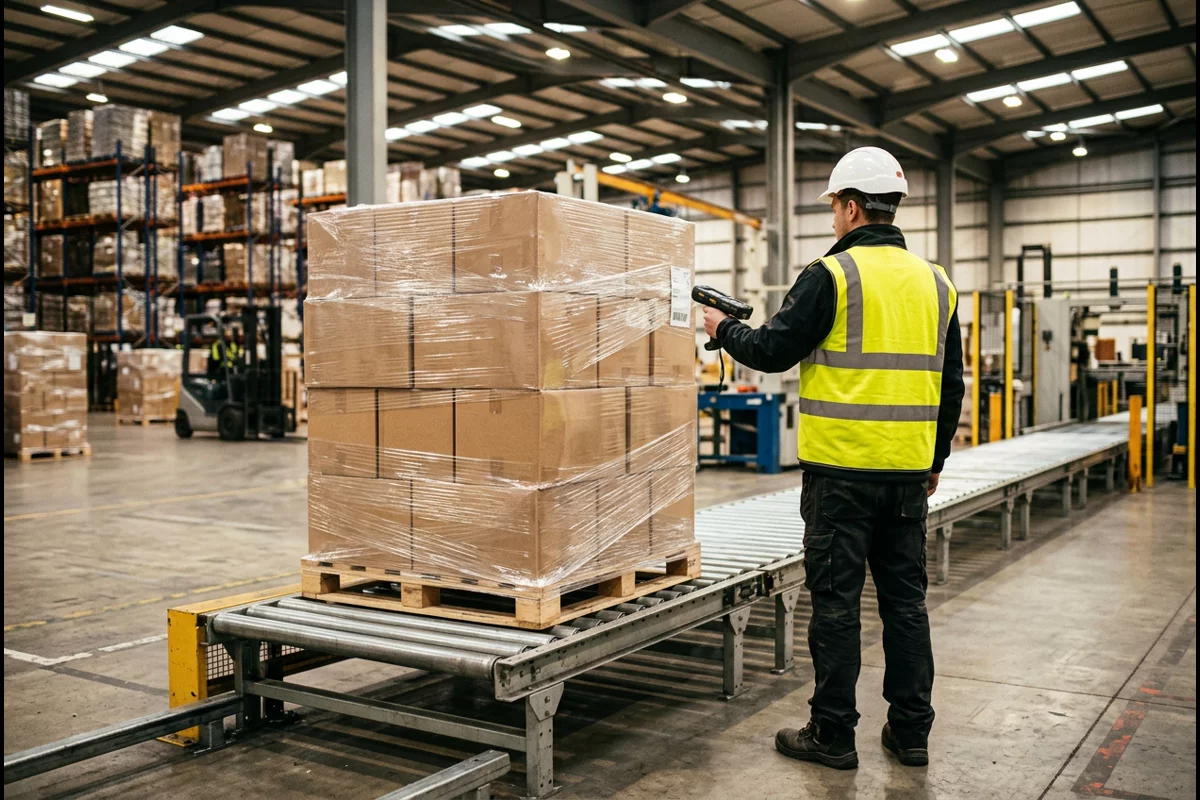
Illustration of a worker checking a stretch-wrapped pallet of cases on a discharge roller conveyor.
The installation and training checklist helps organize the site and operator inputs for LINEVO equipment. The sample-test preparation guide explains why materials and observation conditions belong to the test record. For the AMT cell, obtain the actual trial plan and safety review from its responsible parties.
When to start a supplier review
Start the cell review when you have a credible case-handling task, a proposed pallet arrangement and a project owner. Those inputs let the supplier assess the operating boundary. The news date alone does not establish a purchasing deadline, US trial appointment or delivery slot.
| Event or project step | Date or condition | Source nature |
|---|---|---|
| AMT announcement published | September 25, 2026 | Supplier-submitted publication |
| This component/source review | October 8, 2026 | Editorial review |
| Case-specific proposal and trial | To be agreed with AMT | Project evidence required |
| Order and delivery schedule | To be confirmed in the contract | Supplier commitment required |
Where a manual task is being considered for automation, record the actual cases, staffing, production schedule and interruptions before asking for a financial result. Where the primary packaging equipment is changing, use the machine family directory to identify LINEVO’s possible upstream scope and keep the cell responsibilities as a separate line of the project.
Who can close the remaining questions
Route each open question to the party that can supply its evidence. The component manufacturer can clarify a robot revision; the integrator can define its complete cell; the buyer can supply production and site records. A single model number cannot answer all of those questions.
| Unresolved item | Responsible confirmation | Document requested |
|---|---|---|
| Robot reach discrepancy and revision | FANUC and AMT | Matching model datasheet and cell drawing |
| Maximum approved case and tool load | AMT | Tooling and application load review |
| Cases per minute and recovery conditions | AMT with buyer samples | Defined trial and acceptance protocol |
| Layout, relocation and safe access | Integrator and buyer’s site team | Application review and dimensioned layout |
| Plant-system integration | Integrator and plant controls owner | Signal/interface specification |
| Cost scope, service and delivery | AMT contracting team | Itemized proposal and project terms |
| Payback assumptions | Buyer’s operations and finance teams | Site-specific cost and operating records |
For equipment purchased within LINEVO’s own catalog, the spare and change-parts guide identifies the model, part and format records needed for support. Keep those records separate from robot maintenance or integrator support commitments; a packaging-project inquiry does not automatically include either.
When this does not apply
The article is not a specification for every CRX-30iA-based palletizer, and it does not compare other system suppliers. It provides no measured cell throughput, guaranteed box weight, safety approval or confirmed return on investment. The word collaborative does not supply your application review or settle the required safeguarding arrangement.
The official robot page also contains a higher-payload highlight without explaining the conditions beside the standard technical table. This article does not transfer that highlight to AMT’s solution. Ask for the exact configuration. Likewise, IP67 in the component table is not a protection statement for the gripper, controller, conveyors or installed cell.
Related questions from buyers
What belongs in a palletizing-cell quotation?
List the robot and controller, gripper and attachments, case conveyors, pallet positions and handling, controls, integration and commissioning. Compare those items with site work and support listed separately. The component robot price covers a different scope from the delivered operating cell.
What is FANUC CRX?
CRX is FANUC’s collaborative robot series. The CRX-30iA is the robot component named in AMT’s palletizing announcement. A complete cell also includes its handling tool, incoming-case arrangement, pallet positions and controls; specify those items separately from the robot model.
Does robot payload equal the allowable case weight?
No. The handling tool and other carried attachments are part of the combined load along with the case. Record each mass separately and request application approval for the combined load, required motion and pallet pattern. A component payload alone cannot establish the permitted filled-case weight.
Method, sources and related preparation
Compiled from AMT’s supplier-submitted announcement published September 25, 2026 and FANUC’s EU CRX-30iA technical page, reviewed October 8, 2026. The announcement is a supplier statement, not an independent media evaluation. The official component page does not validate the complete cell. The record tables are LINEVO editorial planning aids and the photographs are generated illustrations, not the AMT cell; no physical test or financial outcome is claimed. Source addresses and capture details are retained in the evidence ledger.
For related preparation: packaging project resources explain performance conditions and equipment terminology; line planning maps adjacent processes; installation preparation organizes site records for LINEVO’s equipment. Use them to define that separate scope alongside the third-party cell review.
We reply within 24 hours.
Discuss LINEVO packaging scope