
On this page
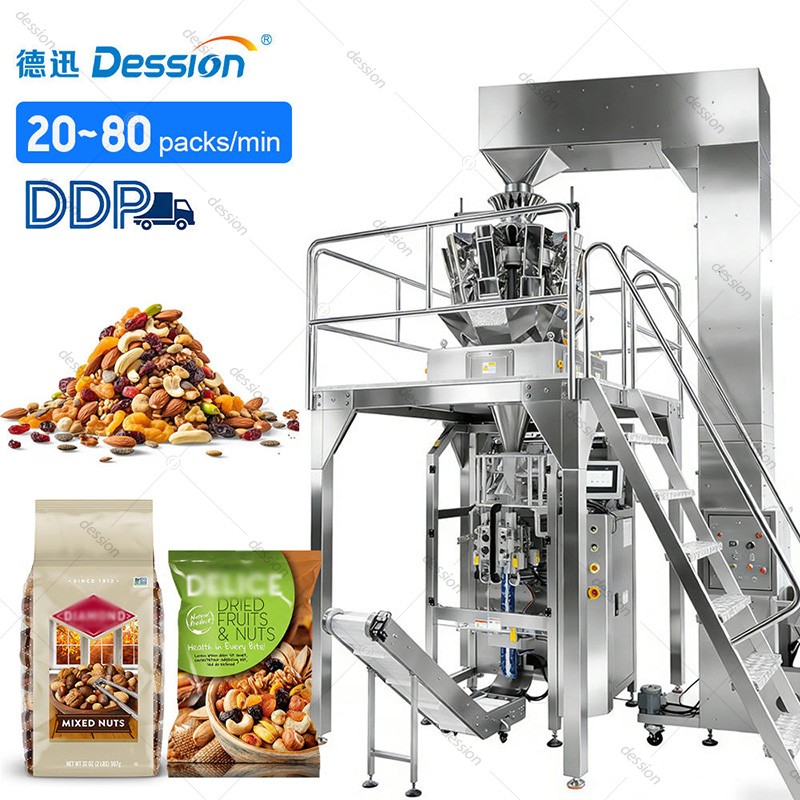
A vertical form fill seal machine makes bags from roll film and fills them from above, coordinating the dosing unit, forming collar, longitudinal back sealer, pulling belts, and transverse cross-seal jaws in one continuous cycle.
On vertical form fill seal machines, buyers choose the dosing unit for their product first and then confirm the bag tooling, film structure, and required good output together.
What Is a VFFS Machine and How the Station Sequence Works
For roll-film VFFS machines, a collar-type pouch packing machine is the same as a VFFS machine, where collar type refers to the forming collar or shoulder that turns flat film into a tube around the forming tube, whereas premade pouch filling machines fill ready-made bags through a separate picking and opening process.
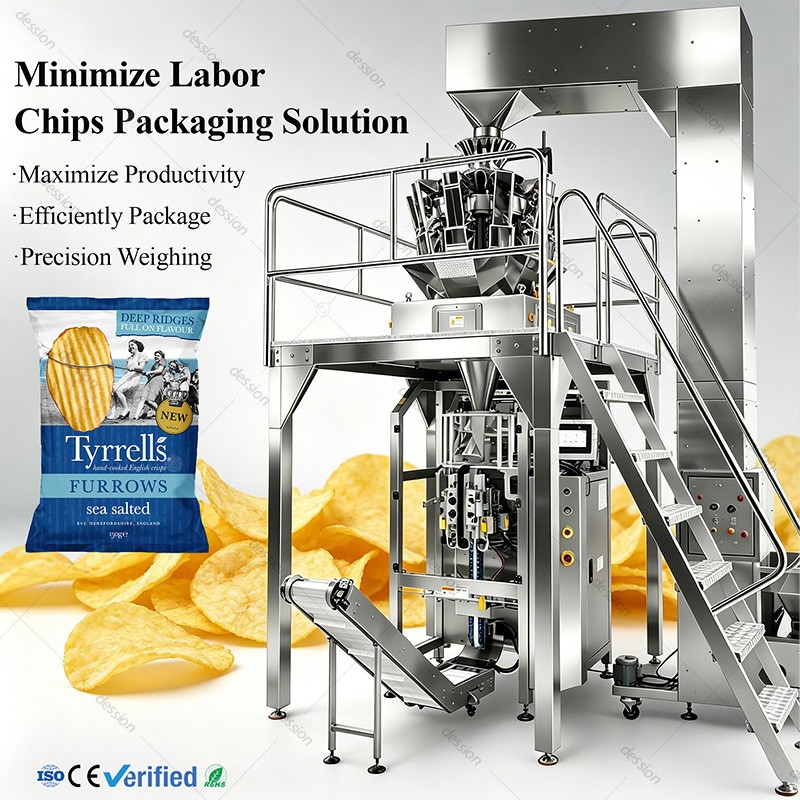
A complete VFFS system usually includes a product elevator or feeder, the weigher or filler on a support platform, the bagger, and a take-away conveyor, followed where needed by checkweighers, metal detectors, cartoners, and case packers, whereas single-serve portions in narrow packs usually fit a multi-lane stick pack machine and retail pouches with zippers or spouts belong to the premade pouch route.

- Unwind the roll film with tension control and print registration.
- Shape flat film around the forming shoulder and tube and make the back seal.
- Release the measured product charge through the vertical forming tube.
- Cross-seal the top of one bag and bottom of the next, cut, and discharge.
| Station in sequence | Mechanical action on the film or product | Engineering control & option scope |
|---|---|---|
| Film unwind & registration | Film unwinding and tension control for flexible roll film. | Uses a registration sensor when the film is printed to index eye-marks consistently. |
| Forming shoulder & tube | Guides the flat film web over the forming collar around the vertical forming tube. | Sets the finished bag width; each forming set makes one bag width. |
| Longitudinal back seal | Presses the vertical film edges against the forming tube to close the vertical seam. | Configured as an inner-to-inner fin seal or an inner-to-outer flat lap seal. |
| Film pulling belts | Film pulling belts advance the film tube. | Uses servo drives on selected configurations to set bag length within the machine range. |
| Product discharge & options | The overhead weigher or filler drops a measured portion through the hollow forming tube. | Optional devices include gas flushing, date coding, hole punching, gusseting, or a degassing valve applicator. |
| Transverse jaws, knife & discharge | Horizontal jaws seal the top of one bag and the bottom of the next, and a knife separates them. | Finished bags drop onto a discharge conveyor to checkweighing, metal detection, or secondary packaging. |
VFFS Machine Parts, Forming Collar Rules, and Fin vs. Lap Seals
For a vertical form fill seal machine, the main assemblies are film unwind and tension control, registration sensor, forming shoulder and tube, film pulling belts, back sealer, transverse jaws, and knife; typical spare and wear parts are sealing jaws, heating elements, PTFE sealing cloth or tape, knives, and pulling belts; and the change part for a new format is a forming set for each bag width.
On a VFFS machine, each forming set makes one bag width while bag length is adjusted within the machine's range, and extra bag widths need extra forming sets that should be listed in the quotation.
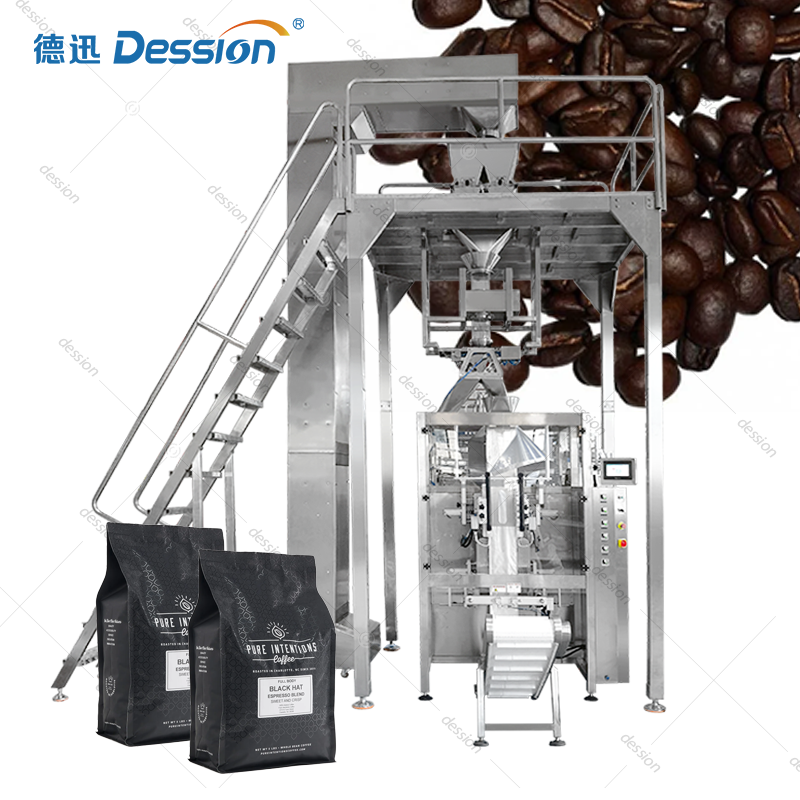
In VFFS packaging, the bag style fixes the forming set and the jaw design while film structure decides the sealing temperature, pressure, and dwell time the jaws must deliver; supported VFFS bag formats include the pillow bag, gusseted bag, quad-seal (stabilo) bag with four corner seals for coffee beans, separately confirmed vacuum brick-pack routes for rice and grains, and block-bottom and hole-punch bag options on the frozen prepared-dishes configuration.
On tubular stick-pack forming collars, a longitudinal center or offset fin seal forms an inner-to-inner bond where both outer edges fold outward at 90° so the inner sealant layers bond face-to-face with a typical 5–7 mm folded fin and 10–14 mm film allowance, creating a 4-layer step at the horizontal cross-seal jaw nip where whole-pack integrity should be verified under ASTM F1140 and ASTM D3078.
By contrast, on tubular stick-pack forming collars a longitudinal flat overlap or lap seal uses an asymmetrical forming collar to lap the inner sealant face of one edge flat onto the outer surface of the opposite edge across a 5–8 mm overlap zone, requiring an outer surface heat-sealable to the inner sealant layer with peel force verified at ≥10–15 N/15 mm under ASTM F88 and ±0.5 mm optical eye-mark tracking tolerance.
When evaluating VFFS barrier films and heat seals for nitrogen-flushed packaging, AMETEK MOCON's oxygen transmission rate method note distinguishes dry-condition D3985 testing from controlled-humidity F1927 testing, while ASTM F88/F88M measures the force needed to separate a seal-containing strip and records the failure mode without setting a universal pass force, leak limit, or shelf-life duration.
| Seam parameter | Longitudinal fin seal (inner-to-inner) | Longitudinal lap seal (inner-to-outer) |
|---|---|---|
| Forming collar & bond geometry | Both film edges fold outward at 90° so the inner sealant layers bond face-to-face. | An asymmetrical forming collar laps the inner sealant face of one edge flat onto the outer surface of the opposite edge. |
| Seam width & film allowance | Stick-pack tubular reference: typical 5–7 mm folded fin requiring a 10–14 mm total film width allowance. | Stick-pack tubular reference: typical 5–8 mm overlap zone requiring a 1 × 5–8 mm film width allowance. |
| Film laminate & tracking requirement | Works when the outer web cannot heat-seal to the inner sealant; creates a 4-layer step at the horizontal cross-seal jaw nip where stick-pack whole-pack integrity should be verified under ASTM F1140 and ASTM D3078. | Requires an outer surface heat-sealable to the inner sealant layer with stick-pack peel force verified at ≥10–15 N/15 mm under ASTM F88 and ±0.5 mm optical eye-mark tracking tolerance. |
Intermittent vs. Continuous Motion Cross-Sealing and Servo Baselines
In VFFS operation, continuous-motion VFFS means the cross-seal is made while the film continues to travel with the sealing jaws following the film during contact, whereas intermittent motion pauses the film for that cross-seal; buyers should observe this part of the cycle rather than judging the mode from a servo motor, a conveyor that keeps running, or the word continuous in a process description.
Following motion in continuous-motion VFFS requires coordination between the film and the jaws during sealing contact and does not automatically solve a product drop, dust, or film-seal problem, so if the limit is product settling, dust in the seal area, or long required seal dwell, changing jaw motion alone will not remove that limit.
- Intermittent VFFS: film advances, stops while the transverse jaws close, seal, and cut, then advances again.
- Continuous VFFS: film keeps moving while the transverse jaws travel downward with the web during sealing contact.
In LINEVO's published VFFS catalog, the chips and snack VFFS configuration with nitrogen and the coffee bean valve-pouch VFFS configuration are documented with servo-driven film pulling and sealing systems, while continuous-motion cross-sealing is quoted only after confirming product drop behavior, bag dimensions, film sealing window, and required good bags per minute.
In cross-seal jaw mechanics, rotary end-seal jaws turn through a fixed circle and touch the film briefly while box-motion jaws travel with the web during contact to give longer dwell at speed; this jaw-path distinction applies mainly to horizontal flow wrappers, whereas vertical baggers are normally specified by intermittent versus continuous VFFS motion and by the film's required sealing time.
How the Dosing Unit Synchronizes with the Bag-Making Cycle
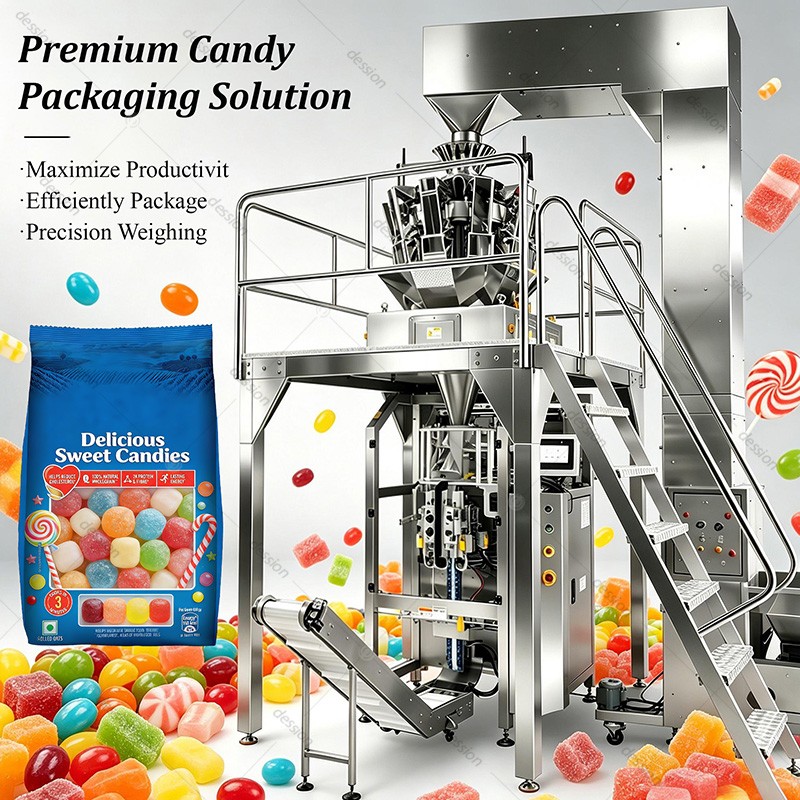
The dosing unit usually decides whether a VFFS project works and is chosen from the product's flow, piece size, stickiness, and required fill tolerance, then matched to the bagger's tube size, drop height, and cycle timing: a multihead weigher handles weighed pieces (with dimpled or coated contact surfaces for sticky dates and gummies), an auger filler handles fine or poorly flowing powders, and a volumetric cup filler handles uniform free-flowing granules where volume tracks weight closely.
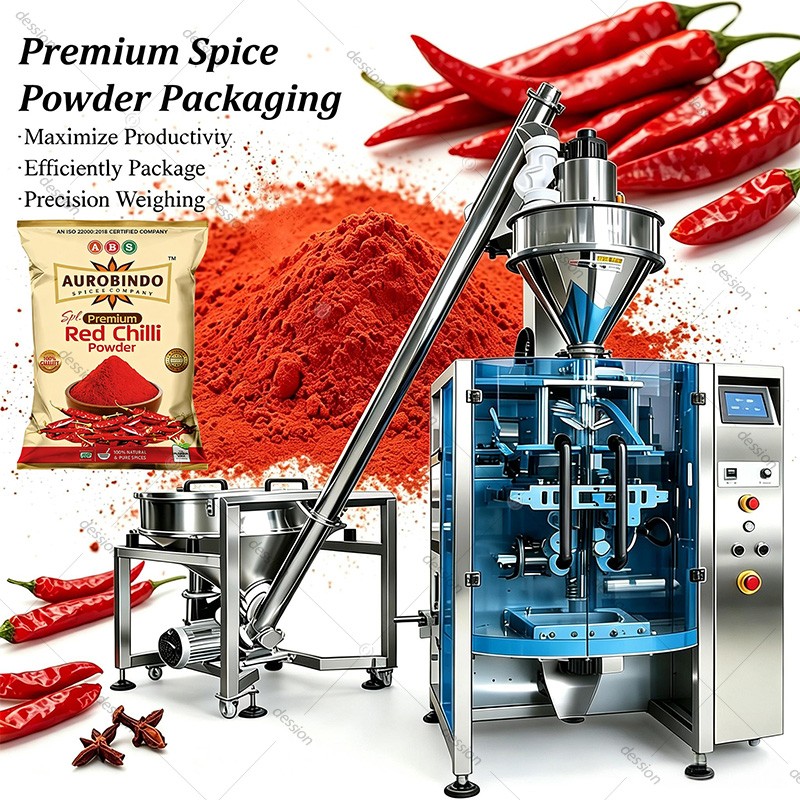
On a multihead weigher, the main assemblies are linear vibrator pans, feed buckets, weigh hoppers on load cells, and collection and discharge chutes; on an auger filler, the main assemblies are the product hopper (with an agitator where fitted) and a servo-driven dosing screw in a closed vertical channel, with screw tooling that depends on the powder.
A multihead weigher distributes product across holding and weigh hoppers and combines a subset whose weights add up to the target fill (for example, hoppers holding 28 g, 34 g, and 38 g combine to 100 g instead of releasing an available 45 g portion). For one bag per cycle, cycle time in seconds equals 60 divided by nominal bags per minute (for example, 60 bags/min gives 1.0 s per cycle, and 1,000 bags produced at a 0.98 accepted fraction over 20 min equals 49 good bags/min).
When synchronizing a multihead weigher with a VFFS bagger, compare release and arrival with the bagger's filling window so late product or pieces do not remain in the seal area; a 14-head arrangement offers more potential combinations than a 10-head arrangement when the hoppers are available, but neither count supplies a universal speed or accuracy.
For regulatory and factory acceptance of weighed VFFS lines, OIML R 61-1:2017 §2 covers automatic gravimetric filling instruments that produce predetermined fills by automatic weighing.
An auger filler uses a rotating screw to discharge a controlled volume per revolution, adding an agitator for cohesive powders that bridge and a cut-off device or outlet lip so powder does not dribble after the screw stops, with downstream weight feedback adjusting subsequent doses when bulk density drifts.
| Dosing route & product fit | Synchronization with the VFFS cycle | Dominant failure mode & prevention |
|---|---|---|
| Multihead weigher (10 or 14 heads) for pieces | Releases a combined hopper charge into the forming tube in time with film advance so all pieces clear the jaw zone before cross-seal closure. | Fragile chips risk breakage during transfer (review drop height and low-drop handling); sticky pieces use dimpled or coated contact surfaces. |
| Servo auger filler for fine or cohesive powders | Rotates the vertical screw for a programmed revolution count, then uses cut-off / outlet-lip tooling so powder does not dribble after the screw stops. | Fine seasoning powder risks powder in the seal; review dust extraction, cutoff tooling, and the timing between filling and jaw closure. |
| Volumetric cup filler for uniform free-flowing granules | Drops a fixed cup volume into the forming tube. | Granules with changing bulk density give a changing fill weight from a fixed cup volume; check representative batches before selecting volumetric dosing. |
Published LINEVO VFFS Configurations Across Applications and Sample Testing
LINEVO's multihead weigher VFFS configuration pairs a combination weigher with a SUS304 stainless-steel vertical bagger covering a 60–240 mm bag width, an 80–350 mm bag length, a 30–70 bags/min speed range, and a ±0.3–1.5 g accuracy range for nuts, snack pieces, dried fruit, and candies.
For snack and granule applications, the chips and snack VFFS configuration with nitrogen covers 100–2000 g fills (including 500 g and 1 kg bags) at 20–45 bags/min with ±0.5–1.5 g accuracy, 150–400 mm bag length, 100–280 mm bag width, SUS304 construction, and nitrogen flushing. The gummy and candy VFFS configuration covers 30–70 bags/min, ±0.1–1.5 g accuracy, 80–300 mm bag length, 60–200 mm bag width, and a 220V/380V, 50Hz/60Hz, 3.5KW power baseline.
For roasted coffee beans, the coffee bean valve-pouch VFFS configuration covers 100–2000 g fills at 25–50 bags/min with ±0.5–1.5 g accuracy, a 220V/380V, 50/60Hz, 4.5KW power baseline, an integrated one-way degassing valve applicator, and nitrogen flushing. The quad-seal coffee bean VFFS configuration covers 250 g, 500 g, and 1 kg bags with face widths of 80–200 mm and heights up to 380 mm, with four vertical corner seal bars.
For fine powders, the spice and seasoning powder auger VFFS configuration achieves ±0.5% to 1.5% fill accuracy in SUS304 stainless steel using a vertical servo-driven auger screw, enclosed plexiglass dust cowl, and industrial dust-suction port. The 420 / 520 / 720 mm film-width detergent powder VFFS configuration runs at 25–55 bags/min with dual servo-driven vacuum transport belts for high-precision film alignment.
For frozen and wet washdown lines, the frozen vegetable VFFS configuration lists ±0.5–2.0 g precision, 20–55 bags/min, 100–450 mm bag length, 80–300 mm bag width, IP65 direct water washdown protection, and a 4.5KW, 220V/380V, 50Hz/60Hz baseline. The frozen food big-bag VFFS configuration covers 1 kg, 2 kg, 3 kg, and 5 kg targets (500–5000 g range) at 15–40 bags/min with ±1.0–3.0 g precision, up to 420 mm or 520 mm bag width, a bottom-pouch support conveyor, an anti-condensation electrical cabinet, and dimpled stainless-steel contact plates.
For multi-component frozen meals and sticky confectionery, the pre-made dishes VFFS configuration pairs a 10 / 14 / 20 head dimpled weigher with 25–70 bags/min output, ±0.2–1.5 g accuracy, 100–350 mm bag length, 100–250 mm bag width, pillow, gusseted, block-bottom, and hole-punch bag formats, IP65 SUS304 construction, and a 220V/380V, 50Hz/60Hz, 4.5KW supply. The gummies and vitamin VFFS configuration combines non-stick SUS316L stainless-steel contact surfaces, a sloped frame, and a Siemens PLC and HMI interface.
| Configuration & application | Published speed or format range | Bag dimensions & key mechanical features |
|---|---|---|
| Multihead weigher VFFS (nuts, snacks, candies) | 30–70 bags/min; ±0.3–1.5 g accuracy with a combination weigher. | Width 60–240 mm, length 80–350 mm; SUS304 stainless-steel frame. |
| Chips & snack VFFS with nitrogen flushing | 20–45 bags/min; 100–2000 g fills (500 g and 1 kg bags) at ±0.5–1.5 g. | Width 100–280 mm, length 150–400 mm; servo film pulling and nitrogen flushing. |
| Quad-seal coffee bean VFFS | 250 g, 500 g, and 1 kg retail formats. | Width 80–200 mm, height up to 380 mm; four vertical corner seal bars. |
| Detergent powder VFFS (420 / 520 / 720 mm film width) | 25–55 bags/min with volumetric cup or servo auger dosing and dual-belt servo film pulling. | 420 / 520 / 720 mm film widths; SUS304 construction and dual servo-driven vacuum transport belts for film alignment. |
| Pre-made dishes IP65 multihead VFFS | 25–70 bags/min; ±0.2–1.5 g accuracy with a 10 / 14 / 20 head dimpled weigher. | Width 100–250 mm, length 100–350 mm; IP65 SUS304 construction and 4.5KW power baseline. |
| Frozen food big-bag VFFS (1 kg to 5 kg) | 15–40 bags/min; 500–5000 g fills (1 kg, 2 kg, 3 kg, 5 kg) at ±1.0–3.0 g. | Bag width up to 420 mm or 520 mm; bottom-pouch support conveyor, anti-condensation cabinet, and dimpled SUS304 plates. |
Frequently Asked Questions About How a VFFS Machine Works
Is a collar-type pouch packing machine the same as a VFFS machine? Yes, for roll-film VFFS machines, collar type refers to the forming collar or shoulder that turns flat film into a tube around the forming tube, whereas premade pouch configurations fill ready-made bags through a separate picking and opening process.
How many bag widths can one VFFS forming set make? Each forming set makes one bag width while bag length is adjusted within the machine's range, and extra bag widths need extra forming sets that should be listed in the quotation.
What is the difference between intermittent and continuous motion on a VFFS machine? Continuous motion means the cross-seal is made while the film continues to travel with the sealing jaws following the film during contact, whereas intermittent motion pauses the film for that cross-seal; if the limit is product settling, dust in the seal area, or long required seal dwell, changing jaw motion alone will not remove that limit.
Can one VFFS machine pack both powders and pieces? Packing both powders and pieces on one VFFS machine is possible only if a second dosing unit is included or swapped in because an auger filler and a multihead weigher are different machines, so any second dosing unit and its changeover scope must be listed in the quotation.
Sources
- LINEVO Vertical Form Fill Seal Machines Catalog, Continuous Motion VFFS Guide, Multihead Weigher Selection Guide, Auger Filler Guide, Spare Parts Guide, and Sample Testing Specification
- ASTM F88 Standard Test Method for Seal Strength of Flexible Barrier Materials, ASTM F1140 Internal Pressurization Failure Resistance of Unrestrained Packages, and ASTM D3078 Determination of Leaks in Flexible Packaging by Bubble Emission
- AMETEK MOCON Application Note on Oxygen Transmission Rate Testing (ASTM D3985 Dry vs. ASTM F1927 Controlled-Humidity OTR) and ASTM F88/F88M Seal Strength Method
- OIML R 61 (2017) Automatic Gravimetric Filling Instruments
Discuss your application with LINEVO.
Send product, bag size & film spec on WhatsApp