
The LINEVO LV-BT280 / LV-BT350 Series covers a combined box length × width × height range of 40–200 × 20–120 × 10–70 mm across the series at a packing speed of 30–80 boxes per minute depending on box size.
On this page
How to Choose an Overwrapping Machine Step by Step
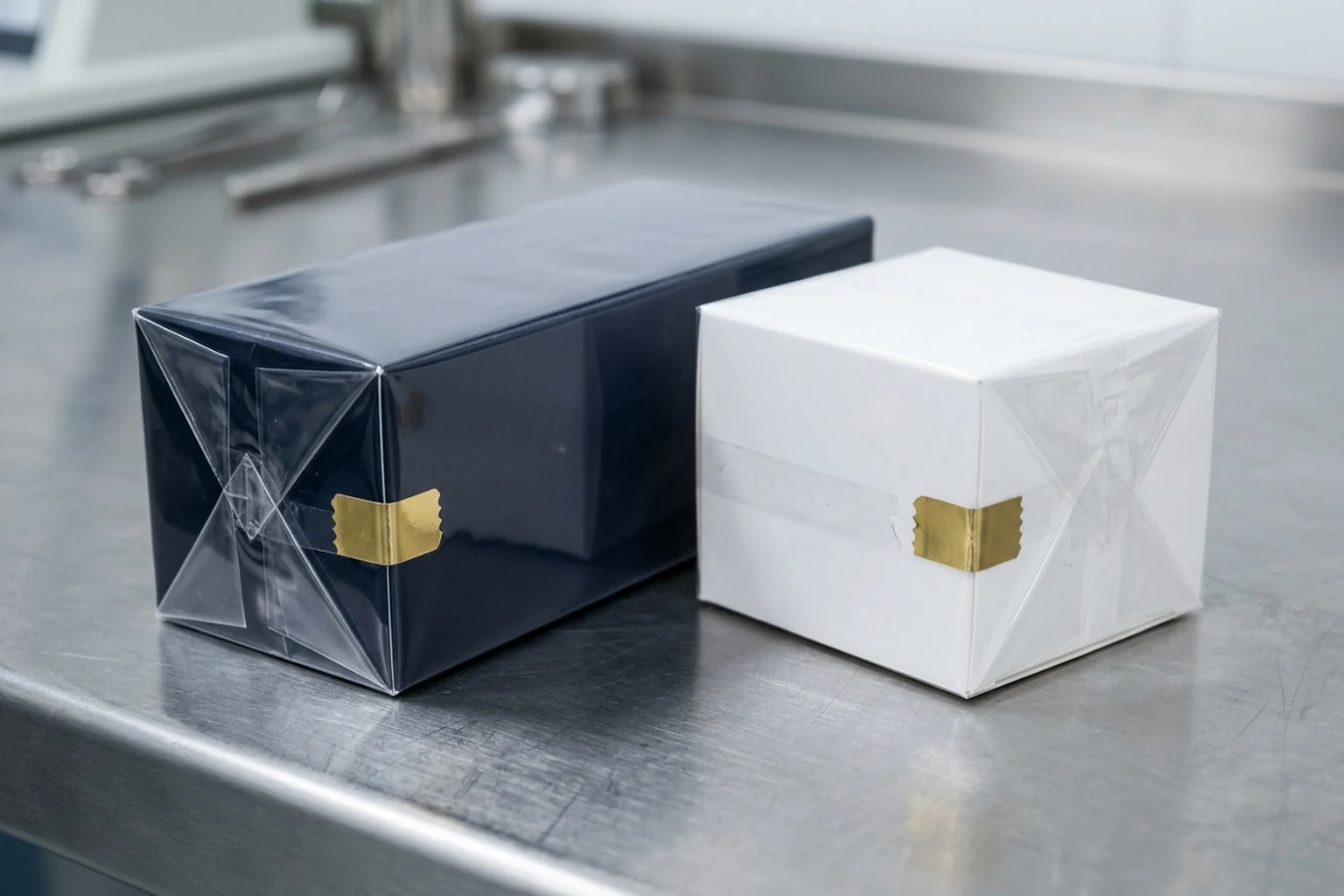
Overwrapping folds film tightly around a rigid box with no fin seal to give a close, box-shaped finish, whereas flow wrapping machines make a pillow pack with a fin seal and crimped ends.
Across the LINEVO LV-BT280 / LV-BT350 Series, the model, box orientation and format tooling are selected together because each box size within the series envelope requires dedicated folding and pushing tooling.
Under LINEVO's overwrapping selection rule, if the proposed box length is below 40 mm or above 200 mm, width below 20 mm or above 120 mm, or height below 10 mm or above 70 mm, a separate configuration review is required.
For each dimension d, a proposed overwrapping format fits only when the production range stays inside its confirmed tooling window: d(min,tool) ≤ d(min,pack) and d(max,pack) ≤ d(max,tool).
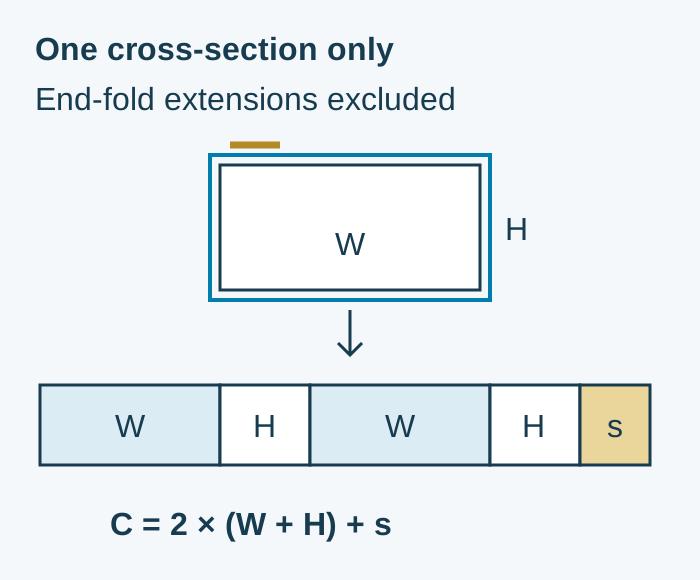
For an overwrap band running around box width W and height H with overlap allowance s, the developed band path in one plane is C = 2 × (W + H) + s, while film web direction, end-fold allowance, and cutting arrangement require confirmation.
In LINEVO's worked band-perimeter example with assumed inputs W = 60 mm, H = 30 mm and s = 15 mm, the developed band path is C = 2 × (60 + 30) + 15 = 195 mm.


| Selection Stage | Primary Engineering Rule | Verification Benchmark |
|---|---|---|
| Box dimension envelope | The LINEVO LV-BT280 / LV-BT350 Series covers a combined box length × width × height range of 40–200 × 20–120 × 10–70 mm across the series at a packing speed of 30–80 boxes per minute depending on box size. | Under LINEVO's overwrapping selection rule, if the proposed box length is below 40 mm or above 200 mm, width below 20 mm or above 120 mm, or height below 10 mm or above 70 mm, a separate configuration review is required. |
| Format tooling window | Across the LINEVO LV-BT280 / LV-BT350 Series, the model, box orientation and format tooling are selected together because each box size within the series envelope requires dedicated folding and pushing tooling. | For each dimension d, a proposed overwrapping format fits only when the production range stays inside its confirmed tooling window: d(min,tool) ≤ d(min,pack) and d(max,pack) ≤ d(max,tool). |
| Film band and tear tape | For an overwrap band running around box width W and height H with overlap allowance s, the developed band path in one plane is C = 2 × (W + H) + s, while film web direction, end-fold allowance, and cutting arrangement require confirmation. | In LINEVO's worked band-perimeter example with assumed inputs W = 60 mm, H = 30 mm and s = 15 mm, the developed band path is C = 2 × (60 + 30) + 15 = 195 mm. |
| Shift output and changeover math | LINEVO calculates shift output for overwrapping using Wrapped boxes per shift = agreed boxes/min × (scheduled minutes − stopped minutes), counting only running minutes and deducting rejected boxes separately. | In a hypothetical shift with 20,000 attempted wraps and 600 rejects, the cost denominator is 19,400 accepted packs rather than 20,000. |
| Plant power and acceptance trials | For U.S. projects, LINEVO reviews electrical supply, utilities, line signals and mechanical handoffs before build, and configures machines for 60 Hz plant power. | According to a PMMI report, companies incorporating Factory Acceptance Testing (FAT) reduce post-installation issues by 30%, saving time and money. |
Comparing LINEVO Overwrapping Machine Configurations and Subsystems
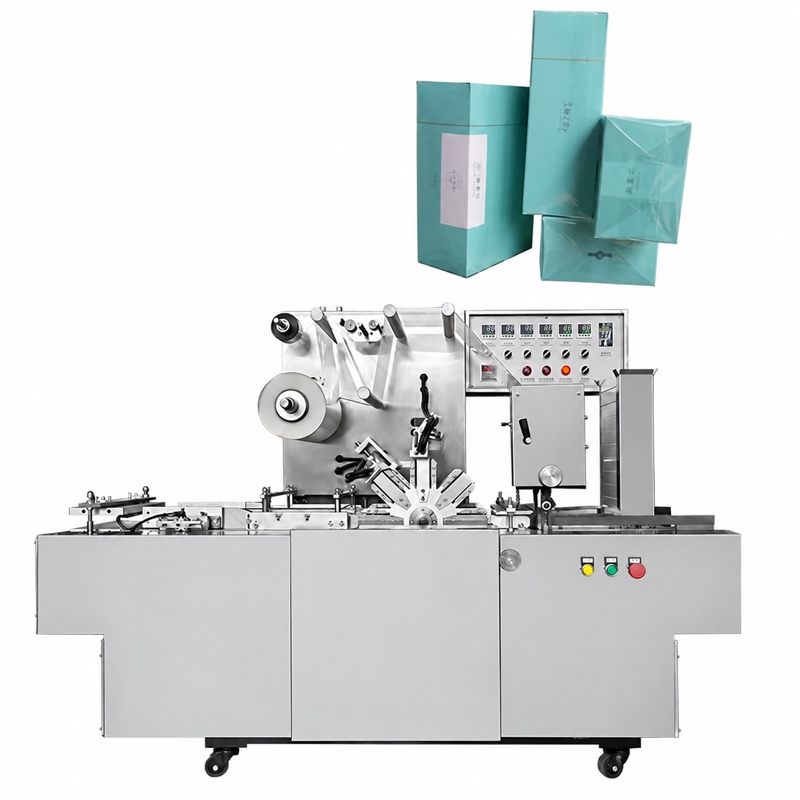
LINEVO is a packaging machinery manufacturer with 41 overwrapping configurations, from perfume box overwrapping and tea box overwrapping to playing card overwrapping and cigarette packs.
The LINEVO LV-BT280 / LV-BT350 Series uses a mechanical cam linkage driving film feed and the push-box sequence, paired with a variable-speed inverter so line speed follows the upstream box feed without stopping.
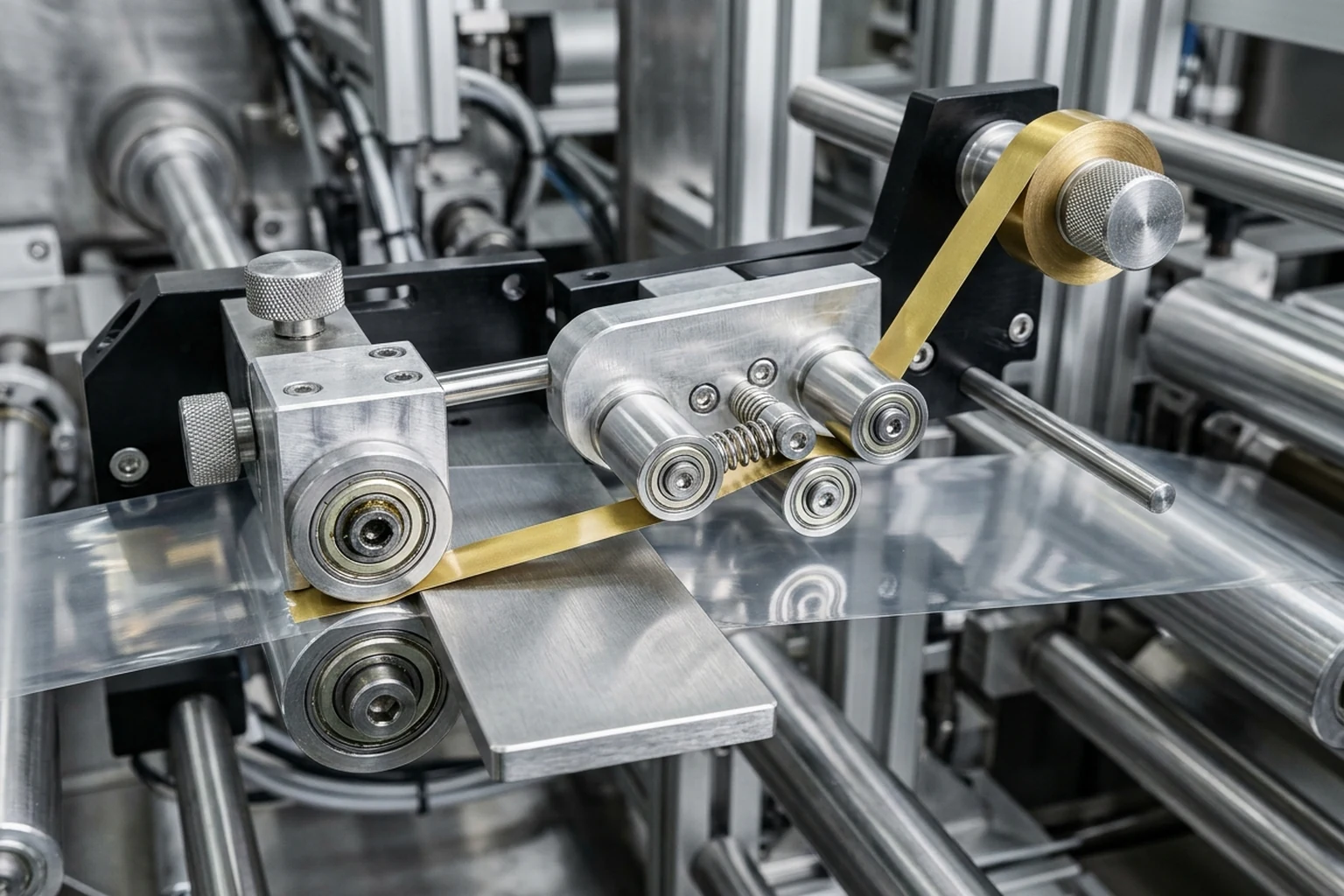
The LINEVO LV-BT280 / LV-BT350 Series feeds tear tape on both sides of the film to seal into the wrap and utilizes PID-controlled heat-seal plates on the side and end sealing elements.
To resolve loose or uneven fold lines on cartons on the LINEVO LV-BT280 / LV-BT350 Series, box height and film tension are set from the sample box during changeover.
The LINEVO Playing Card & Game Box Overwrapping Machine configuration review covers servo-driven film feeding, cutting and multi-side folding, plus tension-controlled tear tape feeding.
The LINEVO Automatic 3D Overwrapping Machine for Perfume Boxes integrates a precision tension-controlled tear tape feeding system and is built using SUS304 stainless steel and anodized aluminum.
Within cosmetic packaging machines, the LINEVO Automatic Cosmetic Box Overwrapping Machine features Modular Quick-Change Format Adjustment requiring no manual tooling and is integrated with a Siemens PLC and HMI interface.
Within pharmaceutical packaging machines, the LINEVO Automatic Pharmaceutical Box Overwrapping Machine features an Integrated Anti-Counterfeit Tear System with standardized high-speed Tear Tape (Easy-Open) Applicator integration for precise, millimetric placement of the opening strip.
The LINEVO LV-BT280 / LV-BT350 cosmetic box overwrapper runs at 30–80 boxes/min for boxes 40–200 mm long, 20–120 mm wide, and 10–70 mm high, with 220 V / 380 V, 50/60 Hz, 4.5 kW electrical supply, 2100 × 850 × 1500 mm machine dimensions, and approx. 550 kg weight.
When planning spare parts for a cellophane overwrapper, the main assemblies are the film unwind and tear tape reel, folding plates, heat sealing of the side seam and ends, and heated finishing belts or plates, while typical wear parts are suction cups and sealing parts.
| Configuration | Drive, Film Feed & Folding Architecture | Sealing, Control & Envelope Specs |
|---|---|---|
| Reference Carton Overwrapper Series (Drive & Sealing) | The LINEVO LV-BT280 / LV-BT350 Series uses a mechanical cam linkage driving film feed and the push-box sequence, paired with a variable-speed inverter so line speed follows the upstream box feed without stopping. To resolve loose or uneven fold lines on cartons on the LINEVO LV-BT280 / LV-BT350 Series, box height and film tension are set from the sample box during changeover. | The LINEVO LV-BT280 / LV-BT350 Series feeds tear tape on both sides of the film to seal into the wrap and utilizes PID-controlled heat-seal plates on the side and end sealing elements. |
| Playing Card & Game Box Configuration | The LINEVO Playing Card & Game Box Overwrapping Machine configuration review covers servo-driven film feeding, cutting and multi-side folding. | The LINEVO Playing Card & Game Box Overwrapping Machine configuration review covers tension-controlled tear tape feeding. |
| Perfume Box Overwrapping Configuration | The LINEVO Automatic 3D Overwrapping Machine for Perfume Boxes integrates a precision tension-controlled tear tape feeding system. | The LINEVO Automatic 3D Overwrapping Machine for Perfume Boxes is built using SUS304 stainless steel and anodized aluminum. |
| Cosmetic Box Overwrapping Configuration (Controls & Envelope) | The LINEVO Automatic Cosmetic Box Overwrapping Machine features Modular Quick-Change Format Adjustment requiring no manual tooling and is integrated with a Siemens PLC and HMI interface. | The LINEVO LV-BT280 / LV-BT350 cosmetic box overwrapper runs at 30–80 boxes/min for boxes 40–200 mm long, 20–120 mm wide, and 10–70 mm high, with 220 V / 380 V, 50/60 Hz, 4.5 kW electrical supply, 2100 × 850 × 1500 mm machine dimensions, and approx. 550 kg weight. |
| Pharmaceutical Box Overwrapping Configuration | The LINEVO Automatic Pharmaceutical Box Overwrapping Machine features an Integrated Anti-Counterfeit Tear System with standardized high-speed Tear Tape (Easy-Open) Applicator integration for precise, millimetric placement of the opening strip. | When upstream pharmaceutical carton discharge is 18 cartons/min—below the 30–80 boxes/min operating band of the LV-BT280 / LV-BT350 overwrapper—the overwrapper runs on demand via inverter speed control. |
| Spare assemblies | For a cellophane overwrapper, the main assemblies are the film unwind and tear tape reel, folding plates, heat sealing of the side seam and ends, and heated finishing belts or plates. | Typical wear parts for a cellophane overwrapper are suction cups and sealing parts. |
Manual Hand-Fed vs. Automatic Inline Carton Overwrapping: Throughput & Cost Math
Buyers searching for a manual cellophane wrapping machine or evaluating small-batch production must plan how cartons enter the machine: when an overwrapper follows a cartoner, the two machines must agree on box orientation, pitch and stop signals, whereas when boxes are fed by hand, the operator position and buffer must be planned.
When upstream pharmaceutical carton discharge is 18 cartons/min—below the 30–80 boxes/min operating band of the LV-BT280 / LV-BT350 overwrapper—the overwrapper runs on demand via inverter speed control.
LINEVO calculates shift output for overwrapping using Wrapped boxes per shift = agreed boxes/min × (scheduled minutes − stopped minutes), counting only running minutes and deducting rejected boxes separately.
For repeated size changes on an overwrapper, changeover timing spans from the last accepted pack of the old format to the first accepted pack of the next format, including film and tape threading and setup rejects.
In shift-output accounting, three assumed format changes taking 20 minutes each remove 60 minutes from that shift.
LINEVO calculates Accepted packs = attempted packs − rejected packs and Cost per accepted pack = total costs for the period ÷ accepted packs in that period.
In a hypothetical shift with 20,000 attempted wraps and 600 rejects, the cost denominator is 19,400 accepted packs rather than 20,000.
Technical Criteria for Judging an Overwrapper: Film Webs, Tear Tape & Carton Board
Bicor™ AB is a two-side acrylic coated sealable OPP film designed for general use in overwrap and HFFS packaging as an unsupported web or in a lamination.
Bicor™ AB film is supplied in nominal thicknesses (gauge 80 100 132; µm 20 25 33) tested per ASTM D2673.
Bicor™ AB typical optical values across its three gauges are Haze (% 1.6 1.7 1.9) per ASTM D1003 and Gloss (90 87 87) per ASTM D2457.
Bicor™ AB crimp seal strength (g/in 540 560 600 per ASTM D882 260°F (126°C) at 20psi for 0.75sec) pairs with minimum crimp seal temperatures of degree 185°F(85°C) 205°F(96°C) 185°F(85°C).
Bicor™ AB acrylic-to-acrylic coefficient of friction is 0.25 0.24 0.22 per ASTM D1894, and WVTR is g/100in²/24hr 0.47 0.37 0.26 per ASTM F1249 at 100°F(38°C),90%RH.
Bicor™ AB is lap sealable to other acrylic coated and sealable PVdC coated films, and is not recommended as the sealant webs on VFFS machines because of poor hot tack.
Bicor™ ASB-X one-side acrylic / one-side sealable PVdC coated OPP film is offered in thicknesses of gauge 110 150 170 210 (µm 27.5 37.5 42.5 52.5) per ASTM D2673.
Bicor™ ASB-X optical values across its four thicknesses are Haze (% 1.3 1.2 1.4 1.4) per ASTM D1003 and Gloss (90 98 98 90) per ASTM D2457.
Bicor™ ASB-X crimp seal strength is g/in 650 600 650 700 per ASTM D882 260°F (126°C) at 20psi for 0.75sec.
Bicor™ ASB-X has an acrylic/acrylic COF of 0.24 per ASTM D1894, WVTR of g/100in²/24hr 0.53 0.23 0.21 0.17 per ASTM F1249 100°F(38°C),90%RH, and OTR of cm³/100in²/24hr 4.5 4.5 4.5 4.5 per ASTM D3985.
Taghleef TSS is a transparent BoPP film, both sides heat sealable and treated, constructed with a treated heat sealable layer, an OPP core, and a heat sealable layer with MST=105ºC.
Taghleef TSS rolls on a 76 mm core have outside diameters of 305 mm, 588 mm, 716 mm, and 825mm, while rolls on a 152 mm core have outside diameters of 337 mm, 605 mm, 730 mm, and 838 mm.
Taghleef TSS nominal thicknesses are µm 15 18 20 25 30 35 40 48, with unit weights of g/m2 13.7 16.4 18.2 22.8 27.3 31.9 36.4 43.7 and yields of m2/kg 73.3 61.0 54.9 44.0 36.6 31.4 27.5 22.9.
Taghleef TSS has Haze (% 2.0 2.3 2.6) per ASTM D1003, Gloss (45°) of 85 per ASTM D2457, and Dynamic COF (NT/NT) of 0.25 per ASTM D1894.
Taghleef TSS thermal shrinkage (130°C , 5 mins) is MD 6.0 and TD 3.0, its heat seal range is °C 105 - 140, and its NT/NT seal strength is g/cm 170 230 300 130°C ;0.5 s.
Taghleef TSS surface treatment level is mN/m 38 per ASTM D2578, and its water vapour permeability at (38°C - 90% RH) per ASTM F1249 is g/m2/d 9.0 7.5 7.0 6.0 5.0 4.0 3.5 3.1.
Taghleef TSS film should be conditioned in the operating environment for at least 24 hours before processing and is suitable for use up to 6 months from the date of production.
Torayfan® BMS matt BOPP film is specified in 15 µm and 20 µm gauges with nominal yield of m²/kg 73 54.5.
Torayfan® BMS matt BOPP film has COF (sealant to sealant) of 0.4 0.4 per ASTM D1894, heat-seal strength @121°C of N/25mm 3 3, SIT (>2N/25mm) of °C 105 105, matt-side gloss (20°) of 6 6 per ASTM D 2457, and haze of % 57 57 per ASTM D 1003.
Torayfan® BMS rolls are wound on a standard paper core with an internal diameter of 152.8mm, with a minimum roll width of 340mm and a maximum roll width of 2450mm.
FLEXOPP™ B-THL heat-sealable BOPP film is produced in Micron 15 18 20 23 25 30 35 40 48 50 (Gauge 60 72 80 92 100 120 140 160 192 200) with a film density of gm/cc 0.91 per ASTM D-1505.
FLEXOPP™ B-THL has a wetting treatment level of dyne/cm 38 per ASTM D-2578, dynamic COF (UTR/UTR) of 0.30±0.05 per ASTM D-1894, haze (% 1.8 2.0 2.2 2.2 2.5 2.8 3.0 3.0 3.5 3.5) per ASTM D-1003, and gloss (at 45⁰) of Unit 88 86 85 85 85 82 82 80 78 78 per ASTM D-2457.
FLEXOPP™ B-THL has a heat seal initiation temperature of ⁰C 105 and minimum heat seal strength of gm/25mm 300 325 350 350 375 400 425 450 450 450.
Futamura Cellophane™ films are biobased and renewable cellulose films derived from wood pulp sourced from managed plantations, available in high barrier, semi-permeable, and heat-sealable grades.
Futamura Lacquered Cellulose Films are heat sealable on both sides and incorporate specialist lacquers for enhanced moisture, oxygen, and aroma barrier performance as well as resistance to oils and greases.
Cosmo Films high-shrink tight wrap BOPP overwrap films provide shrinkage values in the range of 9-11 percent, while medium shrink BOPP overwrap films provide shrinkage in the range of 4-6 percent.
ASTM D2732-14(2025) measures unrestrained linear thermal shrinkage of plastic film and sheeting up to 0.76 mm thick, identifying comparable film data without setting carton acceptance limits.
On Innovia Propafilm high-speed overwrapping BOPP film, a high level of anti-static performance enhances machine performance and minimizes dust attraction onto the wrapped packs while offering puncture and impact resistance.
Static and kinetic coefficients of friction of plastic film and sheeting are determined in accordance with ASTM D1894 and ISO 8295.
Controlled laboratory heat seals formed according to ASTM F2029 are peeled apart at a controlled rate to measure Ultimate Seal Strength after cooling per method ASTM F88.
Hot Tack Strength is peel-tested within 150ms of the heat seal being formed per method ASTM F1921, whereas Ultimate Seal Strength is measured after cooling per method ASTM F88.
As analyzed in our guide to cosmetic versus pharmaceutical carton overwrap tear tape, each Essentra SupaStrip tear tape incorporates an easy-to-use tab cut that simplifies removing the overwrap film.
Essentra Tapes printed tear tape can be produced as a 5mm-wide tape printed with brand names to enhance brand image and indicate where to open the overwrapped pack.
Filtrona Tapes Supastrip Prism decorative holographic tear-tape films are available unprinted or flood-printed in widths starting from 1.6mm and can be combined with print for brand protection.
Within the Filtrona Tapes holographic tear-tape line, Prism Ultra provides de-metallized or selectively metallized holographic effects, and Prism Unique supplies bespoke hologram designs.
Essentra Tapes SupaStrip PCR tear tape is manufactured from recycled PET containing 70% post-consumer resin (PCR) in a single ply, 23micron film.
Integrating a tear strip removes the need for knives or other sharp implements, minimizing the risk of product damage and personal injury during carton opening.
Solid Bleached Board (SBB, GZ, Invercote) is a multiply construction made exclusively from bleached chemical pulp and usually has a pigment coated top surface.
Folding Box Board (FBB, GC2, Incada) with a cream back is a multiply construction made from layers of mechanical pulp sandwiched between layers of bleached chemical pulp.
Paperboard performance and physical properties at Holmen Iggesund mills are measured in a standard test climate of 23°C/50% RH on samples taken from board production.
Holmen Iggesund classifies paperboard surface gloss values of < 40% as matt, ≥ 40% to < 70% as medium gloss, and ≥ 70% as high gloss.
Paperboard grammage (weight per unit area) is assessed in accordance with ISO 536 and expressed in g/m2.
Paperboard absolute moisture content is measured in accordance with ISO 287 and expressed in % of the paperboard weight.
Paperboard interply or interlayer strength (ply bond) is measured in accordance with ISO 16260 using a Scott Bond type tester and expressed in J/m2.
Paperboard L & W 15° bending resistance is measured in accordance with ISO 2493-1 and expressed in mN.
Paperboard L & W 5° bending stiffness is measured in accordance with ISO 5628 and DIN 53 121 and expressed in mNm.
Paperboard surface strength is measured per ISO 3783 in m/s to evaluate the ability of the board surface to withstand picking and blistering.
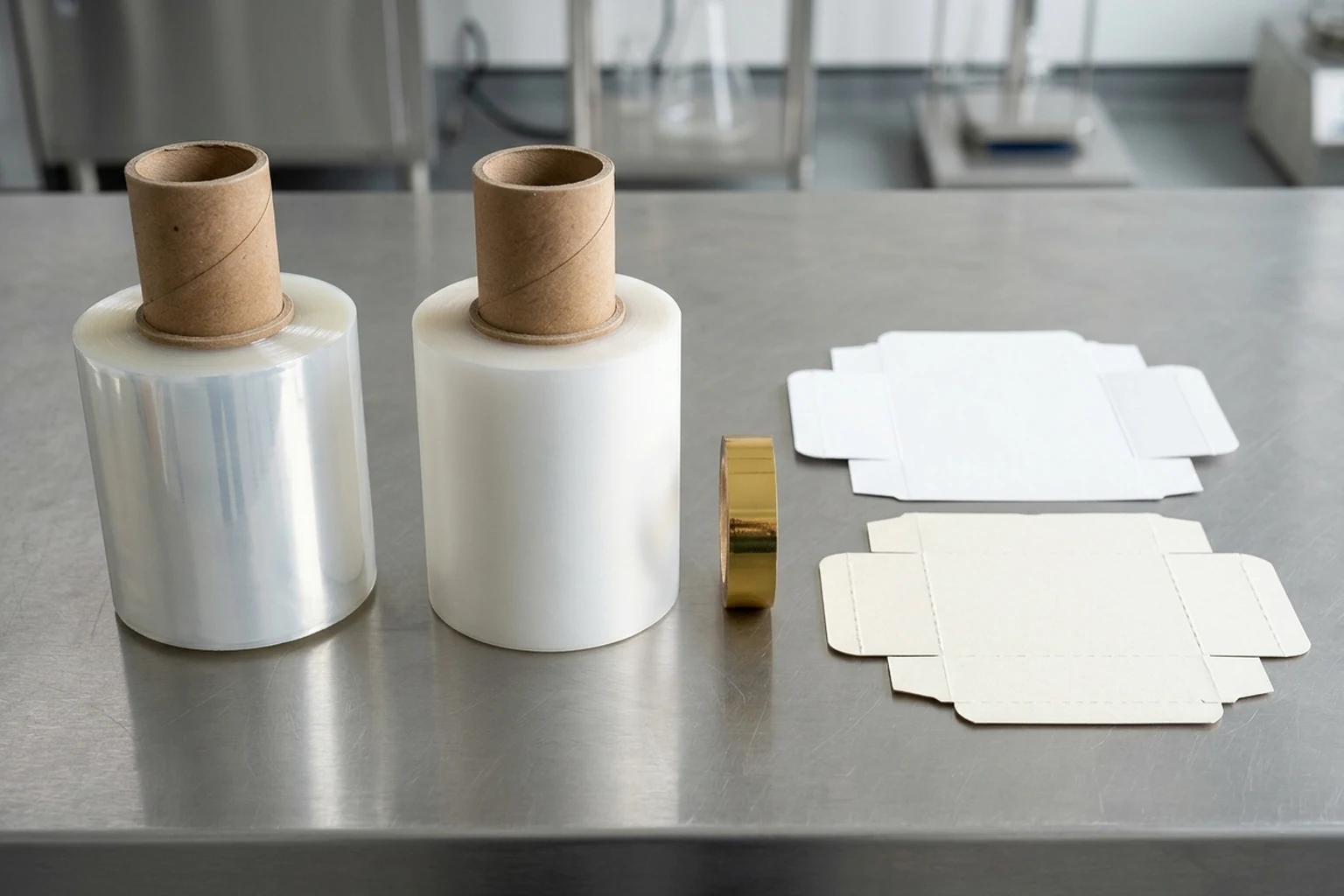
| Film Grade | Thickness & Yield | Optics & Slip (COF) | Heat-Seal Window & Barrier |
|---|---|---|---|
| Bicor™ AB (two-side acrylic coated OPP) | Bicor™ AB film is supplied in nominal thicknesses (gauge 80 100 132; µm 20 25 33) tested per ASTM D2673. | Bicor™ AB typical optical values across its three gauges are Haze (% 1.6 1.7 1.9) per ASTM D1003 and Gloss (90 87 87) per ASTM D2457. | Bicor™ AB crimp seal strength (g/in 540 560 600 per ASTM D882 260°F (126°C) at 20psi for 0.75sec) pairs with minimum crimp seal temperatures of degree 185°F(85°C) 205°F(96°C) 185°F(85°C). |
| Bicor™ ASB-X (acrylic / sealable PVdC OPP) | Bicor™ ASB-X one-side acrylic / one-side sealable PVdC coated OPP film is offered in thicknesses of gauge 110 150 170 210 (µm 27.5 37.5 42.5 52.5) per ASTM D2673. | Bicor™ ASB-X optical values across its four thicknesses are Haze (% 1.3 1.2 1.4 1.4) per ASTM D1003 and Gloss (90 98 98 90) per ASTM D2457. | Bicor™ ASB-X has an acrylic/acrylic COF of 0.24 per ASTM D1894, WVTR of g/100in²/24hr 0.53 0.23 0.21 0.17 per ASTM F1249 100°F(38°C),90%RH, and OTR of cm³/100in²/24hr 4.5 4.5 4.5 4.5 per ASTM D3985. |
| Taghleef TSS (both-sides heat-sealable BoPP) | Taghleef TSS nominal thicknesses are µm 15 18 20 25 30 35 40 48, with unit weights of g/m2 13.7 16.4 18.2 22.8 27.3 31.9 36.4 43.7 and yields of m2/kg 73.3 61.0 54.9 44.0 36.6 31.4 27.5 22.9. | Taghleef TSS has Haze (% 2.0 2.3 2.6) per ASTM D1003, Gloss (45°) of 85 per ASTM D2457, and Dynamic COF (NT/NT) of 0.25 per ASTM D1894. | Taghleef TSS thermal shrinkage (130°C , 5 mins) is MD 6.0 and TD 3.0, its heat seal range is °C 105 - 140, and its NT/NT seal strength is g/cm 170 230 300 130°C ;0.5 s. |
| Torayfan® BMS (matt BOPP) | Torayfan® BMS matt BOPP film is specified in 15 µm and 20 µm gauges with nominal yield of m²/kg 73 54.5. | Torayfan® BMS rolls are wound on a standard paper core with an internal diameter of 152.8mm, with a minimum roll width of 340mm and a maximum roll width of 2450mm. | Torayfan® BMS matt BOPP film has COF (sealant to sealant) of 0.4 0.4 per ASTM D1894, heat-seal strength @121°C of N/25mm 3 3, SIT (>2N/25mm) of °C 105 105, matt-side gloss (20°) of 6 6 per ASTM D 2457, and haze of % 57 57 per ASTM D 1003. |
| FLEXOPP™ B-THL (low-SIT heat-sealable BOPP) | FLEXOPP™ B-THL heat-sealable BOPP film is produced in Micron 15 18 20 23 25 30 35 40 48 50 (Gauge 60 72 80 92 100 120 140 160 192 200) with a film density of gm/cc 0.91 per ASTM D-1505. | FLEXOPP™ B-THL has a wetting treatment level of dyne/cm 38 per ASTM D-2578, dynamic COF (UTR/UTR) of 0.30±0.05 per ASTM D-1894, haze (% 1.8 2.0 2.2 2.2 2.5 2.8 3.0 3.0 3.5 3.5) per ASTM D-1003, and gloss (at 45⁰) of Unit 88 86 85 85 85 82 82 80 78 78 per ASTM D-2457. | FLEXOPP™ B-THL has a heat seal initiation temperature of ⁰C 105 and minimum heat seal strength of gm/25mm 300 325 350 350 375 400 425 450 450 450. |
U.S. Plant Readiness and Pre-Shipment Acceptance Testing Checklist
Since 2013, LINEVO's Foshan manufacturing group has operated a 15,000+ m² factory area across 10 machine families serving 5,000+ customers worldwide.
LINEVO machines use Siemens PLC/HMI controls and Omron temperature controllers across applicable platforms, with sensing and operator functions matched to the application.
Within the list of standards harmonised to the Machinery Directive are packaging machine-specific C-standards, namely EN 415 parts 1 to 10.
Before shipping, LINEVO defines factory acceptance test (FAT) requirements with the customer's engineering team, including product and film trials, dose and seal checks, and feeding and discharge functions.
- Factory Acceptance Testing (FAT) typically includes speed trials, performance checks, product integrity tests, and system compatibility evaluations.
- According to a PMMI report, companies incorporating Factory Acceptance Testing (FAT) reduce post-installation issues by 30%, saving time and money.
- For U.S. projects, LINEVO reviews electrical supply, utilities, line signals and mechanical handoffs before build, and configures machines for 60 Hz plant power.
- Taghleef TSS film should be conditioned in the operating environment for at least 24 hours before processing and is suitable for use up to 6 months from the date of production.
Frequently Asked Questions
What box dimensions and packing speeds does the reference overwrapping series cover?
The LINEVO LV-BT280 / LV-BT350 Series covers a combined box length × width × height range of 40–200 × 20–120 × 10–70 mm across the series at a packing speed of 30–80 boxes per minute depending on box size. Under LINEVO's overwrapping selection rule, if the proposed box length is below 40 mm or above 200 mm, width below 20 mm or above 120 mm, or height below 10 mm or above 70 mm, a separate configuration review is required.
How does an overwrapper handle a slower upstream cartoner or manual hand feeding?
When an overwrapper follows a cartoner, the two machines must agree on box orientation, pitch and stop signals, whereas when boxes are fed by hand, the operator position and buffer must be planned. When upstream pharmaceutical carton discharge is 18 cartons/min—below the 30–80 boxes/min operating band of the LV-BT280 / LV-BT350 overwrapper—the overwrapper runs on demand via inverter speed control.
How should buyers calculate shift output and cost per accepted pack on an overwrapper?
LINEVO calculates shift output for overwrapping using Wrapped boxes per shift = agreed boxes/min × (scheduled minutes − stopped minutes), counting only running minutes and deducting rejected boxes separately. LINEVO calculates Accepted packs = attempted packs − rejected packs and Cost per accepted pack = total costs for the period ÷ accepted packs in that period. In a hypothetical shift with 20,000 attempted wraps and 600 rejects, the cost denominator is 19,400 accepted packs rather than 20,000.
Why do film heat-seal initiation temperature, hot tack, and pre-conditioning matter during trials?
Hot Tack Strength is peel-tested within 150ms of the heat seal being formed per method ASTM F1921, whereas Ultimate Seal Strength is measured after cooling per method ASTM F88. Taghleef TSS film should be conditioned in the operating environment for at least 24 hours before processing and is suitable for use up to 6 months from the date of production.
How are overwrapping machines configured for U.S. plant power and pre-shipment testing?
For U.S. projects, LINEVO reviews electrical supply, utilities, line signals and mechanical handoffs before build, and configures machines for 60 Hz plant power. LINEVO defines factory acceptance test (FAT) requirements with the customer's engineering team, including product and film trials, dose and seal checks, and feeding and discharge functions, and you can message our engineering team on WhatsApp to scope your box format.
Sources
- LINEVO — Cellophane Overwrapping Machines Family Hub, Playing Card & Game Box Overwrapping Machine, Automatic Perfume Box Overwrapping Machine, Automatic Cosmetic Box Overwrapping Machine, and Automatic Pharmaceutical Box Overwrapping Machine.
- Jindal Films — Bicor AB Two-Side Acrylic Coated OPP Film and Bicor ASB-X One-Side Acrylic / One-Side Sealable PVdC Coated OPP Film Technical Data Sheets.
- Taghleef Industries — TSS Coextruded Both Sides Heat Sealable BoPP Film Technical Data Sheet.
- Toray Films Europe — Torayfan BMS One Side Treated and One Side Heat Sealable Matt BOPP Film Technical Data Sheet.
- Flex Films — FLEXOPP B-THL Transparent Both Side Heat Sealable Low SIT BOPP Film Technical Data Sheet.
- Futamura Group — Cellophane Renewable Cellulose Films and Lacquered Cellulose Films Technical Overview.
- Packaging Strategies — Innovia Films Propafilm Anti-Static High-Speed Overwrapping BOPP Film.
- Essentra Tapes and Filtrona Tapes — SupaStrip Printed Tear Tape, SupaStrip PCR Recycled PET Tear Tape, and Supastrip Prism Holographic Tear Tape Specifications.
- Holmen Iggesund — General Technical Information About Paperboard (Solid Bleached Board and Folding Box Board).
- RDM Test Equipment — Heat Seal, Hot Tack and Coefficient of Friction Testing Reference.
- PLAN IT Packaging / PMMI Reference and Automate UK / Pilz UK — Factory Acceptance Testing Integration and Packaging Machine Safety Standards.