
Sidel Cermex RoboSELEX is a collating infeed system described for lightweight, shaped bottles. Its published range and changeover claims are inputs for a supplier review, not a prediction for your bottle or complete line. This guide turns the official announcement and product page into a US project brief. Ask Sidel about RoboSELEX supply and technical approval; LINEVO enquiries cover its own published equipment scope.
- Separate bottle grouping from loading and closing the case.
- Keep bottle format and collation changes on different records.
- Assign the conveyor, transfer and control interfaces before acceptance.
On this page
The announcement describes an infeed boundary
Sidel’s March 10, 2026 release announced plans to premiere RoboSELEX at Interpack, May 7–13 in Düsseldorf. It describes a robotic collation system for case packers. The current product page places the system between upstream bottle flow and case packing; it does not make the collator a complete case-packing machine.
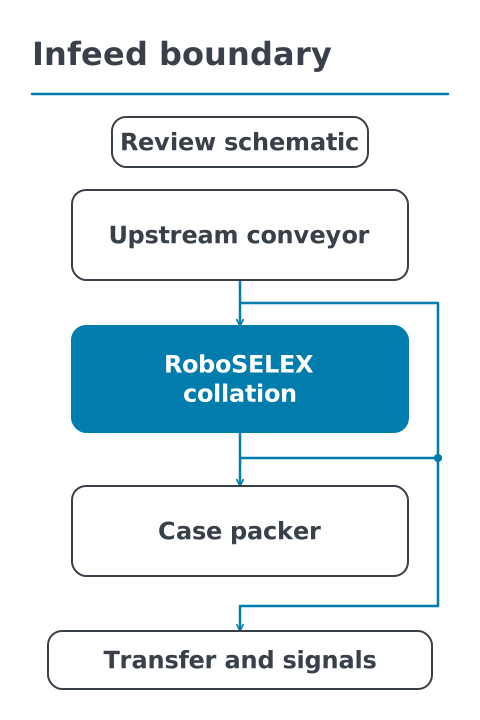
Schematic locates RoboSELEX collation between the upstream conveyor and case packer and marks transfer and signals for review.
Collation means arranging incoming bottles into the group the packer will receive. Put that group and its orientation on the transfer drawing. A separate line item can then describe who loads the group into the case and who closes it. Use packaging system planning to list these responsibilities before comparing equipment proposals.
Who should reassess the bottle-handling brief
The RoboSELEX part of Sidel’s announcement addresses Food, Home Care and Personal Care lines. For those lightweight, shaped-bottle projects, the immediate effect is a review task for engineering, production and procurement. The following role assignments are editorial suggestions, not reported performance improvements.
| Buyer role | What to reassess | Published basis for the question |
|---|---|---|
| Engineering | Filled-bottle presentation and packer transfer | Product page describes shaped-bottle grouping |
| Production | Format-change clock and stop/restart behavior | Announcement and product page use different bottle-change times |
| Procurement | Collator versus complete packer scope and US supply terms | Announcement describes a system for case packers, not a delivered line |
Which bottle inputs change the review
Prepare a filled-bottle record, not just a picture of the empty container. The system is presented for lightweight, shaped bottles, so the supplier review should address shape, stability, orientation and the behavior of your production bottle. Identify the exact product and closure beside the bottle drawing.
| Input to record | Why ask for it | Proposed evidence |
|---|---|---|
| Bottle shape and dimensions | Define the format being assessed | Dimensioned drawing and representative filled samples |
| Filled condition and closure | Identify the production presentation | Product description and closure record |
| Upstream orientation and pitch | Describe what arrives at the collator | Conveyor video and transfer sketch |
| Required case pattern | Define the group and its orientation | Pack-pattern drawing |
| Stops and restart behavior | Expose conditions beyond steady flow | Observed line sequence |
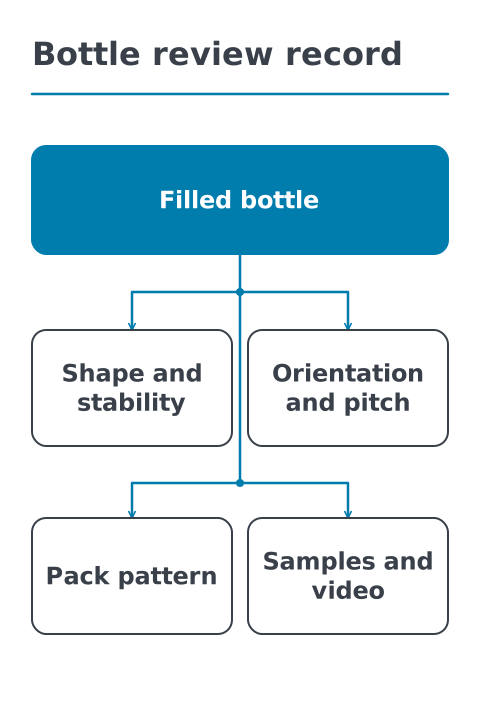
Bottle review record groups the filled bottle, shape and stability, orientation and pitch, pack pattern, samples and video.
Record where bottle labeling occurs in the actual line and which surfaces should remain undamaged during handling. The sample-testing preparation guide explains how to keep samples and test conditions representative for LINEVO equipment; arrange any RoboSELEX trials with the responsible supplier.
Keep bottle speed and case output separate
Sidel’s product page lists 80–320 bottles per minute and case counts from 3 × 1 to 8 × 6 products, depending on product size. It also describes two Delta robots and continuous motion without accumulation. These are manufacturer descriptions of the system, not an agreed rate for every bottle and case pattern.
Write the required good case output beside the number of bottles in each case. Ask which pattern and bottle support the proposed rate, and how pauses upstream or downstream are handled. Keep the selected pattern visible wherever a rate is copied into a comparison sheet. A high bottle count per minute cannot alone establish accepted cases per shift.
The good-output terminology helps distinguish the measurement you need from a catalog figure. For a proposal that includes other LINEVO processes, identify them using the machine family directory and keep their acceptance statements tied to their own product and pack conditions.
Resolve the changeover clock before comparing times
The product page distinguishes one minute for a different collation of the same bottle from two minutes thirty seconds for a different bottle. The March announcement describes a bottle-format change as about two minutes. Preserve that difference and ask Sidel which document and timing definition govern the proposed configuration.
| Change described | Published manufacturer wording | Project record to agree |
|---|---|---|
| Same bottle, different collation | Product page: 1 minute | Starting pattern, ending pattern and timing boundary |
| Different bottle format — product page | Product page: 2 minutes 30 seconds | Tooling, guides, recipe and first accepted case |
| Different bottle format — announcement | Announcement: about 2 minutes | Which revision and conditions explain the difference |
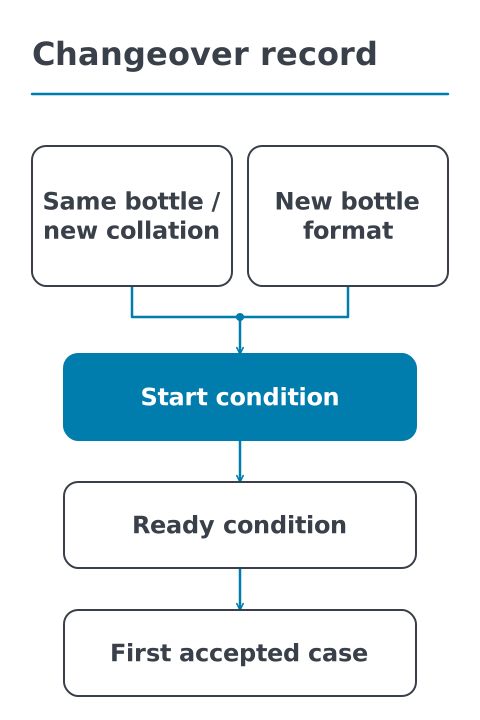
Two changeover paths distinguish same-bottle collation from new-bottle format and identify start condition, ready condition and first accepted case.
For the test brief, propose a clock boundary: when the old format stops, which actions are included, and what marks a successful restart. List the operator actions and the tooling used. The spare and change-parts guide shows why a format list and a parts record belong together for equipment in LINEVO’s scope.
Define the interface and acceptance inputs
Ask for a joint interface review with the case-packer owner. Record transfer position, bottle-group orientation, conveyor behavior, stop and restart signals, and responsibility for controls. A supplier’s general description of feeding case packers does not replace confirmation for your installed machine and retained controls.
| Interface question | Input from the buyer | Acceptance observation to agree |
|---|---|---|
| What arrives at the collator? | Filled bottles and upstream flow record | Stable presentation for selected formats |
| What reaches the packer? | Group and case-pattern drawing | Correct count and orientation at transfer |
| What happens during a stop? | Existing stop/restart sequence | Controlled recovery with recorded rejects |
| Who implements the controls? | Existing equipment and controller list | Named signal owner and agreed handshake |
| Which changes require adjustment? | SKU and format-change schedule | Recorded change sequence and accepted restart |
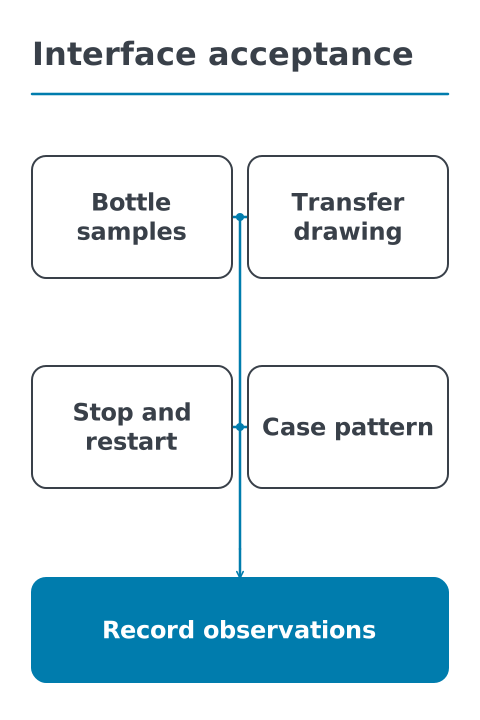
Acceptance input diagram combines bottle samples, transfer drawing, stop and restart, case pattern and recorded observations.
Use installation and operator-training planning to organize site access, utilities and the people needed for commissioning. For LINEVO’s separate portion of a packaging project, the project brief checklist records the product, finished pack and required output. Keep the third-party collator approval with Sidel and the existing case-packer responsibility with its owner.
When the news should trigger action
Act when your planned bottle or case pattern exposes an infeed question that the existing line has not resolved. The useful next step is a technical review with representative bottles and an interface drawing. A dated exhibition announcement does not establish a US ordering window or delivery schedule.
| Event or decision | Date or trigger | Evidence type |
|---|---|---|
| Sidel exhibition announcement | March 10, 2026 | Official release |
| Planned Interpack premiere | May 7–13, 2026 | Plan stated in that release |
| This source review | October 8, 2026 | Editorial review |
| US project supply and trial | Supplier confirmation needed | Project-specific documents |
If a new bottle is already selected, review it before ordering format tooling or changing the infeed. If the bottle is still undecided, compare the production presentations first and keep the shortlisted drawings under revision control. The packaging applications guide is a separate route-planning reference; this article does not turn the news into a new LINEVO product offer.
What is still unconfirmed
The remaining questions need named answer owners and project documents. Prioritize the bottle’s behavior, the retained case packer and the accepted output before treating a general performance description as a purchasing requirement. Store the answer beside the drawing or sample revision it covers.
| Open question | Answer owner | Evidence requested |
|---|---|---|
| Can this bottle run without a puck? | Sidel and the buyer’s engineering team | Bottle assessment and trial record |
| Can the retained packer receive the group? | Sidel and case-packer owner | Interface review and controls scope |
| Which bottle-change time applies? | Sidel | Revision-specific procedure and timed conditions |
| What rate applies to this format? | Supplying parties and buyer | Defined run and reject record |
| What is available in the US? | Sidel commercial/service team | Supply, installation and support proposal |
| What is included in the price? | Contracting supplier | Itemized equipment and integration scope |
Sidel describes possible puck removal for conveyable, non-accumulable shaped bottles. In the review, separate the ability to travel along the conveyor from the ability to tolerate bottles collecting against one another. Ask the supplier to assess both behaviors using your filled samples.
When this does not apply
This guide does not establish suitability for every container or a beverage-line application. The RoboSELEX discussion in the announcement targets Food, Home Care and Personal Care lines; its broader exhibition coverage is not bottle-format approval. No independent operating record or North American delivery evidence is presented here.
It also does not cover liquid dosing or folding-carton loading. Use filling-machine scope for the separate LINEVO configurations and cartoning-machine scope for loading products into folding cartons. Do not use these links as evidence that LINEVO offers RoboSELEX, a compatible replacement or its integration services.
Related questions buyers ask
What is the difference between a cartoner and a case packer?
A cartoner loads products into folding cartons; the case-packing step groups or loads products into a shipping case. RoboSELEX is described as an infeed system serving the latter. Name the incoming pack and outgoing case on your drawing to prevent these functions being merged in a quote.
What is the price of a carton packing machine?
First clarify whether the request concerns a folding-carton machine, a case packer or the bottle collator. The reviewed RoboSELEX documents provide no project price. Ask for separate scope lines covering the collator, tooling, conveyors, packer changes, controls and commissioning rather than a generic machine price.
What does "cartoner" mean?
In LINEVO’s published terminology, a cartoner opens a folding carton, loads the product and closes it. That term does not identify the RoboSELEX bottle-grouping function. Keep the commercial equipment name and its process description together wherever a quotation uses a broad packaging term.
Takeaway: Clarify the packaging stage before requesting the equipment or its price.
Method, sources and related records
Compiled from Sidel’s official March 10, 2026 announcement and its RoboSELEX product page, reviewed October 8, 2026. The source statements remain manufacturer claims; the input tables and diagrams are editorial project aids. The later media retelling is not a second independent operating record. Original addresses, capture dates and library locators are retained in the evidence ledger.
For related preparation, packaging project resources define configuration terms; sample-test planning explains representative inputs for LINEVO equipment; project support stages organize responsibilities from review to commissioning. These resources help document a separate LINEVO scope, not obtain approval for the third-party collator.
What to send us
Send what you have and mark what is still undecided. We reply within 24 hours.
| Item | Why we need it | Example format |
|---|---|---|
| Product and finished pack | Identify relevant LINEVO equipment within the wider project, separately from RoboSELEX. | Product description, filled bottle and finished-pack drawing |
| Target output and formats | Describe good output and the format schedule for LINEVO’s scope review. | SKU schedule with bottle drawings and required output |
| Layout and adjacent equipment | Record transfer direction, retained units, utilities and destination for the proposed LINEVO configuration. | Annotated line layout with US site details |