
Pouch type and machine route in short
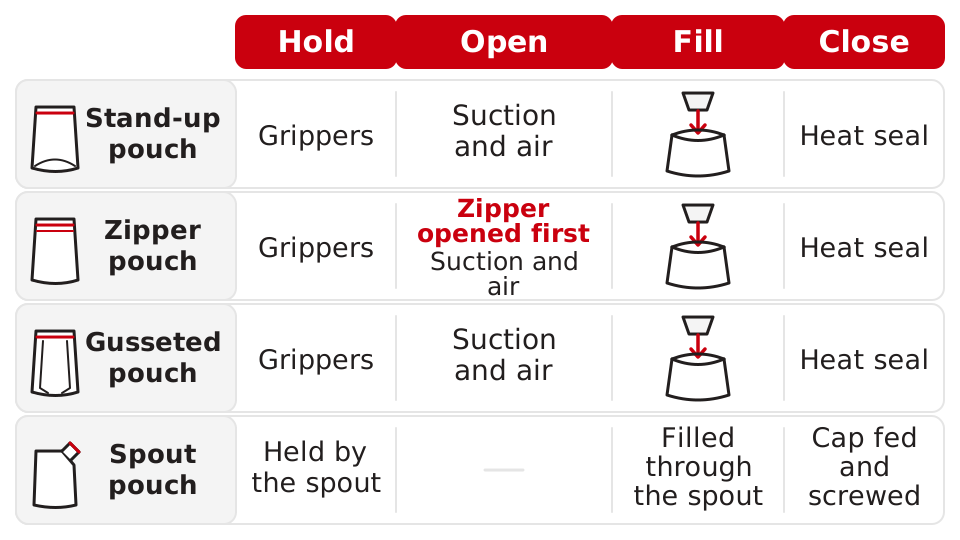
Stand-up pouches (doypacks), zipper pouches and gusseted pouches run on a pick-fill-seal machine: it picks an empty pouch from a magazine, holds it in grippers, opens it with suction and air, fills it and heat-seals the top. A zipper adds one step, because the zipper is opened before the pouch mouth. The LV-160 spout configurations take a different route: the pouch is held by the spout, filled through it and capped. On the LINEVO LV-210 the source catalog lists pouch widths of 90–210 mm and lengths of 110–330 mm; the LV-160 spout filler lists no pouch size, and one configuration is named for 2 kg and 5 l pouches. Fill and output are confirmed with your own pouch and product.
- The machine is set up around your pouch, so the pouch sample, ideally from the supplier you will use in production, is the starting point.
- Pouch width decides the grippers: a different width means adjusting or changing them, so list every size you plan to run.
- A zipper or a spout changes the machine most. A zipper adds an opening step and possibly reclosing; a spout usually points to a spout filler with capping, such as the LV-160, once the fill opening, spout and cap are confirmed.
- Flat-bottom (box) pouches are not named in the LINEVO premade pouch listings, so they need a pouch sample reviewed before any route is proposed.
What are the main stand-up pouch types?
A stand-up pouch, also called a doypack, is a flexible pouch that stands on its base for display and use. Most have a bottom gusset that folds into a W shape and opens into a flat base; some use side gussets instead, and pouch suppliers add features such as a reclosable zipper or a pour spout. Doypack began as a trade name for this pouch and is now used for the same thing. The bottom design and film structure are agreed with your pouch supplier. What matters to the machine is the width and length, the closure feature, and how consistently the pouch opens.
What does each pouch type need from the machine?
Plain stand-up pouches set the baseline: gripped, opened by suction and air, filled and heat-sealed. A zipper adds an opening step, a gusseted pouch is opened the same way but checked on a sample, the LV-160 spout configurations fill through the spout and cap it, and flat-bottom pouches are not listed. Where the catalog says nothing, the table says so rather than filling the gap.
| Pouch type | Machine route | Holding and opening | Filling and closing | What to confirm |
|---|---|---|---|---|
| Stand-up pouch (doypack), no zipper | Pick-fill-seal, such as the LV-210 configurations | Picked from the magazine, held by grippers, mouth opened by suction and air | Weigher for solids, auger for powders, pump or piston for liquids and sauces; heated jaws seal the top | Pouch width and length inside the listed range, and product clearance below the seal |
| Zipper pouch | Pick-fill-seal; the zipper pouch configuration for gummies and the fruit and desiccant configurations list automatic opening including the zipper | The zipper is opened first, then the mouth by suction and air | As above; whether the zipper is closed again before sealing depends on the configuration | Zipper type and position, and whether it must be opened for filling and reclosed |
| Gusseted pouch | Pick-fill-seal; the premade pouch sauce configuration lists doypack, gusseted and spout pouches | Grippers and suction-and-air opening, as on the other pick-fill-seal pouches; how the gusset opens is confirmed on your pouch sample | The sauce configuration lists servo piston dosing with an anti-drip nozzle; heated jaws seal the top | Gusset depth and how the pouch opens, in a sample test |
| Spout pouch | Spout pouch filler, such as the LV-160 laundry liquid configuration | Pouches loaded automatically and typically held by the spout | Filled through the spout, then caps are fed and screwed on | Spout diameter, cap type, and whether capping is included |
| Flat-bottom (box) pouch | Not named in the LINEVO premade pouch listings | To be confirmed | To be confirmed | Send pouch samples for a review before any route is proposed |
On the pick-fill-seal route, where the pouch top is heat-sealed after filling, liquids add one condition: the fill level must stay clear of the seal, and product must not splash onto the seal area as the pouch moves between stations. Seal quality through a liquid-filled pouch is checked on a trial. For spout pouches, how the capped closure is checked is agreed for the project.
Do your pouch size and fill fall inside the machine's range?
Pouch width and length decide whether a pouch fits a machine and which grippers it needs; the fill decides the dosing unit. The LINEVO listings give pouch size ranges and speeds, but no fill weights or volumes, so the fill is reviewed against your own pouch.
| Route | Listed pouch size | Listed speed | Conditions |
|---|---|---|---|
| LV-210 pick-fill-seal | Width 90–210 mm, length 110–330 mm | 20–70 bags per minute | Catalog ranges without product-specific trial conditions; the same ranges appear on the zipper, beverage and desiccant configurations |
| LV-160 spout pouch filler | No size range listed; one configuration is named for 2 kg and 5 l pouches | 10–15 bags per minute | Catalog listing for laundry liquid, detergent and beer; confirmed for your pouch and product |
| Premade pouch sauce configuration | Not listed; figures are on request | Not listed | No model is named for this configuration, so the LV-210 ranges do not carry over; pouch size and output are confirmed with your pouch sample |
Why pouch size alone does not give the fill
A pouch holds a volume, while a fill is usually stated as a weight. The product's bulk density links the two, and how far the bottom gusset opens changes the usable volume. The practical check is to fill your own pouch by hand with your product at the target weight and see how much room is left below the seal area. Send that target fill with every pouch size you run, and the dosing unit and fill range are proposed for them.
Types of premade pouch machine in the LINEVO range
Premade pouch machines, also sold as doypack or pouch packing machines, fill pouches made by a pouch converter; no film is formed on the machine. The nine configurations in the LINEVO family follow two routes, and the pouch type decides which one applies.
- Pick-fill-seal machines (reference model LV-210) handle stand-up and zipper pouches of coffee beans, fruit, gummies, snacks, juice, milk-style drinks and sauces. The number of stations and whether they are arranged in a rotary or in-line layout are confirmed for each configuration.
- Spout pouch fillers (reference model LV-160) handle spout pouches of laundry liquid, detergent and beer, with cap feeding and cap screwing listed.
Machines that form doypacks from roll film are a different type and are not part of this family. The station sequence of both routes, and when a vertical form fill seal machine is the better route, are set out on the premade pouch filling machines page.
Three pouch decisions that change the quotation
Settle three things before the configuration is fixed: the pouch supplier, the closure (zipper, spout or none) and the full list of pouch sizes. Each looks like a packaging detail but changes the machine scope.
Changing the pouch supplier
Pouches from different suppliers, or different batches, can open differently. Run the sample test and the pre-shipment check with pouches from the supplier you will use in production.
Adding a zipper or a spout late
A zipper adds an opening step and, depending on the configuration, reclosing before the seal. A spout can move the project from a pick-fill-seal machine to a spout pouch filler with capping, such as the LV-160; the sauce configuration also lists spout pouches, so the route is confirmed from your spout, cap and fill opening. Decide on both before you ask for a quotation.
Adding pouch sizes
Each extra width needs its grippers and settings. List every size now, so the change parts and changeover steps appear in the quotation rather than as a later addition.
What to send for a pouch machine review
Send the product, the target fill and pouch type, pouch samples for every size, and the output you need. Anything you have not decided can be marked open.
- Product: what it is and how it behaves, such as granules, gummies, powder, liquid or a sauce with particles
- Target fill and pouch type: the fill weight or volume, the pouch type and its closure (zipper, spout or none)
- Pouch samples: pouches from your production supplier, with width, length, gusset and material, for every size you plan to run
- Target output: the good pouches per minute or per shift you need
The team reviews which route and configuration fit and whether a sample test is needed, and comes back with a configuration proposal or a sample-test plan to discuss.
Questions buyers ask about pouch types
Is a doypack the same as a stand-up pouch?
Yes, the two names describe the same pouch; see the main stand-up pouch types. A doypack machine is usually a premade pouch machine, but machines that form doypacks from roll film are a different type and are not in the LINEVO range.
Is a stand-up pouch better than a pillow pouch?
Neither is better in general. A pillow bag is formed from roll film on a vertical form fill seal machine, which usually costs less per pack; a stand-up pouch gives a stand-up base, zipper or spout. Decide on the pack you need to sell first.
What are stand-up pouches used for?
In the LINEVO premade pouch configurations, stand-up and zipper pouches are listed for coffee beans, fruit, gummies, snacks, juice, milk-style drinks and sauces, and spout pouches for laundry liquid, detergent and beer.
How this page was put together
This page is compiled from published sources, not from our own trials. Machine routes, process steps and listed ranges come from the LINEVO premade pouch family page and the source catalog records for the LV-210, LV-160 and sauce configurations (catalog revision of September 2026); every figure is a catalog listing without product-specific trial conditions. The pouch definitions are based on the Wikipedia entry “Stand-up pouch”, read on 7 October 2026. Pouch film structures, size-to-capacity charts and prices are not covered.
Last updated: 7 October 2026.