
For a SIG Neo aseptic carton filler brief, start with the product and exact carton format, then request the approval documents and transfer drawing. The announcement supports a manufacturer specification record, not your complete line’s accepted output. This guide helps US project buyers organize those questions; SIG confirms Neo technical approval and supply, while LINEVO enquiries concern its own published equipment scope.
- Keep single-serve and multi-serve format lists separate.
- Write the product, carton and interface inputs before comparing output.
- Leave supplier availability and acceptance conditions open until documented.
On this page
What SIG announced
SIG’s October 1, 2026 announcement names separate single-serve and multi-serve Neo additions. Its figures describe the named carton families. Keep that manufacturer record alongside your own pack list; a format count does not identify which of your proposed capacities, closures or material structures are approved.
| Announced filler | Carton family | SIG-listed output and formats |
|---|---|---|
| SIG Neo XSlim 32 Aseptic | XSlimBloc, single-serve | 32,000 cartons/hour; nine sizes |
| SIG Neo Midi 15 Aseptic | MidiBloc or MidiFit, multi-serve | 15,000 cartons/hour; three sizes per format |
Create a row for each stock-keeping unit, or SKU: the sellable product and pack combination. Attach its carton drawing and intended fill. Ask for a supplier-approved format list rather than interpreting the number of sizes as a list of capacities. This distinction also keeps an aseptic liquid carton separate from a folding carton loaded by a cartoning machine.
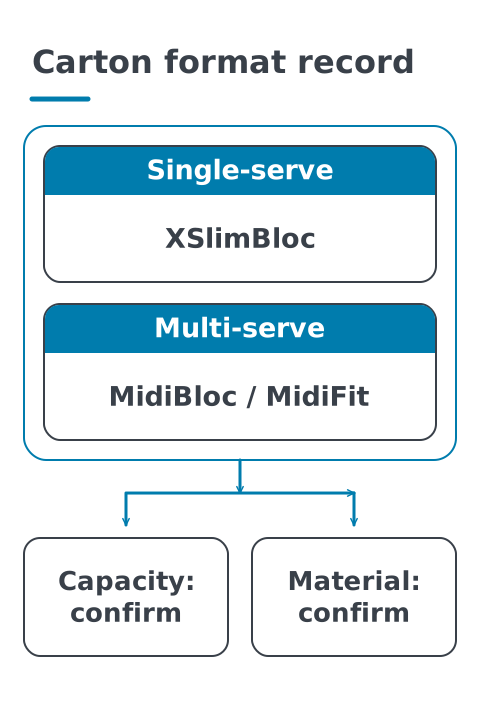
Two project records distinguish single-serve XSlimBloc from multi-serve MidiBloc and MidiFit, with capacity and material fields left for confirmation.
Who should change their packaging-line brief
Use the announcement when your decision concerns single-serve or multi-serve aseptic cartons. The useful project change is a more precise material-and-format brief. A buyer adding output to an existing plant needs a different evidence package from one planning a new primary pack or a broad format schedule.
| Buyer task | What changes in the brief | Evidence to request |
|---|---|---|
| Add single-serve carton output | Identify the XSlimBloc format and discharge requirements | Approved format list and transfer drawing |
| Plan multi-serve SKUs | Separate MidiBloc and MidiFit requirements | Format-by-format proposal and changeover sequence |
| Keep an existing building | Show utilities, access and adjacent equipment | Project layout with service and operating access |
| Retain installed equipment | Mark the units and interfaces being retained | Responsibility matrix and compatibility review |
Start with the packaging system planning guide to map the process boundary. Mark what already exists, what is proposed and what remains undecided. Write the plant location and intended project window into the brief so the supplier can answer a specific availability question rather than a general question about a global announcement.
How to read the capacity baseline
SIG says both total output and output per square meter increase by one-third, but the announcement does not name the comparison machine. Keep the two measures separate: output compares rates, while area productivity also depends on the area definition. Neither statement identifies the good output of your complete line.
Ask which standard filler, configuration, format and operating conditions form the baseline. For the area figure, ask whether the boundary includes only the machine or also operating space, service access and connected equipment. Those are comparison inputs to request, not assumed dimensions. Without them, a percentage cannot settle your plant-layout decision.
| Directory-only comparison | Published rates, cartons/hour | LINEVO calculation under stated assumption |
|---|---|---|
| XSlim 32 announcement / Smile 24 directory | 32,000 / up to 24,000 | (32,000 − 24,000) ÷ 24,000 = one-third |
| Midi 15 announcement / SIG Midi directory | 15,000 / up to 12,000 | (15,000 − 12,000) ÷ 12,000 = 25% |
These are LINEVO calculations using the October 1 announcement and SIG’s Smile 24 and Midi directory pages reviewed October 8, 2026, assuming only that the published rate ceilings are comparable. They are not SIG’s stated comparison or measured gains. The directory labels the earlier system SIG Midi; this table does not invent a Midi 12 model designation. Neither arithmetic result establishes the announcement’s area-productivity baseline.
Use the catalog information explanation to distinguish listed figures from a project proposal. Record the required good cartons over an agreed observation period, the reject definition and the format being run. That lets the acceptance discussion describe an observable result instead of repeating a headline.
Turn carton and material choices into interface records
An interface record describes what passes between units and who supplies each connection. For this project, begin with the product and approved carton, then record discharge orientation, transfer height, downstream demand, stop signals and the responsibility for each item. Leave every numerical field blank until the project documents supply it.
Put the carton drawing and material revision beside the format record. Ask SIG to confirm which specification is accepted for the proposed machine. Keep closure questions and any planned material change on the same revision list; a similar-looking carton is not evidence that the configuration accepts it.
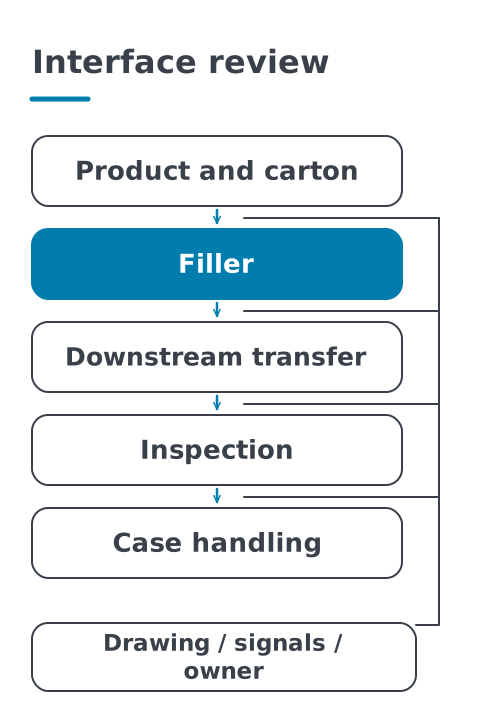
Project interface map connects product and carton records to the filler, downstream transfer, inspection and case handling, with responsibilities recorded at each boundary.
Follow the site preparation checklist for layout and utility inputs. For any LINEVO equipment considered elsewhere in the project, the equipment family directory defines the published process scope. Treat each supplier’s interface agreement separately and assign one project owner to reconcile the drawings.
When to act on the announcement
Begin information gathering when the carton route is a serious project candidate; reserve procurement dates until the supplier confirms them. The announcement date is a news event. It is not evidence of a US ordering date, a trial slot or a delivery commitment. Use milestones tied to your own decision documents.
| Milestone | Date or condition | Source nature |
|---|---|---|
| Neo announcement | October 1, 2026 | SIG official release |
| This editorial review | October 8, 2026 | Source review, not a new launch |
| US supply, trial or delivery | To be confirmed for the project | Written supplier response needed |
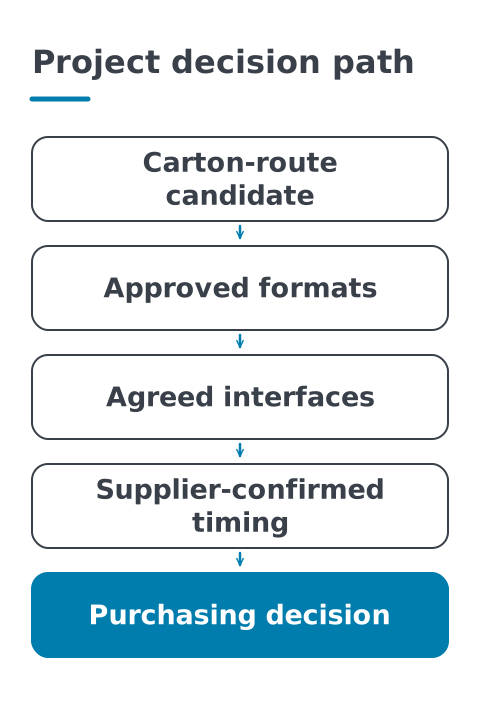
Decision path moves from carton-route candidate to approved formats, agreed interfaces and supplier-confirmed timing before a purchasing decision.
For a LINEVO scope discussion, use the project brief checklist to record the product, primary pack and target output. Ask SIG directly about the Neo machines. Keep the two conversations clearly assigned so an adjacent-equipment inquiry cannot be mistaken for a Neo quotation.
What remains open before acceptance
Convert an open question into an assigned document request. The announcement leaves project-specific supply, materials, interfaces and acceptance unresolved. A useful register records the answer owner, the document expected and the decision that answer unlocks. It should travel with the proposal rather than remain in an email thread.
| Open item | Who can confirm it | Record needed |
|---|---|---|
| Exact capacities and material compatibility | SIG technical team | Revision-controlled format and material approval |
| US availability and support | SIG commercial/service team | Project-specific proposal and support terms |
| Comparison baseline and operating area | SIG technical team | Named baseline and dimensioned scope |
| Retained-line compatibility | Equipment suppliers and project integrator | Interface drawings and responsibility matrix |
| Good output, rejects and format changes | Buyer and supplying parties | Acceptance protocol with product and conditions |
| Price and delivery scope | Contracting supplier | Itemized quotation and agreed schedule |
The sample-testing preparation guide explains why product, packaging material and observation conditions belong together in a test record. That principle helps organize your acceptance request; it does not mean LINEVO can run a Neo trial. Ask the responsible supplier which observations establish the particular aseptic process and which checks concern adjacent packaging equipment.
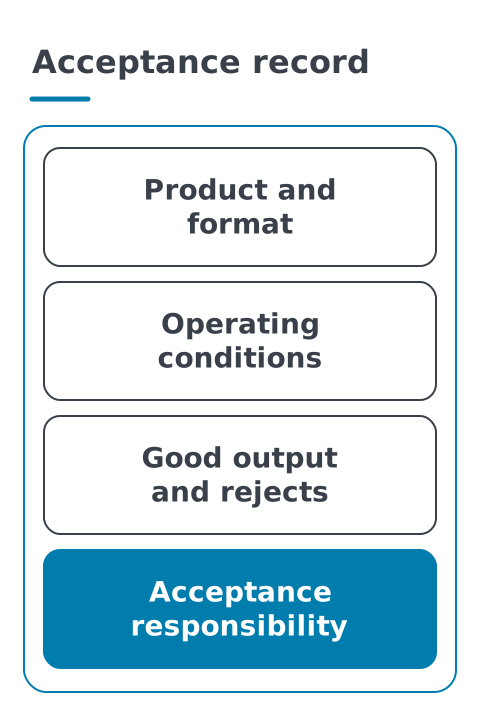
Acceptance record groups product and format, operating conditions, good output and rejects, and named acceptance responsibility.
When this does not apply
This record is not a specification for open-container filling, pouch packing or loading products into folding cartons. It cannot establish aseptic suitability for a different package or product. Start from packaging routes by product if the primary pack has not been chosen, and use filling-machine scope for the separate published LINEVO configurations.
Do not transfer claims about format changes, waste or particle removal to your own production acceptance. The reviewed announcement is manufacturer evidence of what was said, with no independent project test in this article. Material approval, process validation and the contracted operating conditions belong to the supplier and buyer’s project documentation.
Questions buyers also ask
What are aseptic filling machines?
An aseptic filling machine fills commercially sterile product into sterilized packaging while maintaining commercially sterile conditions through filling and closing. The process involves the product, equipment and packaging material together. Ask for the proposed product and carton process boundary, rather than identifying suitability from a dosing mechanism alone.
What is an aseptic carton?
An aseptic carton is a primary carton container used in that aseptic processing-and-packaging system, where the product, equipment and packaging material are brought to and maintained at commercial sterility. It is distinct from a folding carton loaded with already-packed products. Keep the two packaging stages under separate headings in your brief.
How much does a filling machine cost?
The reviewed announcement provides no project price. Request an itemized quotation for the approved formats, included units, interfaces, commissioning and service responsibilities. Define the equipment boundary before comparing offers; this article provides no price estimate for either Neo model.
Takeaway: Use the questions to distinguish the process and quote scope before asking for a number.
Method, sources and related preparation
Compiled from SIG’s official October 1, 2026 release and Smile 24 and Midi directory entries, reviewed October 8, 2026. The short aseptic definitions use the introduction and paperboard-container section of a public food-agency inspection reference updated July 14, 2005; they do not assert current regulatory approval. Announced figures remain manufacturer statements; directory arithmetic is explicitly a LINEVO calculation. Tables and diagrams organize project questions. No independent operating test, delivery record or model-equivalence assessment is claimed. Source addresses and retrieval records are retained in the evidence ledger.
For the next document: packaging project resources explain terminology and configuration checks; installation and training planning organizes site readiness; spare and change parts explains the separate support record for equipment in LINEVO’s scope.
What to send us
Send what you have and mark what is still undecided. We reply within 24 hours.
| Item | Why we need it | Example format |
|---|---|---|
| Product and primary pack | Identify the part of a wider project that falls within LINEVO’s published scope. | Product description and dimensioned finished-pack drawing |
| Output and format schedule | Describe required good output and the formats involved in that scope discussion. | SKU list with required output and change sequence |
| Interfaces and destination | Record adjacent equipment, transfer direction, utilities and site constraints for the proposed LINEVO equipment. | Annotated layout, utilities sheet and US site details |