
Which bottles these labelers are listed for
A bottle labeling machine applies a label to each bottle, or places a sleeve over it, as the bottles move along a conveyor. Two different processes sit under this name. A label applicator puts a label onto the bottle surface; the catalog does not state whether a given machine applies self-adhesive, cold glue or hot-melt glue labels. A shrink sleeve machine places a tube of film over the bottle, which is then shrunk to the bottle's shape with heat.
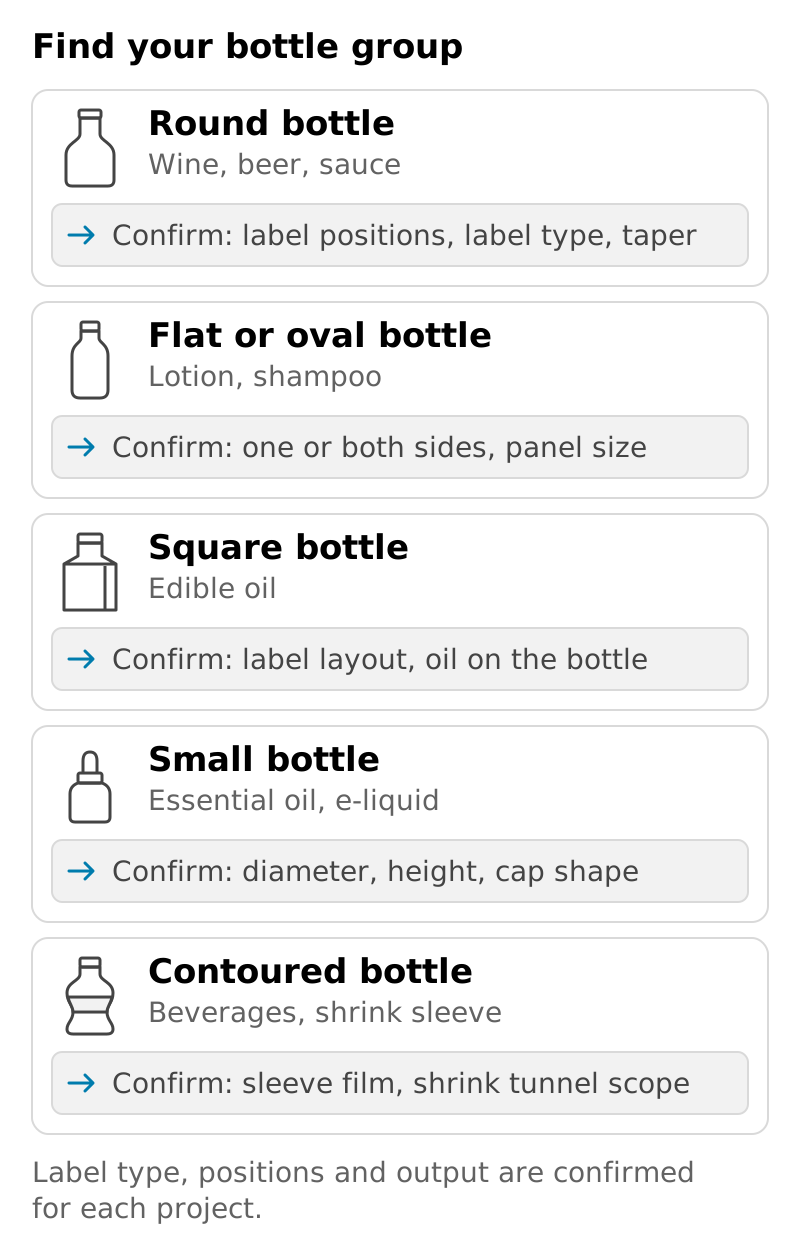
The bottle shape decides much of the configuration, because it sets how the bottle is held and guided. The table matches each bottle group in the catalog to its configuration, to what the catalog lists for it and to what has to be confirmed for your own bottle.
| Bottle group | Catalog configuration | What the catalog lists | Confirm for your project |
|---|---|---|---|
| Round wine and spirits bottles | Wine bottle labeling machine | Application: wine, spirits and premium bottled beverages | Label positions, including any neck label; label type; bottle taper in the label area |
| Beer bottles, glass or PET | Beer bottle labeling machine | Application: body, shoulder and neck labels on glass or PET beer bottles | Which of these labels this configuration applies on your bottle; label type; whether bottles arrive cold or wet |
| Sauce and condiment bottles and jars | Sauce bottle and jar labeling machine | Application: ketchup, chili sauce, mayonnaise and other glass or plastic jar containers | Label layout; container profile; oil or condensation on the surface at labeling |
| Flat and oval cosmetic and shampoo bottles | Lotion and cosmetic bottles or shampoo and personal care bottles | Application: flat bottles, oval shampoo containers and other personal care packaging; a flat-surface labeling engine listed for review | One or both sides labeled; label panel size |
| Square edible oil bottles, PET or glass | Square edible oil bottle labeling machine | Application: square PET or glass bottles for olive, vegetable and sesame oil; a square-profile labeling engine listed for review | Label layout; bottle width and depth; oil residue at labeling |
| Small essential oil and CBD dropper bottles | Essential oil and CBD bottle labeling machine | Application: small glass bottles, amber vials and droppers; a small-diameter labeling engine listed for review | Bottle diameter and height; dropper or cap shape; label layout |
| Small e-liquid bottles | E-liquid bottle labeling machine | Application: small-diameter bottles used for e-liquids; a small-diameter labeling engine listed for review | Bottle diameter and height; label layout, including any tamper-evident label |
| Beverage bottles with a full-body sleeve | Shrink sleeve labeling machine | Application: shrink sleeves on beverage bottles; servo-driven sleeve feeding and cutting modules listed for review | Sleeve film and seam; whether a steam or hot-air shrink tunnel is in scope; shrink result on your bottle shape |
Items listed for review are named in the source catalog but are not yet confirmed as standard scope; they are settled in the quotation. None of these configurations has a published speed, positioning accuracy or bottle size range either. A listed application is a starting point, not a record of a trial on your bottle.
Start somewhere else if your project is one of these. A hand-fed, benchtop or semi-automatic applicator is not in this range. Vials, ampoules, pet food cans and cartons have their own configurations on the labeling machine family page. Labels printed on demand at the labeler, print-and-apply, are not listed in the catalog.
Round bottles: wine, beer and sauce
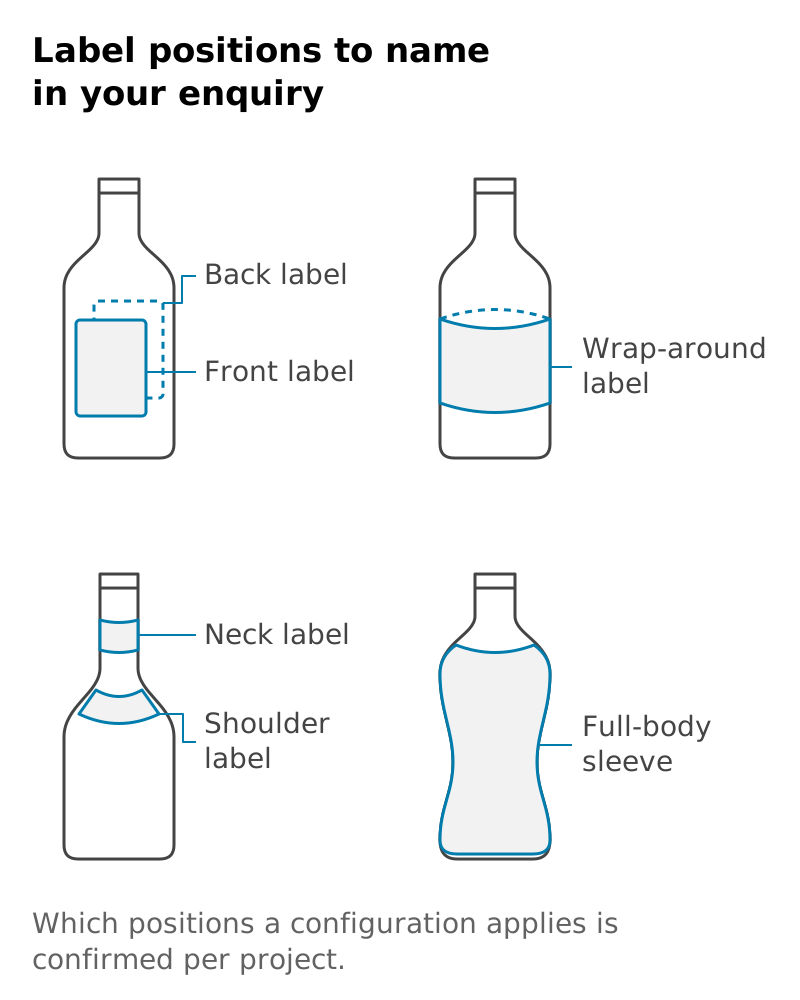
On a round bottle a label can run around the body, or separate front and back labels can be placed at set points on the circumference. Neck and shoulder labels sit on a surface that narrows, so their position and size have to be stated as precisely as the body label.
The beer configuration's application text names body, shoulder and neck labels on glass or PET bottles, and its source detail names moisture-induced adhesion failure as a problem it addresses. Which labels it applies on your bottle, and how they hold, are confirmed with your bottles and labels. The wine configuration is listed for wine, spirits and premium bottled beverages; its label positions are not stated, so give every position you need. If the bottle tapers where a label goes, say so, because a tapered surface affects how the label is applied.
Sauce bottles are listed with jars on one configuration, for ketchup, chili sauce, mayonnaise and other glass or plastic containers. Its source detail names oil residue as a cause of poor adhesion. If your bottles carry oil or condensation when they reach the labeler, describe it, and plan a trial with filled bottles.
- Bottle diameter, height and material, glass or PET
- Every label position: body, front, back, shoulder or neck
- Taper or embossing in the label area
- Surface condition at labeling: dry, wet, chilled or oily
Flat, oval and square bottles
A flat or oval bottle carries its label on a large, nearly flat panel, often on both sides. One personal care configuration is listed for lotion and cosmetic bottles, the other for flat bottles and oval shampoo containers. Their source detail names air bubbles and wrinkles on large labels as the problem, and a multi-stage pressure-roller system as the response; how labels lie on your panel is checked in a trial.
Square edible oil bottles in PET or glass are listed for olive, vegetable and sesame oil. The source detail names label peeling caused by oil residue, in cold or humid storage, as the problem for this configuration. Oil on the bottle at labeling is therefore the first thing to describe, followed by the label layout you need.
Flat, square and round bottles are handled differently. One labeler covers several shapes only if its configuration includes the stations and guides for each, so list every bottle you run before a machine is proposed.
- Panel width and height available for the label on each side
- Whether one side or both sides are labeled, or the label wraps around
- Bottle width and depth, and how stable the bottle stands
- Oil or residue on the bottle when it reaches the labeler
Small bottles: essential oil, CBD and e-liquid
Small dropper and e-liquid bottles form a separate group because of their small diameter. Both configurations list a small-diameter labeling engine for review. The essential oil and CBD configuration is listed for small glass bottles, amber vials and droppers; the e-liquid configuration for the small-diameter bottles used for e-liquids. Their source detail names air bubbles on small and transparent labels as the problem it addresses.
A small, light bottle can tip or turn on a conveyor, so its diameter, height and the shape of the cap or dropper decide how it is guided. Say whether the label wraps around the bottle or covers part of it, and whether you need a tamper-evident label. If you need a batch number or date on the label, ask for coding to be quoted; it is not listed as standard on these configurations.
Shrink sleeves for contoured beverage bottles
A shrink sleeve is cut from a flat tube of film, placed over the bottle and shrunk to its shape with heat. It covers the whole bottle, so it suits contoured bottles and full-body designs. A label suits a defined panel and is simpler to change. The bottle shape and the design usually decide between them.
The beverage configuration lists servo-driven sleeve feeding and cutting modules for review, and its source detail mentions a steam or hot-air shrink tunnel. Whether a tunnel is part of the quoted scope, and which type, is confirmed for your project, along with the sleeve films the machine handles. The catalog also lists a shrink sleeve labeling line. Sleeve film, seam and shrink result on your bottle are best checked in a trial before the configuration is fixed.
- Sleeve film, seam and the printed design
- Bottle shape, including any taper or shoulder
- Shrink tunnel in or out of scope, steam or hot air, and the utilities on your site
Jar labeling
A jar has a shorter wall and a wider mouth than a bottle, and often a lid or seal on top. Glass honey jars, hexagonal jars and other specialty glass jars have their own configuration. Sauce jars in glass or plastic are listed on the sauce bottle and jar configuration. For honey, the catalog also lists a packaging line that includes filling, capping and labeling, covered in the next section.
The catalog does not state the label layout for jars, so give it: around the jar, front and back, or on one face of a hexagonal jar. Labels or seals on the lid are not described in the catalog; if you need one, include it in your enquiry so it can be confirmed.
- Jar shape, wall height available for the label, glass or plastic
- Label layout: wrap-around, front and back, or one face
- Any label or seal on the lid, to be confirmed
- Whether labeling follows a filling and capping step
A standalone labeler or a line with labeling
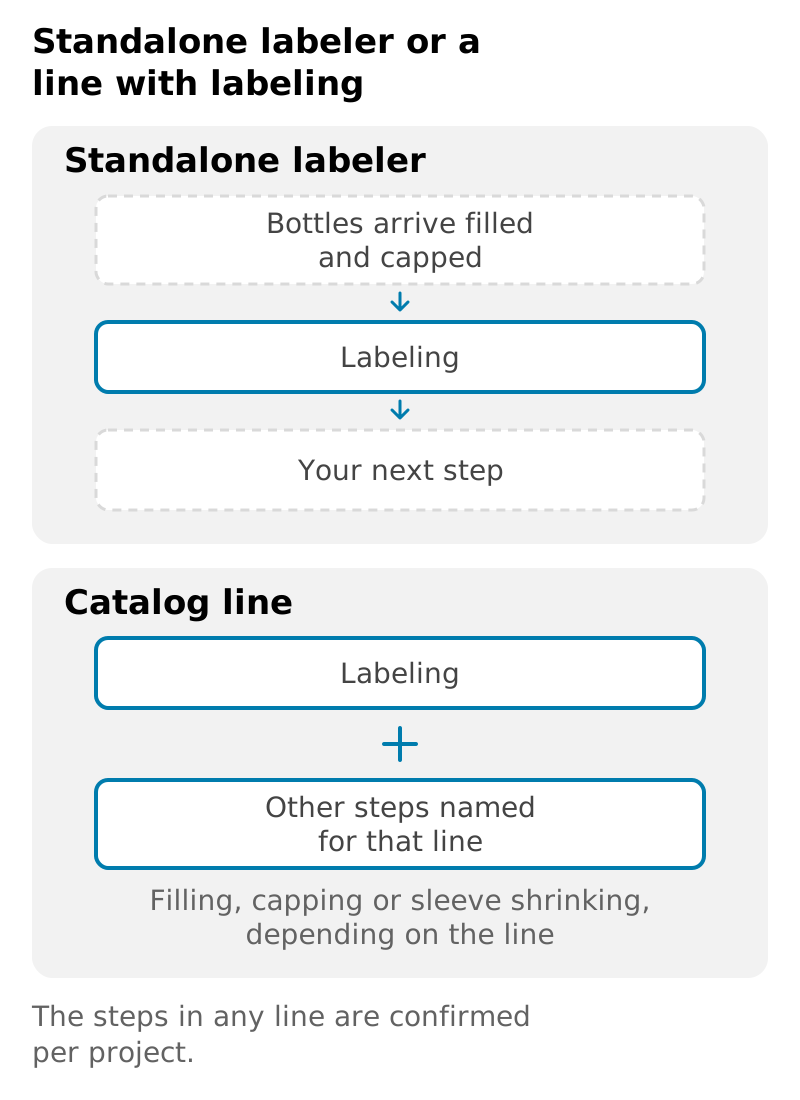
Choose a standalone labeler when your bottles already arrive filled and capped, for example from a line you are keeping, and only the labeling step is new. Consider a line when you are planning several steps together. Either way, the machines before and after the labeler, their conveyor heights and the signals between them are part of the quotation.
| Catalog line | Steps named in the application text | Confirm in your enquiry |
|---|---|---|
| Carbonated soft drinks | Isobaric filling and labeling | Full scope, including capping; which labeler is included; label positions; line output |
| Edible oil bottling line | Filling, capping and multi-side labeling | Bottle shapes covered; labeling sides; line output |
| Sauce bottling and labeling line | Filling and labeling | Whether capping is in scope; containers covered; line output |
| Honey packaging line | Filling, capping and labeling | Jar shapes covered; label layout; line output |
| Shrink sleeve labeling line | Sleeve application with shrink tunnels | Whether filling or capping is included; tunnel type; bottle range; line output |
For these lines the catalog names the steps but not the labeler inside, whether it matches one of the standalone machines on this page, or the output the line reaches. Treat line scope as a question for your enquiry, not as a specification. The filling machine family covers filling routes on their own.
Label type, position and roll
The catalog does not state whether a given bottle labeler applies self-adhesive (pressure-sensitive), cold glue or hot-melt glue labels, or which label positions each configuration supports on your bottle. Name the label type your printer supplies and every position you need, and have both confirmed in the quotation.
The labeling station has to accept your labels as they come from the printer, so the roll matters as much as the artwork.
- Label face material, width and height for each position
- Core diameter, roll outer diameter and winding direction
- Gap between labels and any printed registration mark
- For sleeves: sleeve film, layflat width and seam
What to send for a bottle labeling quotation
No price list is published for these machines. The quotation scope changes with the number of labeling stations or sides, any coding or inspection you ask for, integration with filling and capping, and a shrink tunnel for sleeves. The details below let the team propose a configuration and say whether a sample test is needed. Leave blank anything you have not decided.
- Bottles: every size you run, with shape, material, diameter or width and depth, and height. These set the guides and decide whether one machine covers all of them.
- Labels: positions, sizes, label type and roll details, as described in the label section above.
- Surface at labeling: dry, wet, chilled or oily. Moisture and oil residue are the adhesion problems named in the source catalog.
- Output: the bottles per minute or per hour you need and your shift pattern. Output depends on the bottle, the label size and the number of labels per bottle, so it is quoted for your case.
- Changeover: how many bottle and label sizes you run and how often you switch.
- Line context: what comes before and after the labeler, and whether filling, capping or sleeve shrinking are part of the project.
- Coding and checks: any batch number, date or barcode you need on the label, and whether labels must be checked and faulty bottles rejected. These are quoted on request.
- Site: supply voltage, compressed air and floor space available.
Sample test
Send filled bottles where possible, since an empty light bottle behaves differently on a conveyor, together with label rolls as supplied by your printer and a labeled reference bottle. Quantities for any trial are agreed with the team before shipping.
Questions buyers ask about bottle labeling machines
Is there a semi-automatic or manual bottle labeler?
Not in this range. Every bottle configuration on this page is automatic equipment for production lines, and the LINEVO catalog lists no semi-automatic, hand-fed or benchtop labelers.
How much does a bottle labeling machine cost?
No price is published, because the configuration drives the price: the number of labels and sides, coding and checks, a shrink tunnel, and integration with filling and capping. Send the details listed in the quotation section and the quotation is prepared for that scope.
Which bottle labeling machine is best?
The one configured for your bottle shape, label positions, label type and line. When you compare offers, compare them on the same bottle, the same labels and the same output target, and ask each supplier what a trial on your bottle would show.
Can one machine label both round and square bottles?
Only if the configuration includes the stations and guides for both shapes. Labeling around a round bottle and labeling the flat sides of a square one are different arrangements, so list every bottle before a machine is proposed.
How fast is an automatic bottle labeling machine?
Speed is not published for these configurations. It depends on the bottle, the label size and the number of labels per bottle, and it is confirmed in the quotation for your bottle.
Next step: send your bottle and label details
Send photos or drawings of your bottles, the label artwork with positions and sizes, the label type and roll details, the output you need and what happens before and after labeling. The team reviews which configuration fits and whether a sample test is needed, and comes back with a configuration proposal or a sample-test plan to discuss.